

Audio By Carbonatix
The National Road Safety Authority (NRSA) has described the legalisation of motorcycles for commercial use as a positive step towards improving professionalism and addressing rider indiscipline nationwide.
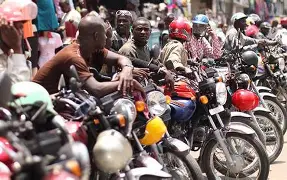
The Deputy Director of Planning and Programmes, Henry Asomani, told the Ghana News Agency in an interview that reckless practices by some motorcycle operators, including driving against traffic, running red lights, and using pedestrian walkways, had become a serious road safety hazard.
He said those behaviours were partly borne out of the past illegality of commercial motorcycle operations, which forced riders to avoid enforcement by skirting rules.
“Initially, the Okada business was illegal, so they tried to dodge, and that is why they use all these areas. They don’t stop at red lights; they cross at unauthorised places like pedestrian walkways, zebra crossings, etc. I've seen some motorcycle riders even using footbridges, which they are not supposed to use,” Mr Asomani said.
The newly passed Road Traffic (Amendment) Bill, 2025, formally legalises the use of motorcycles, tricycles, and quadricycles for commercial passenger transport once it is assented to by the President and gazetted.
The law also amends the Road Traffic Act, 2004 (Act 683), to accommodate these changes and update provisions on alcohol limits and vehicle safety standards.
The legislation is a culmination of years of discussions and regulatory reviews aimed at formalising one of the country’s most pervasive but formerly unlawful transport practices.
Authorities have been working to revise the Road Traffic Regulations 2012 (L.I. 2180), which previously prohibited motorcycles from carrying fare-paying passengers, to reflect the realities on Ghana’s roads and establish enforceable safety and licensing standards.
Mr Asomani said the legal shift could help reduce the tendency of riders to evade law enforcement and improve overall compliance with traffic rules.
He said when riders were properly licenced, identifiable, and regulated, enforcement became easier and more effective.
“We think that will also help them,” he said, adding that the forthcoming Legislative Instrument (LI) would outline procedures for training, licensing and operations under the new regime.
The NRSA and other road safety stakeholders are actively preparing this year to prioritise rider discipline under the new legal framework, with expectations that a regulated environment will foster safer behaviours among commercial motorbike operators.
Latest Stories
-
US seeks changes to rejected $109m health compact with Ghana – Mahama
3 minutes -
Nine dead in mass shooting at Pennsylvania home
20 minutes -
‘Time for Ukraine to get new president,’ says Trump after Zelensky condemns diesel deal
23 minutes -
Hincapie injury adds to Arsenal issues after Guimaraes rescue act
32 minutes -
Henderson scores twice as Chelsea thumb Bournemouth
41 minutes -
Photos: Mentapulse Africa convenes health and labour summit to address talent retention
53 minutes -
Mahama inspects Nkokɔ Nketenkete plant, eyes Bechem as chicken capital
60 minutes -
Ghana not seeking full BRICS membership, applying as Partner Country – Ablakwa
1 hour -
Woman injures three people in third Poland school knife attack in a week
1 hour -
Ghana should join BRICS as partner, not member – NPP Bono East Regional Secretary
1 hour -
Ghana High Commission warns nationals in South Africa over protests in Johannesburg, Durban
1 hour -
Mahama praises Roads Minister for keeping Big Push contractors on their toes
1 hour -
World Cup Visa Scandal: ‘My client has not collected money for visas’ – Ampofo Ankrah’s lawyer
1 hour -
US immigration officials defend ICE agents who shot man in same car as child
2 hours -
Commentator Katie Zacharia picked as new White House press secretary
2 hours