

Audio By Carbonatix
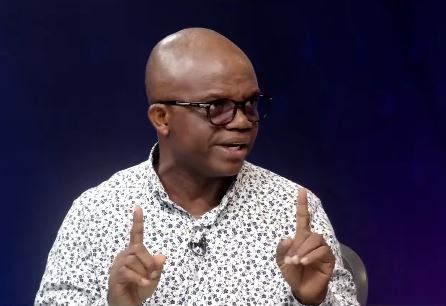
Former Deputy Finance Minister Dr Stephen Amoah has dismissed President John Mahama's claims that Ghana’s economy is in a dire state.
According to the Nhyiaeso MP, while the economy faces challenges, the President’s portrayal of the situation as a near-collapse is misleading and does not reflect reality.
“....Our President, John Mahama is respectfully creating a picture as if the economy is in a coma. Totally, it is not true," he asserted on JoyNews PM Express on Monday, March 3.
He argued that Ghana’s current economic trajectory under the former President Akufo-Addo-led administration is far better than what was handed over in 2016 by the National Democratic Congress.
He stated that while economic growth stood at 3.4 per cent in 2016, it had risen to 6.3 per cent by the end of 2024.
Similarly, agriculture, which grew at 2.7 per cent in 2016, had improved to 4.5 per cent by the time of transition.
Dr. Amoah also attributed some of the country’s economic challenges to global factors, particularly the impact of COVID-19.
He noted that Ghana’s debt-to-GDP ratio increased because of necessary debt financing, as government revenues took a major hit due to the pandemic.
“Maybe, if you say we have challenges, that one is true. Maybe our president is still dwelling on what happened with post-COVID, 2022, where the world grew negative 3.3 - we grew 0.4 or 0.5. We even grew positive, but it was too small,” he said.
He further noted that during the pandemic, civil servants were paid despite working in shifts, while over 40,000 private sector employees lost their jobs.
These, he said, were necessary but difficult decisions that impacted the economy.
“I've never seen in the history of this country that public and then civil service workers were asked to stay home, but they were paid for some months, and even beyond the months they ran a shift way over one year. That's if they’re 10, five workers go for one week or two weeks, and they were all being paid,” he explained.
Additionally, Dr. Amoah argued that Ghana’s debt situation should be analysed in context, stressing that debt-to-GDP ratio is more critical than nominal debt figures.
“You know, everywhere in the world, majorly, you use debt financing or your revenue. So if your revenue goes down badly, you will resort to debt financing. And debt to GDP is what matters, not even the nominal value,” he noted.
Latest Stories
-
Fiabci-Ghana inaugurated to promote professionalism and global collaboration in real estate sector
19 minutes -
‘No flying in just for matches’ – Kofi Adams sets conditions for next Black Stars coach
23 minutes -
Ghana and BRICS: Strategic opportunity, economic imperative or geopolitical gamble?
28 minutes -
SML vs GRA: Court grants preservation order in dispute over US$500 million investment
29 minutes -
Spotify brings audiobooks to Ghana
31 minutes -
GPL 2026/27: ‘We are the team to beat’ – Medeama boss Tanko ahead of Samartex clash
33 minutes -
Parliamentary Select Committee on Health assesses progress of work on KATH maternity block
39 minutes -
Ghana’s fertility rate too high for development – Reproductive health specialist warns
54 minutes -
NLA/KGL Licence Contract: Why Ghana must reform the law to maximise the state’s benefit
59 minutes -
Association of Small-Scale Industries empowers trade executives in Bono East with a mentorship programme
1 hour -
AMA evacuates refuse along Graphic Road, warns against indiscriminate dumping
1 hour -
STC interdicts driver over Pokuase overtaking incident
1 hour -
Ekumfi: How $6m EXIM participation built a $53m industrial asset — now poised for a 24-Hour Economy breakthrough
1 hour -
4 arrested, 142 parcels of suspected Indian hemp seized as officers reject GH¢50k bribe
1 hour -
No MMDCE can say they don’t see galamsey – Local Government Ministry
1 hour