

Audio By Carbonatix
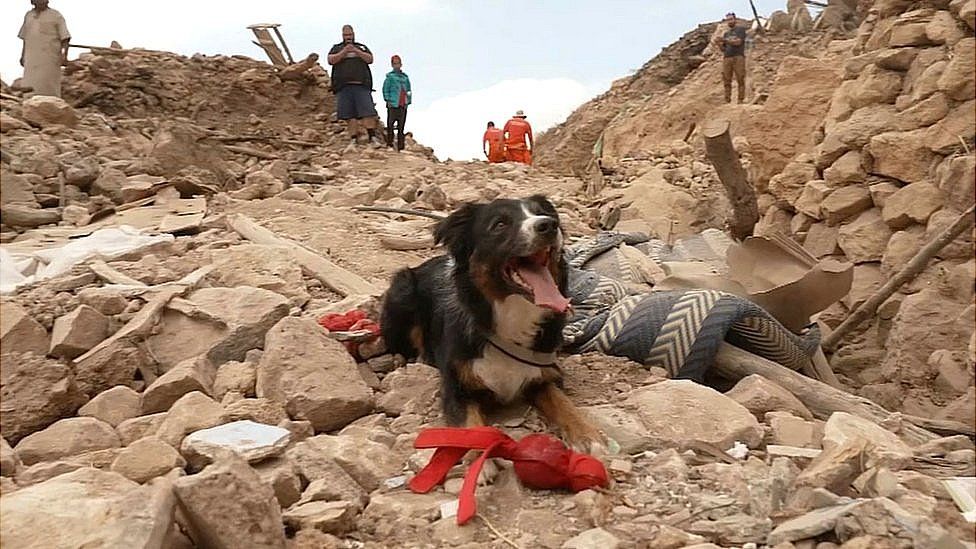
A dog called Colin scampers across the earthquake's wreckage in Morocco's remote mountain village of Douzrou.
The bell attached to his collar rings to signal his location as the border collie bounds over broken concrete towards crevices in the rubble - anywhere a survivor might still be found.
Colin is a rescue dog with the official UK team that has been deployed in Morocco and he is trained to search for the scent of the living.
But this life-saving work takes place against all odds.
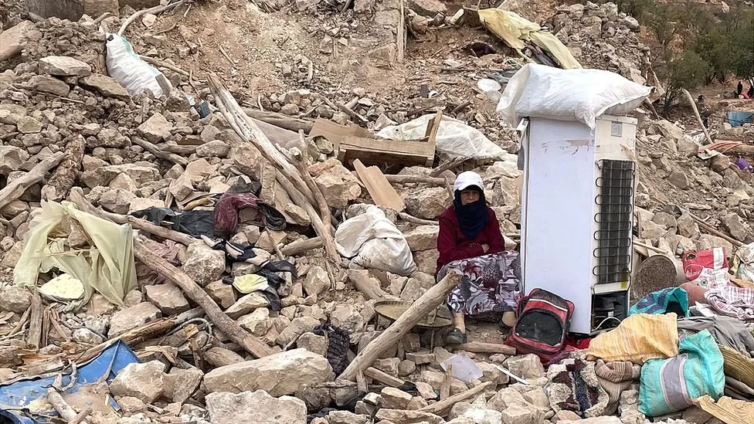
Locals tell the BBC that they believe there is little hope of finding anyone alive in what is left of their village - before the quake Douzrou had nearly 1,000 inhabitants.
But most homes collapsed when the earthquake struck late on Friday, burying part of this hillside community in the ruins of nature's rage.
It has left a vast, perilous field of strewn boulders, mud bricks and timber.
Experts say such traditional materials leave fewer chances for air pockets or spaces in which people can survive after buildings collapse.
More than 100 people were killed in the village, according to residents.
The people who are left, exhausted from shock, have to work out how to find shelter and keep their families fed.
The British rescuers speak with a village elder and make their way off the rubble mountain, as their search dog stays by their side.
"Colin is an experienced dog - he was in Turkey earlier this year," says Neil Woodmansey from the UK International Search and Rescue Team (ISAR). He is referring to February's devastating earthquake in northern Syria and southern Turkey, which killed nearly 60,000 people.
"He only goes on live scent. [Here] there's been no indication... so unfortunately it doesn't look like there's any live casualties in this area," he tells the BBC.
Since the earthquake struck, there's been a growing spotlight on the deployment of international search teams.
On Sunday, amid local criticism of a patchy and slow response by authorities, Morocco's government sparked controversy by deciding to only accept help from four countries.
It defended the move, saying "a lack of co-ordination could be counterproductive".

On Wednesday, we spotted the 60-strong British rescue team as members prepared to leave their base camp in the town of Amizmiz, at the foot of the High Atlas Mountains.
We joined them in a convoy.
Following two Moroccan military vehicles transporting the rescuers, we drove towards the earthquake's epicentre. The road rose steeply into the mountains of southern Morocco.
Kicking up clouds of dust, we made our way through the increasingly remote villages. Some seemed relatively intact, but in others, buildings were toppled or cracked, and makeshift tents lined the routes in and out.
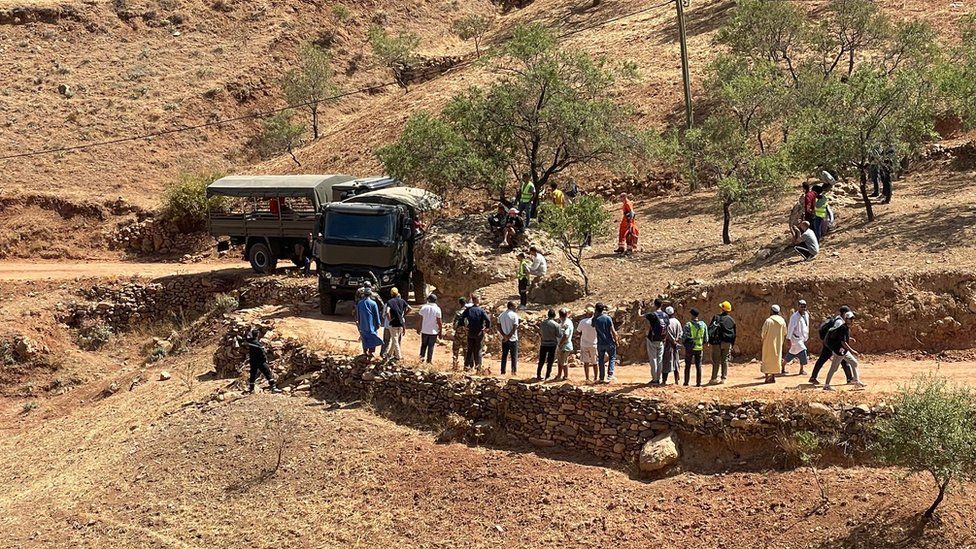
The winding road was treacherous, as the convoy rumbled up rock strewn paths, often inches from nerve-wracking drops.
At least twice, the trucks became stuck on hairpin bends. Finally, about 4km (2.5 miles) from Douzrou, the team pulled over.
Some of the crew, along with Colin the dog, had to be ferried the final stretch in jeeps belonging to the Moroccan military. The 30km journey from base camp to the village took nearly five hours - a sign of the huge challenges in providing relief to this remote province - home to some half a million people.
As the rescue team searched, the full scale of devastation in Douzrou was revealed.
It felt overwhelming. People were having to try to survive when nearly everything they knew had been destroyed.
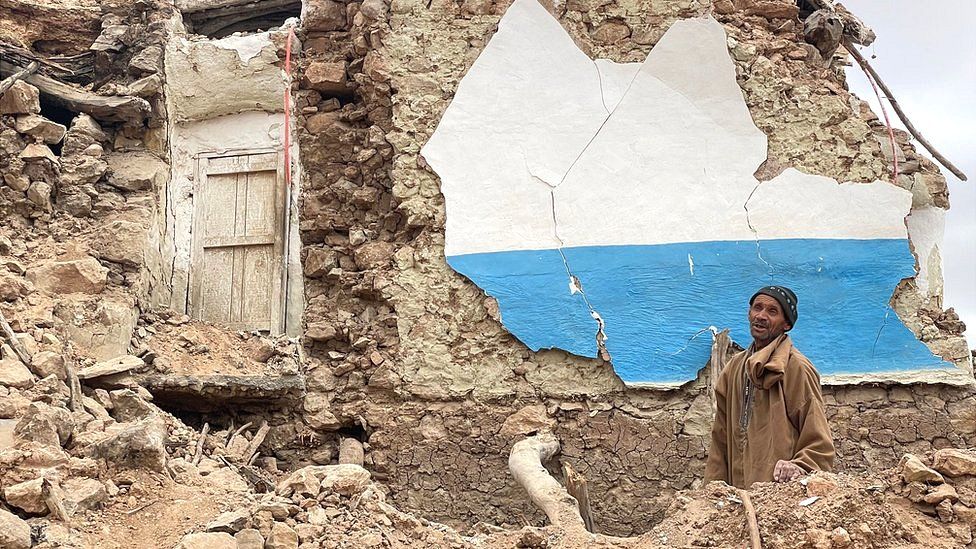
I met Hussein deep in the rubble of his house, as he worked to dig it out, hoping to find his family's possessions. His wooden front door rose from the rubble, standing as a sole reminder of his lost home.
"I was here with my family, we were having dinner. The ceiling fell on me. My brother died. [But] it is God's decision," Hussein said.
"There is nothing I can do now. I'm just going to take my clothes out and go to the tent," he said, before taking his pick axe and working away at the jumble of fallen stone and earth.
A few metres up the hillside, his wife and the rest of their family, like most people in Douzrou, were living in a homemade tent. Blankets were piled up ready to insulate them from the mountain chill that descends at night.
I walked towards one of the few remaining buildings, where many villagers gathered as supplies of clothes were being handed out, much of it from volunteers.
In the village, all but cut off from the outside world, residents say they need much more.
"My whole body is shaking," another resident, Fatouma, told me. She is now living in a tent made of blankets and wood. It overlooks the only beacon of hope that stays standing in Douzrou: The pink minaret of the village mosque.
"May God protect us," she said. "We are fighting for life - slowly".
Latest Stories
-
At least 30 feared dead in crush at Haitian tourist site
59 minutes -
Four arrested over murder of Scottish businessman in Kenya
1 hour -
New Mainoo deal closer, says Man Utd boss Carrick
1 hour -
Sinner beats Alcaraz to return to world top spot
1 hour -
An inappropriate joke nearly ended his career. Now he’s back with more humour
2 hours -
GPL 2025/26: Dreams FC stage stunning comeback to hammer Eleven Wonders
3 hours -
Livestream: The Probe examines Kumasi’s looming water crisis
3 hours -
MTN Ghana gears up to lead Africa’s AI revolution
3 hours -
Philanthropist Alhaji FuZak donates Da’wah bus to Ambariya Sunni community
3 hours -
GUTA calls for suspension of Publican AI system over trade disruptions
3 hours -
TTAG raises alarm over proposed recruitment of 7,000 teachers, demands national posting roadmap
4 hours -
Civilians feared killed after reports of air strike on Nigerian market
4 hours -
Bishop Simon Kofi Appiah installed as new Jasikan Diocese Bishop
4 hours -
Trump’s Strait of Hormuz blockade threat raises risks and leaves predicaments unchanged
4 hours -
US Court backs extradition of former MASLOC CEO Sedina Tamakloe-Attionu to Ghana
4 hours