

Audio By Carbonatix
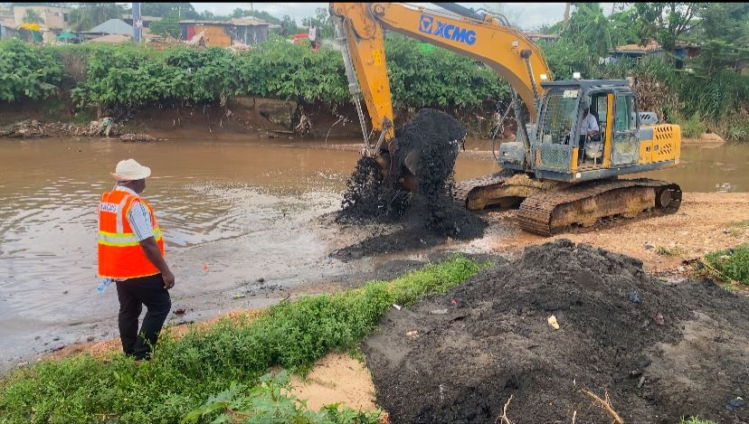
The National Disaster Management Organisation (NADMO) in the Ashanti region is on a mission to prevent a full-blown flooding situation as they embark on a major de-silting exercise in at least 17 drains in the Greater Kumasi metropolis.
The exercise comes after floodwaters inundated homes and some shops in recent downpours in parts of the city.
Many drainage systems in the Greater Kumasi metropolis are heavily choked with sand debris and filth from households and commercial activities.
The situation poses a precarious risk to communities along these drains with imminent threats of flooding.
The Pelele stream around the Kumasi Airport in the Dichemso enclave is one of the many streams which has always been at the mercy of the environmental menace.
The Ashanti regional NADMO office is embarking on a 12-day de-silting exercise in major drains within the Greater Kumasi Metropolis.
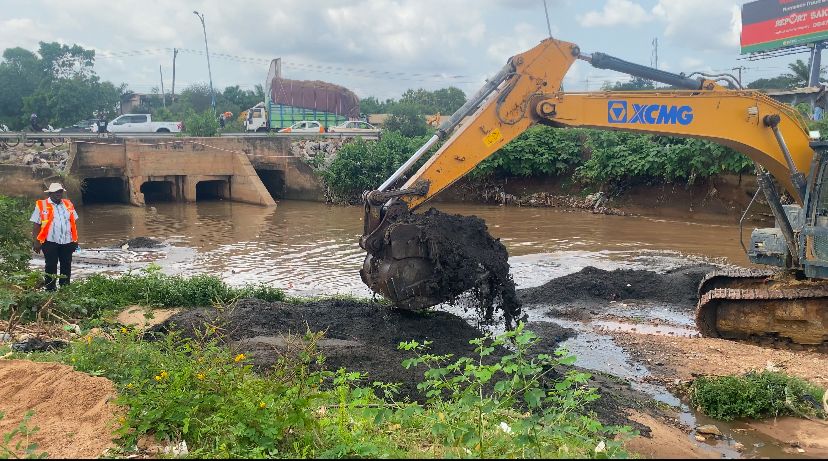
They include Airport, Buokrom South Africa, Mossie Zongo/Yenyawoso, Duase-Kenyase, Aboabo Pelele, Asabe-Buobai, Parkoso Estates, Sawaba/Affordable housing, Anloga Junction, Oforikrom and the Family Chapel area.
Others include the Kaase, Atonsu market-High School (Wewe river), Ahinsan Ambassadorial Area (Wewe river), Suame Kotoko, Breman UGC, Kronom Abuahia/Owabi and the Attafua Bridge on the Barekese Road.
“We are doing this to prevent the water from overflowing onto the roads and blocking access. We want to clear the sand debris to ensure the water flows freely in the drains. This is not our job, but as an organisation tasked to prevent any disaster, we are de-silting these drains,” Ashanti Regional NADMO Director, Alhaji Mohammed Nasir Ibrahim, said.
For years, residents living along these waterways have demanded an expansion of the narrow culverts underneath bridges over these drains.
The regional NADMO is adding to calls for the bridge elevation and the construction of concrete slabs on the shoulders and floors of the drains.
“We must construct a concrete floor and a 200-m concrete envelope on the shoulders of the drains so that once it rains, the water doesn’t hit back and flood homes,” he said.
As private individuals continue to build on waterways, NADMO stated that it will, in the coming days, launch an exercise on structures erected in wetlands.
Latest Stories
-
Power restoration fault suspected in Kumasi Central Market fire
4 hours -
The 7-foot giant of Ngleshie Amanfro: Seven-foot Ghanaian Ephraim Saawa dreams of joining the national basketball team
4 hours -
Government promises support for Kumasi Central Market fire victims
4 hours -
Vibes The Movie: Big Ghun’s Ghanaian film earns five nominations at 2026 REFFA
5 hours -
MamaCare CEO warns unresolved conflicts among health workers could undermine maternal and neonatal care
5 hours -
Health professionals urged to translate medical knowledge into practice to save mothers
5 hours -
Conflicts among care providers linked to maternal, neonatal deaths – Expert
7 hours -
GIS marks 10th TIME conference, champions improved teaching practices
7 hours -
BRICS Or Balance? What Ghana’s bid really means
8 hours -
GPRTU wants full TRAFFITECH-GH implementation to start in 2027
8 hours -
Mahama announces plans to import electric wheelchairs for PWDs
8 hours -
KGL U17 Colts 2026: Western beat Prempeh Elite Academy to set up final final with Greater Accra Region
8 hours -
Late Solanke strike salvages 10-man Spurs draw at Man United
8 hours -
Gender Ministry to monitor welfare of Nana Akua Addo’s children amid domestic violence case
9 hours -
Benedict Okyere Yeboah: Ghana’s football problem goes beyond sacking a coach
9 hours