

Audio By Carbonatix
The National Democratic Congress (NDC) has announced plans to introduce more private-sector initiatives in its next government to reduce the government’s involvement in business operations.
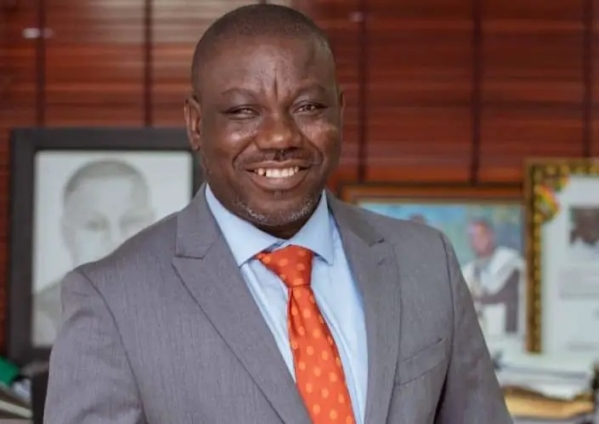
Speaking on Joy News’ PM Express, Isaac Adongo, the spokesperson on the economy for NDC flagbearer John Mahama, stated that a lean government would free up significant resources for other ventures.
“The idea of running a lean government will save the country a lot of money to channel into other ventures,” Adongo stated, underscoring the party’s commitment to efficient governance.
Mr Adongo defended Mr Mahama’s 680 campaign promises, asserting that they are both realistic and achievable.
“It's not the number of promises, it is the quantum of the envelope. If you look at the programs that we have planned and the policies that we have put together that are geared towards providing some level of realignment, you would understand that this can be funded,” he explained.
The NDC has been transparent about its strategy to fund its development projects, including leveraging Public-Private Partnerships (PPP) and development finance.
Mr Adongo pointed to successful projects from the previous Mahama administration, such as the development of the Tema Harbour (MPS) with $1.5 billion and the construction of Terminal 3, which were accomplished without burdening the government budget.
He elaborated on the party’s approach to infrastructure projects, such as the dualization of the Accra-Kumasi road, stressing the role of the Ghana Infrastructure Investment Fund (GIIF) and partnerships with multilateral institutions.
“If we say that we want to set up a vehicle, government becoming a stakeholder with $500 million, use the $500 million to leverage another $500 million that gives you $1 billion.
"With that $1 billion, if the road from Accra to Kumasi is $400 million, what you need is that government is bringing $200 million and the private sector investors are bringing $200 million,” Adongo illustrated.
Mr Adongo also addressed concerns about private sector involvement during a time when Ghana’s creditworthiness is in question.
“I trust the private sector more than government because the private sector has certain attitudes and principles and risk management beliefs that allow the investor to recoup his money.
"And we want to introduce programs that allow us to leverage this private sector arrangement without necessarily suffering the long hand of government in those activities,” he concluded.
Latest Stories
-
Prime Insight: Making room for meaningful national conversations on Joy Prime
5 minutes -
FABAG commends Ato Forson’s over removal of 20% excise duty on locally manufactured fruit juices
12 minutes -
HIV stigma discourages testing, prevention and treatment in Ghana – Ghana AIDS Commission
15 minutes -
Blocking cocaine probe lends weight to claims of political protection for traffickers – Assin South MP
18 minutes -
NPP Vice Chair race: I may be the youngest, but most experienced – Nana B
20 minutes -
Last UK and US troops leave Iraq as anti-Islamic State mission ends
20 minutes -
Don’t stay home idle, embrace entrepreneurship while awaiting posting – Unemployed nurses urged
32 minutes -
Aayalolo buses not speeding on contra-flow lanes – GAPTE assures commuters
35 minutes -
Effia MP calls for Kurt Okraku’s removal, overhaul of Ghana football structure
36 minutes -
CAS hearing on AFCON final appeal by Senegalese Football Federation set for October 8
36 minutes -
STC fares to go up by up to 8% this week – Deputy MD
37 minutes -
Photos: Accra-Kumasi bypasses get new lease of life as contractors return to site
38 minutes -
Man allegedly swallows five SIM cards to conceal evidence after arrest
38 minutes -
After three finals, Ayikuma Methodist Basic School finally lifts National Juniors Challenge trophy
38 minutes -
Black Stars management ignored players’ health conditions ahead of Gambia game – Ernest Thompson alleges
40 minutes