

Audio By Carbonatix
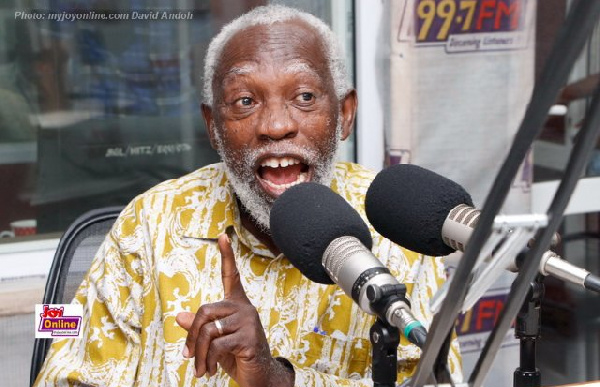
The former Rector of the Ghana Institute of Management and Public Administration (GIMPA), Professor Stephen Adei, has expressed his reservations about the payment of 'neutrality allowances' to civil servants across the country.
According to the renowned civil servant, the idea of neutrality allowance "makes him sick"; adding that, it is the "most stupid thing", he has ever heard in his life.
Speaking in an interview with Raymond Acquah on UpFront on Wednesday, he criticised the Civil and Local Government Staff Association of Ghana (CLOGSAG), for threatening to lay down their tools over government's inability to pay their 'neutrality allowance'.
"To be honest with you, as somebody who spent 35 years in national and international public service, the idea of neutrality allowance just makes me sick. So if they're not paid, they're not going to be neutral? That's what they mean? Let them declare their political colours.
In fact, never in the world. I don't know, the government somehow got themselves into trouble. The idea of a public servant being paid a neutrality allowance to me is the most stupid thing I've ever heard in my life", he stated, while venting his displeasure.
In his view, instead of civil servants threatening to lay down their tools over the nonpayment of the said allowance, they should have simply asked for increased salaries, in the wake of the current economic situation.
Professor Adei added that back in the day, such civil servants would have been dismissed for demanding such allowances. He also criticised government for undertaking to pay such allowances in the first place; stating that, based on his vast years of experience in the public sector, the allowance is not appropriate.
In expressing his reservations, he continued that, civil servants who state such demands as a condition for working, should be outrightly dismissed from the civil service and asked to reapply or stay home.
As to whether the government can meet the said demands, he has stated that the only viable alternative is for government is to print money.
“At this moment, the government’s projected expenditure in order for the economy not to collapse, is such that the government has to reduce expenditure by 20%. And already, debt servicing and public sector wage, takes about 95 to 98 percent.
So yes, I have no doubt at all that given the economic circumstances, the price increases, the petroleum prices, workers are having a hard time. But I can’t see how the government can pay any significant pay increase now, other than printing money”, he stated.
Professor Adei added that, if government considers the printing of money to satisfy the demands of workers, it will lead to an increase in inflation, since the printing of money, will not be backed by any productivity.
The former GIMPA Rector, made these remarks on UpFront, while contributing to discussions on the “State of the Ghanaian Worker”.
In that regard, he further intimated that, government must devise well-thought out strategies to address the situation.
In the last couple of days, there have been some agitations on the labour front, with civil servants threatening to lay down their tools, over the failure of government to pay their ‘neutrality allowances’, since the beginning of the year.
This has consequently triggered concerns from other labour unions, regarding their salaries and conditions of service.
In a related development, the General Secretary of the Health Services Workers Union, Franklin Owusu Ansah, has also expressed his displeasure with the state of Ghanaian workers across the country, in recent times.
According to him, “the Ghanaian worker is not happy today”; especially health workers.
Speaking on UpFront on Wednesday, he explained that, the widespread unhappiness and dissatisfaction amongst Ghanaian workers, is tied to the current challenges in the economy.
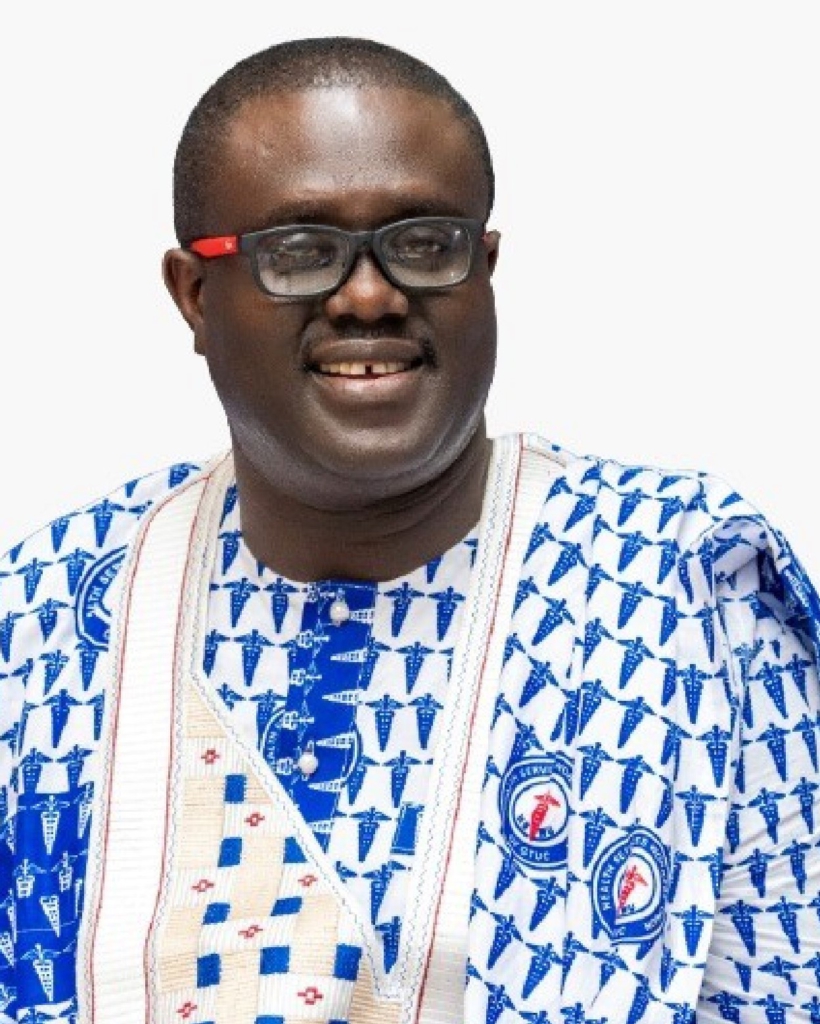
“The salaries of our working force is very low. It is not low because we are unable to negotiate better salaries. But it is low because of the circumstances in which we find ourselves. Unfortunately, last year was a bad year for labour because, what we did negotiate was not good at all.
We negotiated for 4% for last year, and 7% for this year. Unfortunately, recent happenings in the economy, especially inflation, which nobody anticipated was going to go this high, has come to erode all the good things that the Ghanaian had”, he stated.
He added that, looking at the cost of transportation alone, it is obvious that the Ghanaian worker is feeling the brunt of the harsh economic conditions in the country.
Mr. Owusu Ansah also made these comments while contributing to discussions on the ‘State of the Ghanaian Worker’.
Latest Stories
-
Cryptocurrency regulation: BoG, SEC must collaborate closely to align risk assessments – IMF
25 minutes -
Congo’s Ebola outbreak has killed more than 4,000, government data shows
36 minutes -
Ethiopian rebel forces withdraw from Tigray regional capital
44 minutes -
All set for 7th Ghana Credit Excellence Awards 2026 on October 10
47 minutes -
Why pastors may not be seen – or heard – preaching on buses for much longer
55 minutes -
Oil slips as Middle East crude exports rise, G7 to release stocks
1 hour -
France to step up Ebola funding in Congo amid resurgence fears, minister says
1 hour -
Djokovic beats Zverev to reach China Open semis
1 hour -
Brazil election goes to run-off as right-wing Flávio Bolsonaro wins first round
2 hours -
Modric ‘ashamed’ of Croatia’s ‘catastrophic night’
2 hours -
Klopp’s mixed start continues as Germany held
2 hours -
The job interview question you don’t have to answer
2 hours -
Trump unveils ‘Super Intelligence Force’ to oversee AI policy
2 hours -
Zirkzee gives Netherlands win as van Dijk joins 100 club
2 hours -
Haaland injury worry as Norway lose in Portugal
3 hours