

Audio By Carbonatix
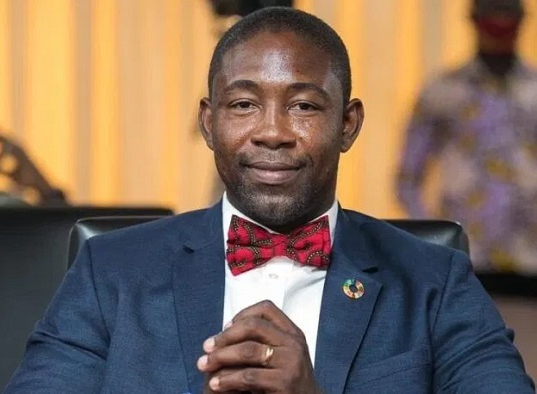
The Chief Executive Officer of the National Health Insurance Authority (NHIA), Dr Bernard Okoe Boye has suggested measures the government can adopt to reduce out-of-pocket expenses for renal patients.
According to him, dialysis was too huge a cost for individuals battling kidney conditions to bear alone since most of them might be unable to pay for these services.
Speaking to JoyNews he said, “As a country, I can tell you boldly, if we are committed we can pay totally for kidney care."
Elaborating on the ways the government can reduce the burden on kidney patients, he said; "First of all, politically we have been going back and forth on funding to NHIS. Kenya even pays for kidney transplants. The reason is very simple, 90% to 95% of the funds are directly with them."
"Secondly, we can put some levy referred to as syntax on some one or two products which are normally not consumed by the ordinary person but by people in a particular class and the inflows on that can go into a fund not necessarily with National Health Insurance.
"It can be the chronic disease fund or the peripheral disease fund which would go to the departments that take care of kidney care and other conditions like cardio diseases so that instead of the GHȼ700 cedis that is been looked at, you can retain GHȼ200 because GHȼ500 cedis has been paid for by this fund.
"Thirdly, we as a country can come together to take away all the taxes on any item that goes into kidney care. We can look at two or three consumables that affect the pricing and the state can procure them directly."
Conversations on what can be done to improve renal services have been in the news for some time now, following the Korle Bu renal unit's closure for over five months.
Read also: Opening Korle Bu renal unit without sustainable financing recipe for disaster – Beyuo
Various stakeholders have advised that the service be migrated onto the NHIS, but those opposed say the scheme lacks the financial strength to take it up.
It is currently unclear what the next line of action would be. However, Dr Boye mentioned that a five-member committee has been charged to come up with recommendations to sustain the renal unit.
Latest Stories
-
Glasner suffers loss on Selhurst return as Palace beat Forest
55 minutes -
WAFU B U17: ‘We won but I expected more from my boys’ – Kassim Ocansey
59 minutes -
Man City cruise to statement win over 10-man Liverpool
1 hour -
Be careful with cross-border lending, foreign currency exposures – BoG to financial institutions
3 hours -
GPL 2026/27: Medeama go three clear as Hearts of Oak recover and Bechem stage stunning comeback
4 hours -
Ntiamoah Foundation launches “BEYOND 20” anniversary campaign
4 hours -
Credit Risk Management Directive: BoG to begin implementation for banks, others from July 1, 2027
4 hours -
Ghana Brands Awards 2026: Leading brands, business trailblazers to shine on November 20
5 hours -
T-bills auction: Demand improves as government exceeds target by about 76%; interest rates soften
5 hours -
Ziope undertakes initiative to build a technologically inclined community, commissions self-help ICT lab
5 hours -
ECG announces power outage in parts of Tema, Central Region due to network fault, maintenance
5 hours -
When the Gospel Becomes a Weapon: The church, blackmail and the abuse of faith
6 hours -
JoyNews’ Jacqueline Ansomah Yeboah selected for UK Media Excellence for Emerging Technologies Fellowship
6 hours -
Mental Health Alliance urges government to operationalise Mental Health Fund
6 hours -
Ghana–Holy See agreement heads to Parliament after Cabinet approval
6 hours