

Audio By Carbonatix
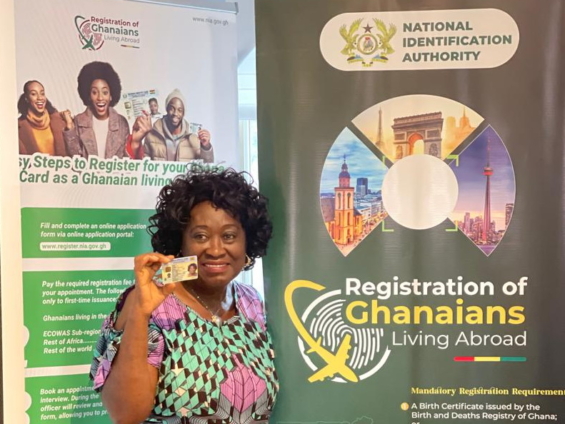
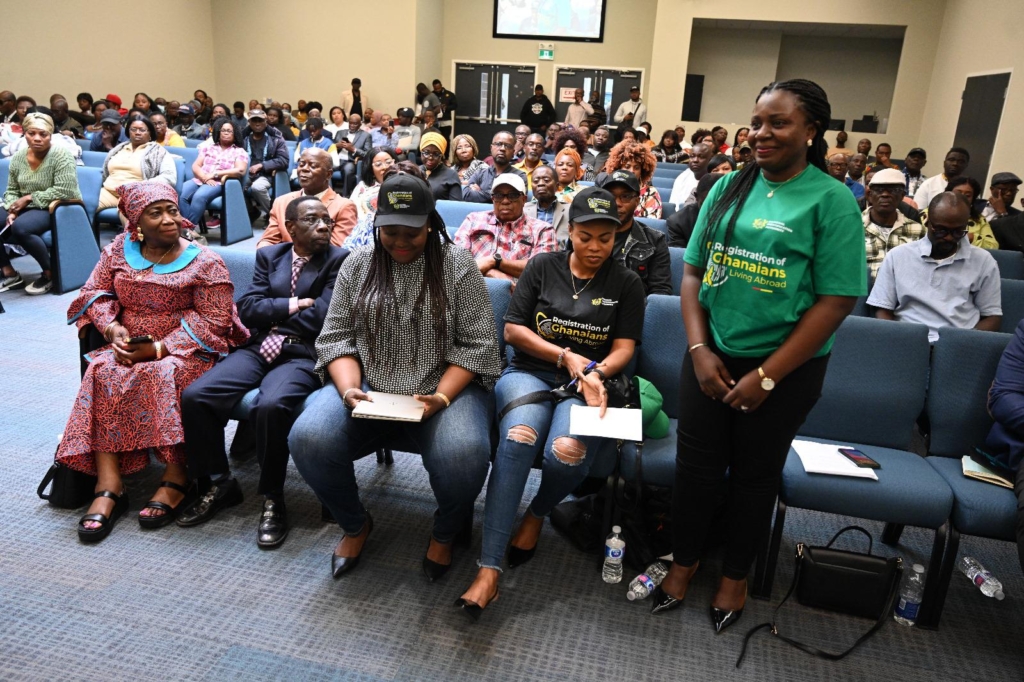
In a major step to extend Ghana Card services to Ghanaians living outside the country, the National Identification Authority (NIA) has begun issuing cards to Ghanaians in Ottawa and Ontario in Canada under the first phase of the pilot exercise.
Pilot phase locations
The pilot phase has commenced in Ottawa and Ontario in Canada and will be extended to Washington, D.C., and New York in the United States of America.
Last week, officials from the NIA and its technical partner, Identity Management Systems (IMS), held public engagements in Ottawa and Ontario after which they trained selected officials of Ghana’s mission in Canada.
These staff are working as registration officers in the first phase of the pilot exercise to register Ghanaians abroad.
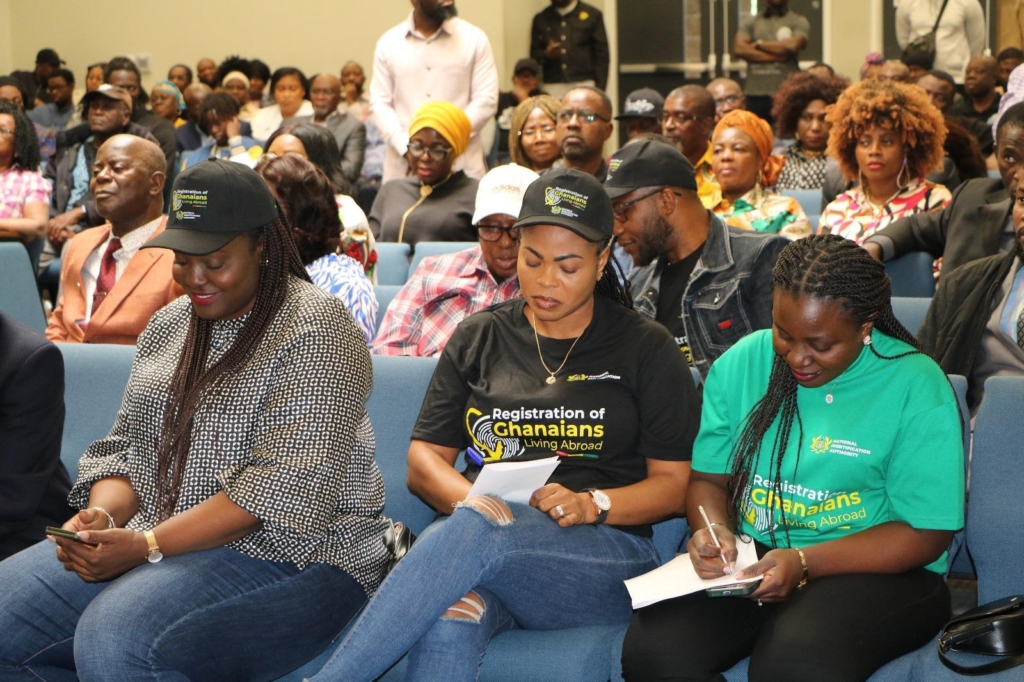
Officials from the NIA and IMS, are currently in New York to hold public engagements and train embassy staff to serve as registration officers.
Simplified registration
Ghanaians abroad are able to fill out forms online and pay the required fees to book appointments from the comfort of their homes.
Applicants and persons vouching for them are interviewed online.
Applicants only go to the mission at their appointed date and time to donate their biometrics and be issued their cards.
This process is projected to take only 10 minutes making the process more flexible.
Fees for registration
Fees approved by parliament for the registration vary by region, with ECOWAS nationals paying $55, the rest of Africa $75, and the rest of the world $115.
The foreign registration covers individuals aged six and above.
Valid passports and birth certificates are required, but applicants without these documents can be vouched for during the interview process. However, those who have renounced Ghanaian citizenship or are non-Ghanaian spouses cannot register.
Dual citizens who can prove their Ghanaian heritage are eligible to acquire the Ghana card.
NIA’s global initiative
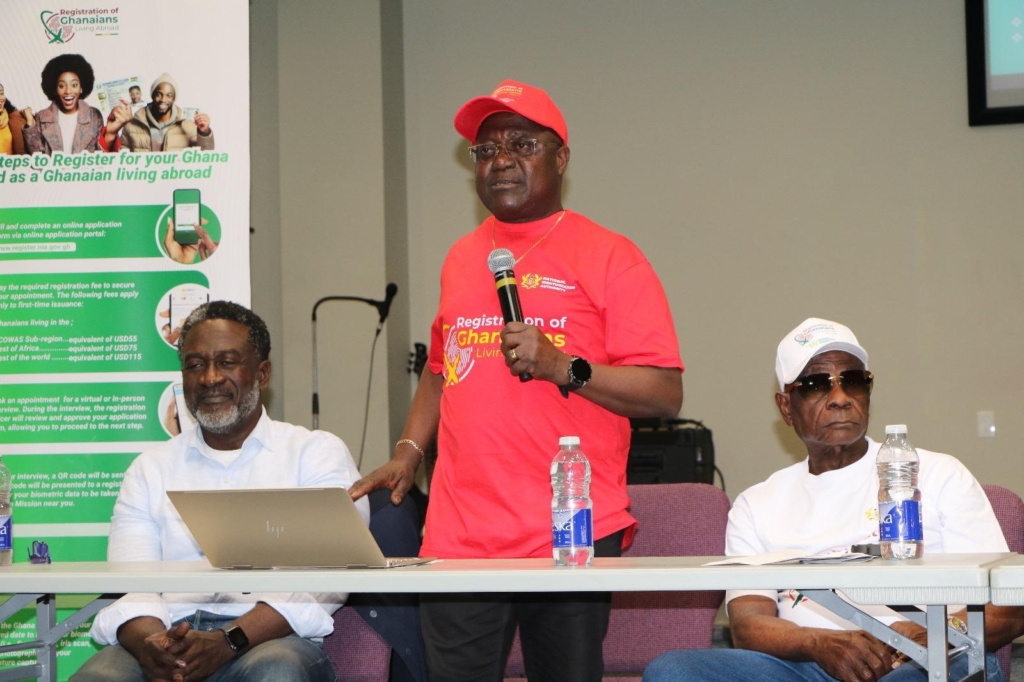
NIA Board Chairman Mr. Abel Edusei described the engagement as a major milestone in the NIA’s work to identify Ghanaians around the world.
He noted that the engagement in Ottawa is historic and a significant step in the NIA's effort to extend the Ghana Card beyond the borders of Ghana.
Training for mission staff
NIA Executive Secretary Prof. Kenneth Agyemang Attafuah announced plans to train the staff of Ghana’s missions to handle registrations, explaining that NIA is legally mandated to train these officials as registration officers.
Prof. Attafuah also took participants through the NIA’s mandate, its achievements, and the integration of the Ghana Card into the ECOWAS system to avoid the need for a separate ECOWAS identity card.
Security features of the Ghana Card
Prof. Attafuah highlighted the security features of the National Identification System (NIS) and clarified that first-time registration for the Ghana Card is free at NIA district and regional offices in Ghana.
However, he said registration at premium centres and for institutions or groups attracts a fee.
Additionally, he stated that cardholders would need to pay for a new card when their existing one expires after 10 years.
Prof. Attafuah explained to the gathering that the Ghana Card’s Personal Identification Number (PIN) serves as a replacement for various identification numbers, including the Social Security and National Insurance Trust (SSNIT) number, Tax Identification Number (TIN), and National Health Insurance Scheme (NHIS) number.
Data security assurance
Responding to questions, Executive Director of IMS, Mr. Emmanuel Selby assured participants that all data is stored in Ghana and not in the cloud.
He explained that private virtual networks are used from the registration centres and NIA’s site.
According to him, the primary site is located at NIA’s Head Office in Accra, with a secondary disaster recovery site in Kumasi.
He said real-time synchronisation occurs between the two sites.
Mr. Selby also noted that only specific subsets of data are shared with institutions, as mandated by law, and biometric data is not shared with user agencies.
Mr. James Cantamantu-Koomson, Chief Operating Officer of IMS, explained that biometric verification is done for every transaction to prevent identity theft, as relying on visual inspection of cards poses risks.
Community engagement in Ottawa
Ghana’s Ambassador to Canada, Anselm Ransford Adjetey Sowah, organized the interaction in Ottawa.
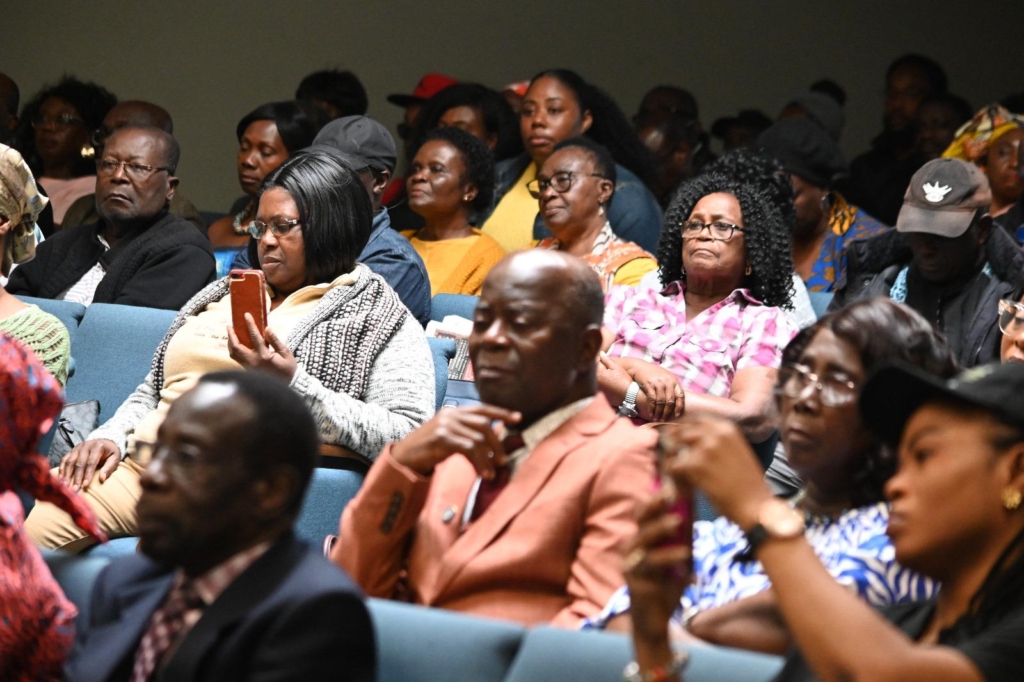
Participants expressed their gratitude for the education about the Ghana Card registration process, describing it as very useful.
Latest Stories
-
NPP orders parliamentary aspirants and their supporters to suspend campaign activities
20 minutes -
Techiman unites against child marriage: Joy Impact Makers Awardee leads charge on International Day of the Girl Child
32 minutes -
Ghana Psychological Association calls for greater involvement of people with lived experience in mental health care
2 hours -
Ablakwa says Ghana could evacuate more citizens from South Africa if the situation worsens
2 hours -
Violence against girls must be tackled through individual responsibility – Gender advocate
2 hours -
Ghana’s BRICS bid must be guided by national interest – International Affairs Analyst
2 hours -
Journalists look back on a decade of breast cancer reporting in Ghana
3 hours -
President Mahama ends Resetting Ghana tour of Ahafo Region
5 hours -
African negotiators seek delivery of climate commitments at COP31
5 hours -
BoG develops AI rules for financial sector
5 hours -
‘Big Push’: Government assures contractors of prompt payments
5 hours -
Court fines miner for breaking into gold buying shop
5 hours -
Tarkwa court jails labourer for three years over GH¢123,000 theft
6 hours -
GAEC must retain nuclear scientists for Ghana’s nuclear ambitions – Minister
7 hours -
Man reportedly mistaken for game and shot by hunter dead in forest
7 hours