

Audio By Carbonatix
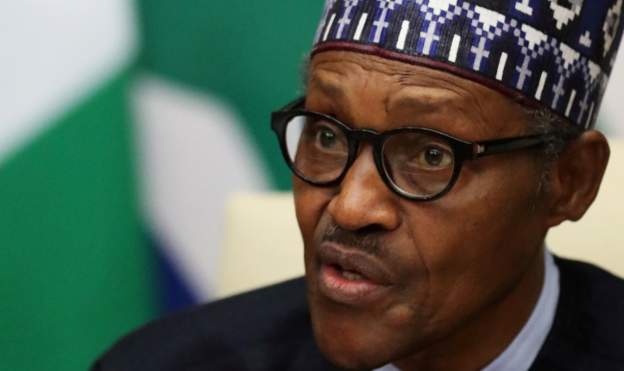
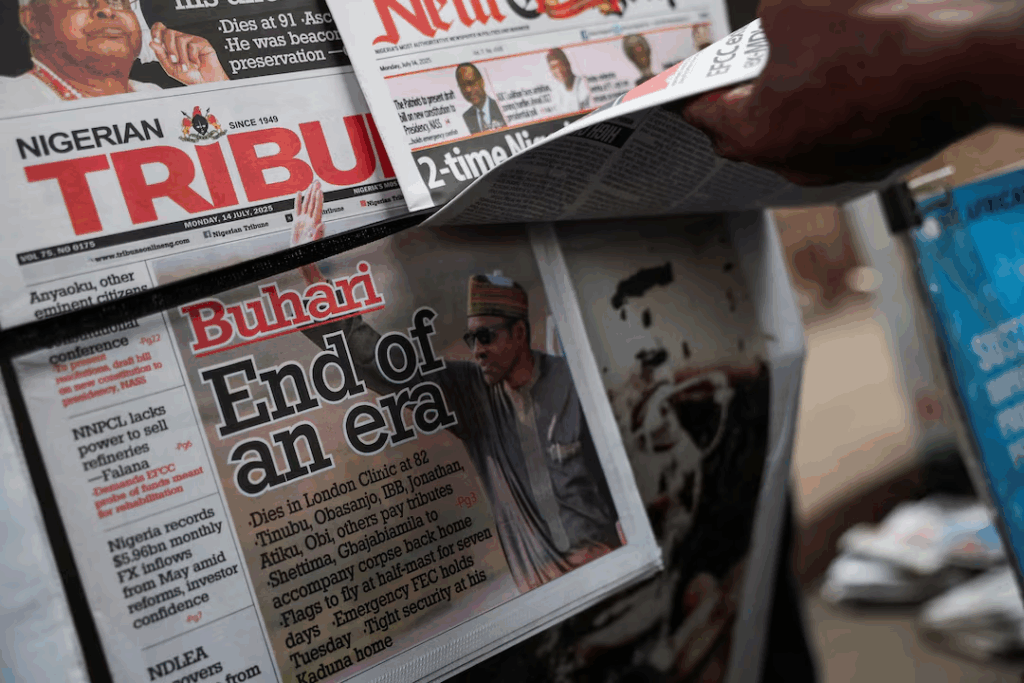
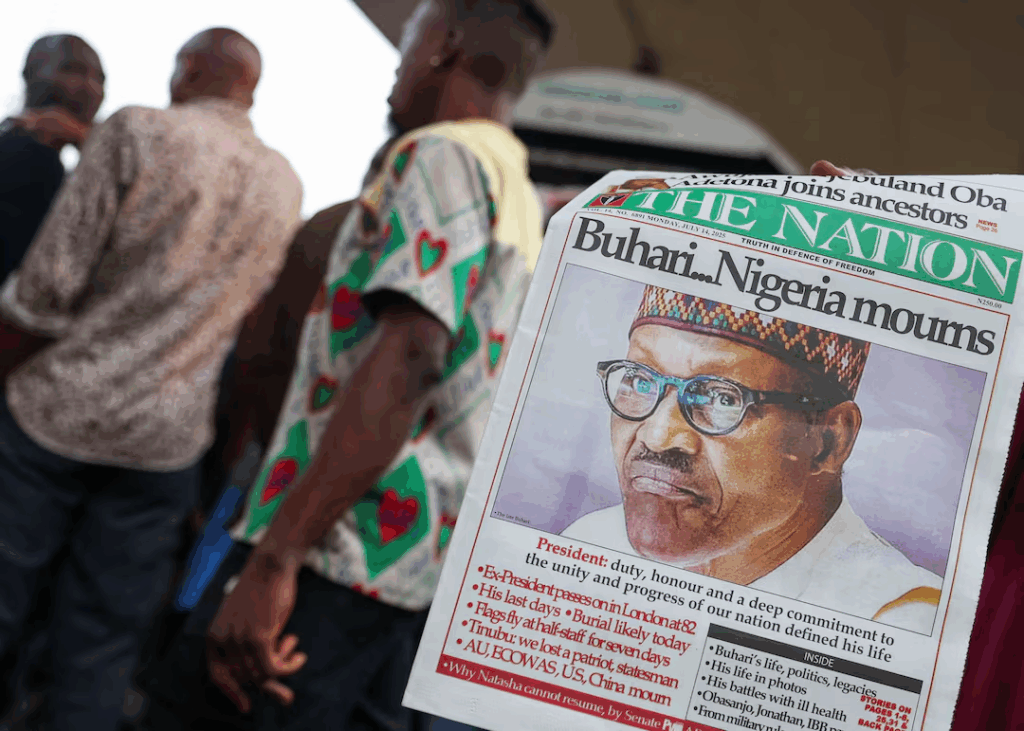
Nigeria's late former President Muhammadu Buhari, who died in a London clinic on Sunday aged 82, will be buried in his northern home state of Katsina on Tuesday, the state governor said.
Buhari, a former military ruler after a coup in the 1980s, returned to frontline politics to become the first Nigerian president to oust an incumbent through the ballot box in 2015. He was re-elected for a second term four years later.
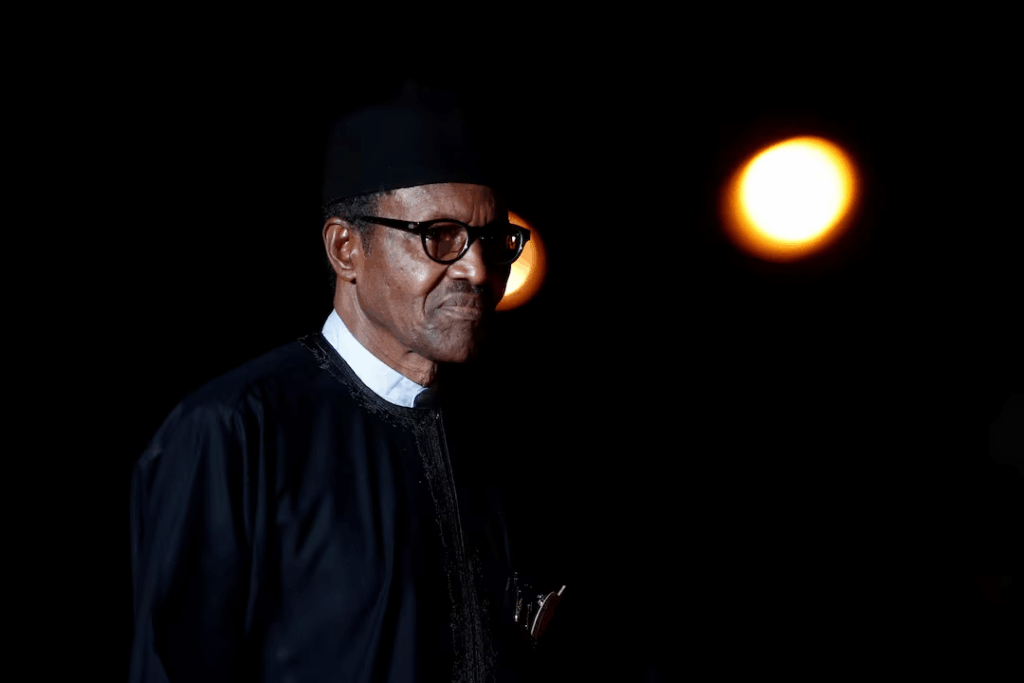
Nigeria's Vice President Kashim Shettima and government officials were in London on Monday to organise the repatriation of the former president's remains.
Katsina state governor Dikko Umaru Radda said after consultation with Buhari's family, it was agreed the body would arrive in Nigeria on Tuesday for burial the same day in his home town of Daura.
Among those who paid tribute to Buhari was Indian Prime Minister Narendra Modi, who posted on the X platform that "his wisdom, warmth and unwavering commitment to India–Nigeria friendship stood out."
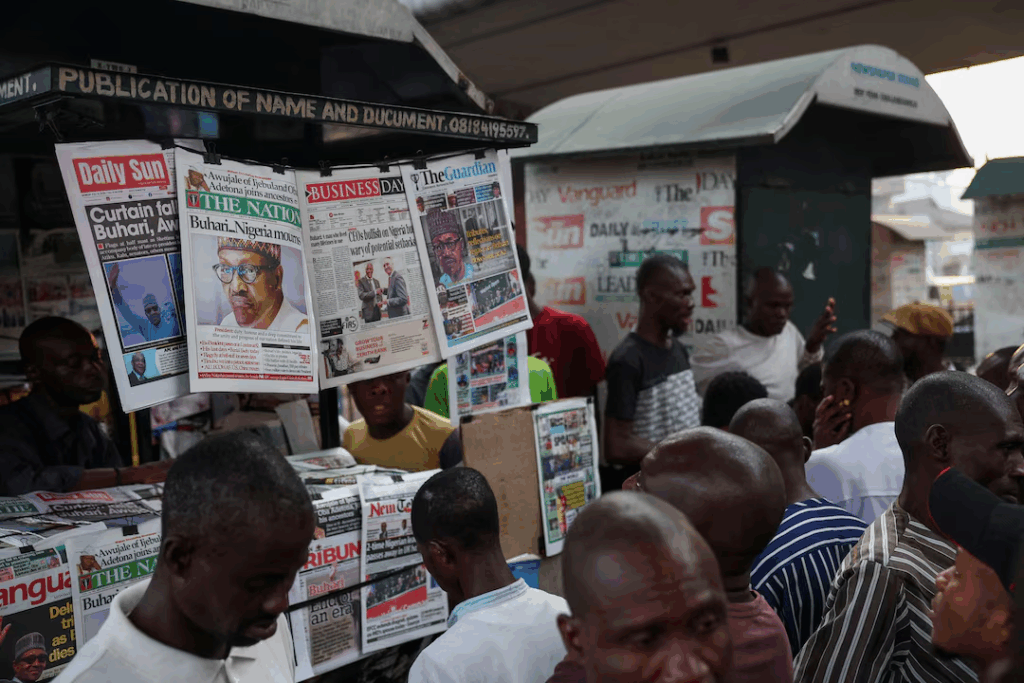
Buhari earned a devoted following for his brand of anti-corruption conviction politics, especially in Nigeria's largely Muslim north.
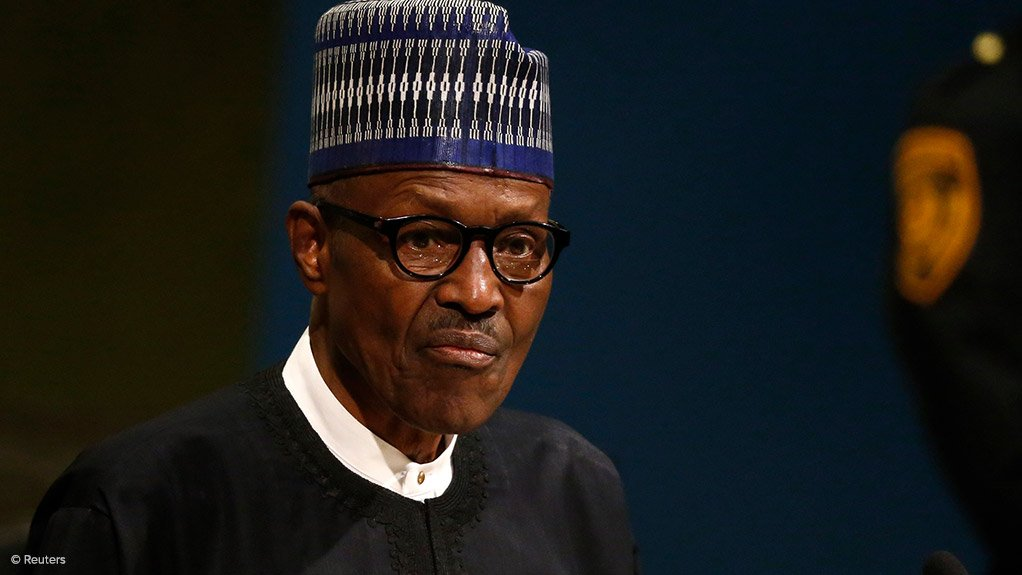
He referred to himself as a "converted democrat" and swapped his military uniform for kaftans and prayer caps.
Ibrahim Babangida, another former military ruler who toppled Buhari in a coup in 1985, said he knew Buhari as a deeply spiritual and humble man.
"We may not have agreed on everything, as brothers often don't, but I never once doubted his sincerity or his patriotism," Babangida said in a statement.
After leaving office in 2023, Buhari spent most of his time in Daura, away from the public eye.
His successor, Bola Tinubu, inherited a country grappling with double-digit inflation, foreign exchange shortages, economic hardship, low oil production and insecurity that had spread to most parts of Nigeria.
Buhari's supporters, however, viewed him as Nigeria's conscience because he had a reputation for shunning corruption and ostentatious lifestyles often associated with the country's political elites.
To his critics, Buhari was "an absentee landlord — a leader who governed by delegation, who disappeared for long stretches (often to London for medical treatment), and whose aloofness felt like abandonment," the local BusinessDay newspaper said.
Latest Stories
-
Friends of Bridget Bonnie Marks her 35th birthday with donation to Kasseh Model Health Centre
29 minutes -
Landfilling waste management creates no value, it’s an economic waste
56 minutes -
Photos: Speaker Bagbin Commissions MPs constituency office under parliamentary decentralisation programme
1 hour -
Black Stars technical advisor Winfried Schäfer sacked as GFA shakes up backroom staff
1 hour -
Wenchi water project almost complete, critical to gov’t agenda – GWL MD
2 hours -
Anti-LGBTQ+ bill not part of government’s legislative agenda – Inusah Fuseini
2 hours -
Anti-LGBTQ Bill: Forget the rumour mongers, I’m a man of action, and will pass the bill – Speaker
2 hours -
Women and children among those killed in Sudanese army shelling of wedding celebration
2 hours -
President Mahama is not sincere with Ghanaians on LGBTQ bill matter – Hassan Tampuli
3 hours -
Gov’t to establish Prison Industrial Hub to equip inmates with income-generating skills – Prison Service boss
3 hours -
Alhassan Tampuli donates cement, roofing sheets to support storm victims in Gushegu
3 hours -
Alhassan Tampuli appeals for urgent support for storm victims in Gushegu
3 hours -
The hypocrisy must stop; pass Anti-LGBTQ+ Bill now – Alhassan Tampuli to Mahama
3 hours -
Imprisonment should be rehabilitative, not punitive – Ghana Prisons boss at UNGA
4 hours -
Ga Adangbe traditional priests petition Mahama over McDan aviation licence revocation
4 hours