

Audio By Carbonatix
Only 48 percent of Ghanaians consistently wash their hands with soap, according to Dr Freda Prempeh, Minister for Sanitation and Water Resources.
Referencing a scientific report made available to the Ministry (MICS 2018 Report), she indicated that 24 per cent of households had designated places or devices for handwashing but without soap and water.
Equally, about 28 per cent also have no facility at home for handwashing when hands come into contact with germs.
The report consequently showed inequalities in the coverage of basic handwashing facilities, which ranged from just 42 per cent in rural areas to 56 per cent in urban areas.
Such inequalities in handwashing facilities and ineffective handwashing promotion programmes the report said, could put individuals at higher risk for diseases that impact their health, education, and economic outcomes.
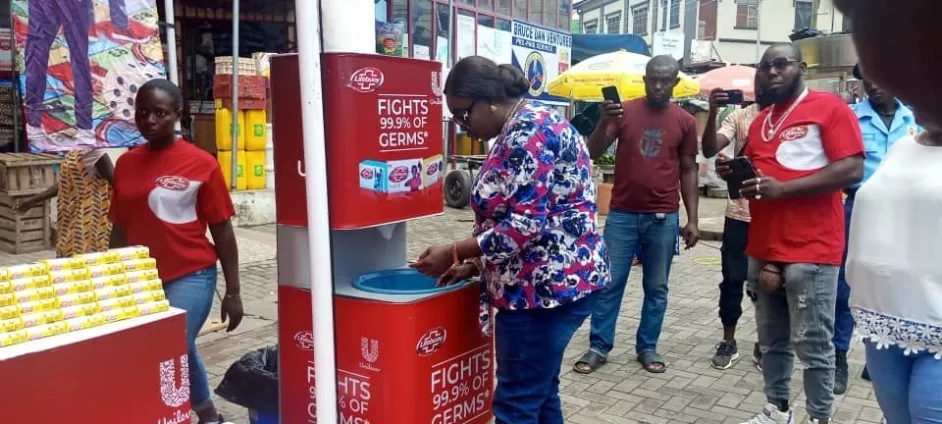
Dr. Prempeh disclosed this at the 2023 national media launch of the Global Handwashing Day in Cape Coast on Tuesday, on the theme: ”Saving lives through handwashing with soap.”
The global theme for the celebration is “Clean hands are within reach.”
Organized by the Ministry of Sanitation, the engagement was aimed at equipping media personnel with information on the National Hand Hygiene For All (HH4A) strategy and roadmap for Ghana (2022-2030).
HH4A is an initiative by the World Health Organization (WHO) and UNICEF that came on the heels of the onset of COVID-19.
It is a call for all to achieve universal access to hand hygiene through a three-R approach, namely responding to COVID-19, rebuilding after the COVID-19 pandemic, and re-imaging hand hygiene to become part of the people’s culture.
The initiative also aligns with the Sustainable Development Goal (SDG) 6.2, aimed at achieving access to adequate and equitable sanitation and hygiene for all, ending open defecation, paying special attention to the needs of women and girls and those in vulnerable situations.
The goals identify 12 settings where handwashing facilities are expected to be available.
They are households or homes; schools; childcare homes; healthcare facilities; workplaces; markets; transport terminals; correctional centres; worship centres; refugee camps; eateries and events or recreational centres.
Dr. Prempeh stressed the need for Ghanaians to inculcate the habit of regular handwashing, given its significant part in preventing diseases.
Washing hands with soap regularly is an effective way to prevent infections and communicable diseases such as cholera, hepatitis, typhoid, and respiratory infections.
Dr. Prempeh said the importance of regular handwashing was brought to the fore more strongly, following the outbreak of the coronavirus pandemic globally and has since proven as the most cost-effective and effective way of dealing with a disease outbreak.
Mrs. Marigold Assan, the Central Regional Minister, reiterated the essence of handwashing with soap which helped remove germs from hands to prevent infections because people frequently touched their eyes, nose, and mouth without even realizing it.
“Regular handwashing is one of the best ways to remove germs, avoid getting sick, and prevent the spread of germs to others.
“Whether you are at home, at work, travelling, or out in the community, regularly wash your hands to prevent any unpleasant consequences,” she advised.
Later, a durbar was held at the Kotokuraba market, where the traders were enlightened on the essence of handwashing and the processes involved.
Latest Stories
-
Judges’ conference forces further adjournment of Salomey Baffoe case
8 minutes -
GRA assures Tullow of collaboration to settle $393m tax liability without disrupting its petroleum operations
38 minutes -
South Korea demands apology from Pyongyang for landmine blasts that injured three
41 minutes -
Carlos Queiroz not the sort of coach Black Stars need – Nii Lante Vanderpuye
1 hour -
AFCON 2027Q: ‘Our Black Stars team is gone’ – Former Sports Minister
2 hours -
Prof. Prempeh calls for public review of draft constitutional reform bills
2 hours -
AFCON 2027Q: ‘I have never seen a poor performance from Black Stars like against Gambia’ – Nii Lante Vanderpuye
2 hours -
Bawumia backs insurance sector reforms after engagement with IBAG
2 hours -
Nigeria set to launch National Digital Address System 9 years after Ghana showed the way
2 hours -
Policy rate decision takes time to reflect in lower lending rates – BoG
2 hours -
Western Regional Minister applauds Karpowership’s role in Ghana’s power sector
3 hours -
Playback: Road safety crises: Where are we getting it wrong?
3 hours -
Enterprise Life celebrates 25 years of protecting families and building trust
3 hours -
ICC London rules in favor of Ghana against Tullow over $400m tax charge
3 hours -
We are disappointed in ICC’s ruling over our corporate income tax assessment in Ghana – Tullow Oil
3 hours