

Audio By Carbonatix
The Centre for Alternative Politics and Security West Africa hosted a webinar on November 22, 2024, as part of its "Beyond Electrocracy Series", exploring governance and accountability in Ghana post-election.
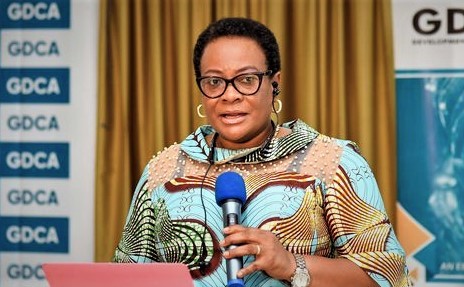
Speaking on the theme, “Beyond Ghana’s 2024 Election: Business as Usual or a New Pathway Towards People-Centered Politics?”, Mary Awelana Addah, Executive Director of the Ghana Integrity Initiative (GII), delivered an analysis of the nation’s anti-corruption efforts.
“Our fight is more talk and very less action,” Mrs Addah said, underscoring the disconnect between policy rhetoric and practical results in combating corruption. She pointed out how entrenched corruption continues to undermine Ghana’s democratic gains 32 years into its Fourth Republic, with systemic failures persisting despite various initiatives.
Mrs Addah highlighted Ghana’s stagnant score of 43% on the Corruption Perception Index over the past four years, cautioning that prolonged inaction could lead to a further decline. “When countries remain on the same score for a long time, the potential to reduce or even go further down is very high,” she warned.
She attributed much of the problem to weak institutional frameworks, excessive executive power, and a lack of transparency in campaign financing. She also lamented the deep-rooted monetization of politics, where citizens view elections as an opportunity to trade votes for material gain due to economic marginalization. “Voters now see elections as a season to maximize their benefits before it elapses,” she said.
Mrs Addah proposed a series of reforms to address the challenges. Chief among them was the need for a transparent campaign financing regime to curb illicit funding and undue influence in Ghanaian politics. “The lack of a campaign financing regime creates avenues for illicit funding,” she noted, adding that political candidates must also be held accountable for campaign expenditures.
She called for improvements in whistleblower protections, emphasizing the need to activate the promised 10% reward for whistleblowers whose reports lead to the recovery of stolen public funds. “If citizens are assured of confidentiality and compensation, they will be more willing to speak out against corruption,” she argued.
Mrs Addah also advocated for reforms to Ghana’s Criminal Offenses Code to expand the definition of corruption to include unexplained wealth and illicit enrichment. She stressed the importance of public oversight in asset declarations, calling for verification and publication to prevent officials from concealing ill-gotten wealth.
Concluding her presentation, she emphasized the need for collaboration among civil society, citizens, and the public and private sectors in the fight against corruption. “If we pick what happens in other models and adapt them to our context, we can make significant gains in fighting corruption,” she stated.
Latest Stories
-
Analysis: Ghana’s yellow fever numbers reveal a gap between vaccination and protection
29 minutes -
Education Ministry welcomes suspension of teachers’ strike
41 minutes -
Vice Chancellors Ghana appeal to striking university administrators to resume work
56 minutes -
KNUST postpones 2026/2027 academic year reopening indefinitely amid GAUA strike
1 hour -
Fire destroys mattress factory at Sokoban in Kumasi
1 hour -
ECOM-SMS Ghana launches ‘Agriculture Our Future Clubs’ to address threat of ageing farmer population
1 hour -
Nicholas Atsu Kumi
1 hour -
Cherif Sarr: Economic participation needs more pathways, not one prescribed route
1 hour -
Cyber Security Authority: Ghana led Operation Blackout, not FBI
2 hours -
GH¢800,000 goods destroyed as fire engulfs Kia Rhino truck on Apedwa-Kibi Road
2 hours -
Chief Justice calls for supportive workplaces to address mental health stigma
2 hours -
NVI CEO defends GH¢13m spending on training, workshops and conferences
2 hours -
Ghana targets first locally manufactured vaccine by 2027
2 hours -
Teachers suspend strike after reaching agreement with government
2 hours -
Council of State describes talks with striking teachers as fruitful
3 hours