

Audio By Carbonatix
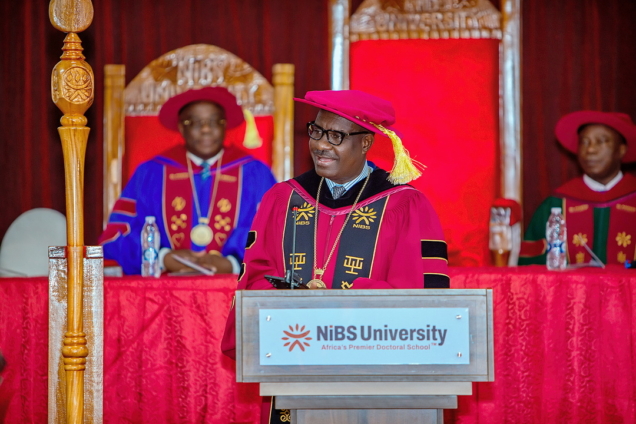
The Chancellor of the Nobel International Business University (NiBS), Dr George Agyekum Donkor, has urged graduates to champion innovation and advance policies that not only address Africa’s most pressing challenges but also safeguard the continent’s most vulnerable populations.
He encouraged graduates to take on leadership roles with a sense of responsibility and to boldly apply the research and training they have acquired in shaping public and business policy—especially in “a world marked by volatility, economic uncertainty, technological shifts, and global realignments.”
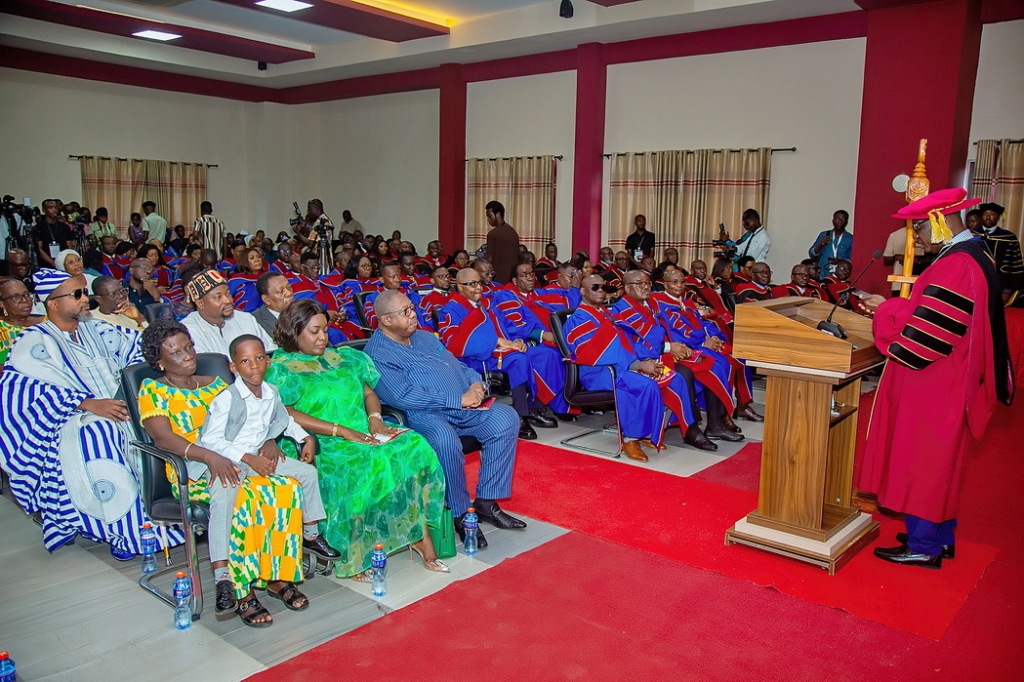
Dr Donkor, who also serves as President and Chairman of the Board of Directors of the ECOWAS Bank for Investment and Development (EBID), made these remarks at the inaugural graduation ceremony of NiBS in Accra on Saturday. The event, themed “Leaders of Thought, Architects of Growth,” marked a milestone in African higher education, as the university graduated 58 members of its pioneering cohort of doctoral scholars—each poised to contribute to the continent’s transformation.
He emphasised that EBID, as an institution deeply invested in Africa’s progress, recognises the critical importance of nurturing homegrown expertise. “When we invest in developing Africa's human potential,” he noted, “we lay the strongest foundation for sustainable growth and regional integration.”
To that end, EBID has channelled millions of dollars into educational development projects across its member states, underscoring the central role that education plays in advancing economic development in the sub-region.
The NiBS graduating class included scholars from twelve African nations, who earned terminal degrees in business innovation, financial technology, and development policy. The ceremony also marked the launch of the NiBS Global Alumni Network, designed to foster collaboration among graduates who are now well-positioned to influence policy, business, and social development across the continent.
About EBID
The ECOWAS Bank for Investment and Development (EBID) is the development finance institution of the Economic Community of West African States (ECOWAS), comprising fifteen member states: Benin, Burkina Faso, Cape Verde, Côte d’Ivoire, The Gambia, Ghana, Guinea, Guinea-Bissau, Liberia, Mali, Niger, Nigeria, Senegal, Sierra Leone, and Togo. Headquartered in Lomé, Togo, the Bank finances development projects across a broad spectrum of sectors including infrastructure, basic amenities, rural development, the environment, industry, and social services. EBID operates through both private and public sector windows, offering financial instruments such as long-, medium-, and short-term loans, equity participation, lines of credit, refinancing, and financial engineering services.
Latest Stories
-
The Ghanaian prophet and the mysterious death of his scottish wife Charmain Speirs
37 minutes -
Nearly 400 sentenced in Nigeria for links to militant Islamists
59 minutes -
Ghana’s recovery supported by gold strength despite global oil price pressures – Standard Bank Research
1 hour -
Kwaku Azar writes: A-G vs OSP
2 hours -
Mfantsipim–Adisadel rivalry built excellence, not division – Sam Jonah
2 hours -
Vice President launches Mfantsipim’s 150 years of shaping Ghana’s greatest mind
2 hours -
I assure Otumfuo, Mahama will join him to commission KNUST Teaching Hospital by end of this year – Haruna Iddrisu
3 hours -
Barcelona dominate derby to extend La Liga lead
3 hours -
Gov’t to roll out free special education for persons with disabilities from July 1 – Education Minister
3 hours -
Importers and Exporters Association declares full support for Publican AI port system
4 hours -
“We used it to test our officiating officials’ readiness” – Bawah Fuseini after CAA Athletics event
4 hours -
Volleyball emerges as Ghana’s fastest rising sport
4 hours -
National Sports Fund needs strong leadership from the top – Administrator David Wuaku
4 hours -
JoySports Exclusive: Steve McLaren in talks with GFA after expressing interest in Black Stars job
4 hours -
Fire guts auto parts warehouse at Bubuashie, one fire officer injured
4 hours