

Audio By Carbonatix
Thirty staff from the Agriculture Ministry, Resilience Against Climate Change (REACH) and GIZ/ComCashew have participated in Technical Training Programme on Cashew from March 22 to 26, in Sunyani.
This one-week training was organized by the Competitive Cashew initiative (GIZ/ComCashew), the Ministry of Food and Agriculture (MoFA), and the African Cashew Alliance (ACA), with funding from the Swiss State Secretariat for Economic Affairs (SECO) and the German Federal Ministry for Economic Cooperation and Development (BMZ).
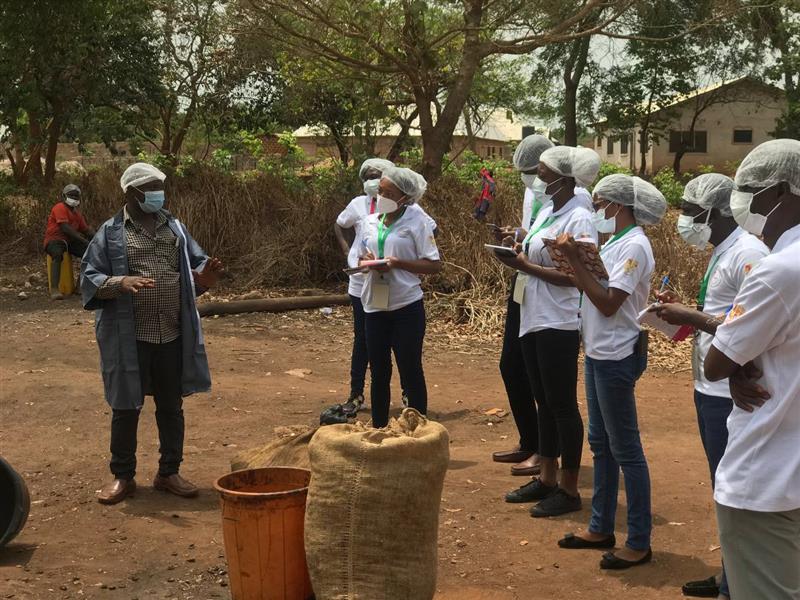
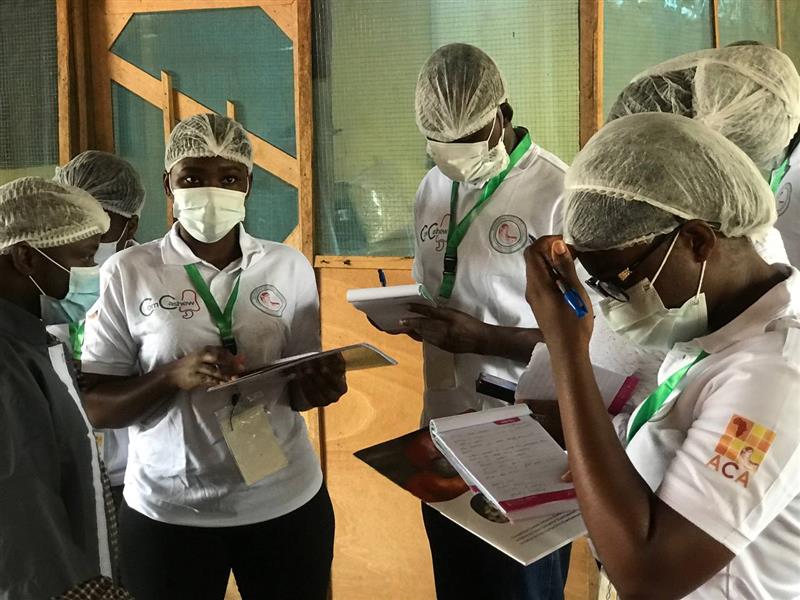
The Technical training sought to provide cashew value chain actors with theoretical knowledge and equip them with practical skills on cashew.
Aimed at further promoting the competitiveness of African cashew, the training covered the cashew value chain concept, cashew market dynamics, marketing and financing mechanisms, and the development of training materials.
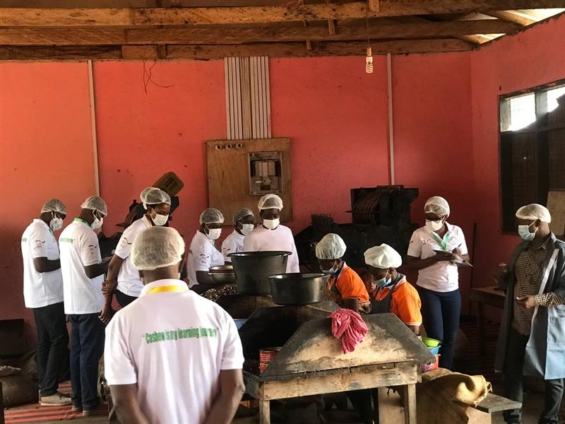
The highlight of the week’s activities was a visit to the Kabile Cashew Farmers’ Cooperative at Kabile in the Bono region, where participants had the first-hand experience of cashew kernel processing.
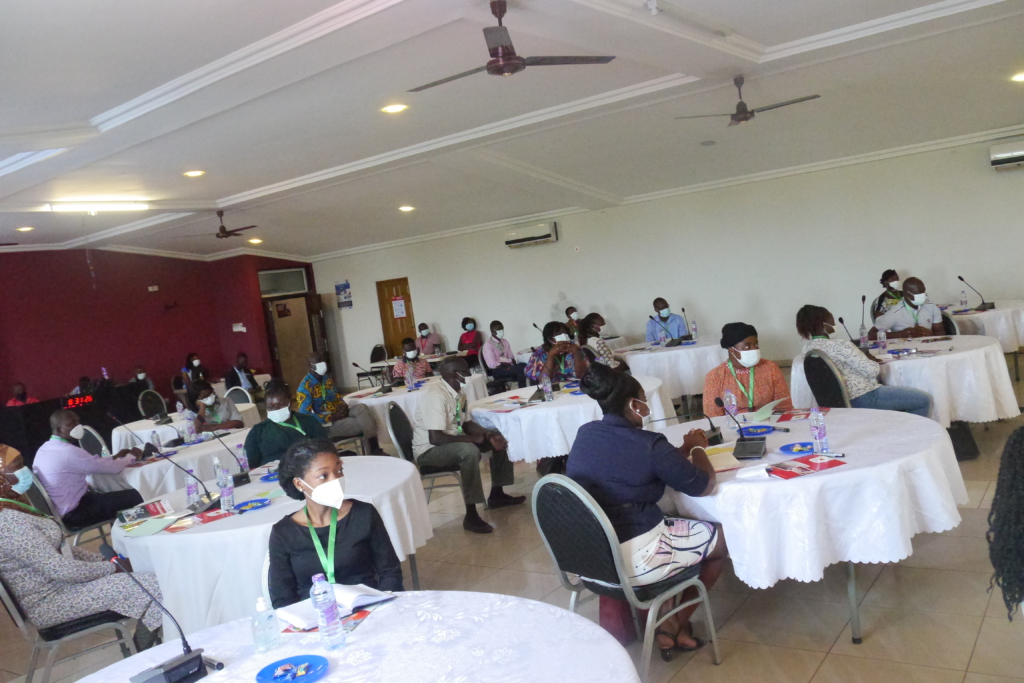
In her speech at the opening ceremony of the training, Anne Schick, Deputy Head of Cooperation at SECO, said, “Through the economic cooperation activities of SECO, Switzerland aims at improving livelihoods in Ghana. In the cashew sector, we believe that this is possible through a mix of the right formulation and implementation of new favorable framework conditions and policies, capacity building, and the promotion of local processing."
"Through GIZ/ComCashew, we have facilitated capacity-building activities for industry actors. These include the Cashew Master Training Programme, training on access to finance as well as cashew apple processing. We have also supported the development of curricula and learning materials on cashew in the ATVET space, as well as supported training providers from agricultural and technical institutes all over Ghana to implement these curricula.”
In terms of creating an enabling environment for sector actors, SECO, through GIZ/ComCashew has supported sector actors in processes leading up to the passage of the Tree Crop Development Act and the inauguration of the Authority.
A cashew dialogue platform has also been formed to bring actors along the entire chain together to discuss pertinent issues and share knowledge relating to the sector.
The Swiss State Secretariat for Economic Affairs (SECO) is the federal government’s centre of excellence for all core issues relating to economic and labour market policy.
Its main aim is to contribute to sustained economic growth, high employment, and fair working conditions, by creating the necessary regulatory, economic, and foreign policy framework in their countries of intervention.
GIZ/ ComCashew is a private-public partnership project under the implementation of the Deutsche Gesellschaft für Internationale Zusammenarbeit (GIZ) GmbH.
Currently, in its third phase, ComCashew focuses on building a sustainable cashew value chain and increasing the competitiveness of African cashew production and processing.
Working in six (6) countries – Benin, Burkina Faso, Côte d’Ivoire, Ghana, Mozambique, and Sierra Leone, GIZ/ComCashew’s objectives also include advocacy for favorable sector policies. The regional program’s activities are mainly funded by BMZ and SECO.
Over the years, SECO has shown interest in capacity-building activities in the cashew sector in Ghana and in the improvement of people’s livelihood.
In this vein, SECO has funded the development of curricula and learning materials on cashew under the Agricultural Technical Vocational Education and Training (ATVET) aimed at further building capacities of people who are interested in working in the value chain.
Other capacity-building programmes funded by SECO and BMZ include the Cashew Master Training Programme which has produced over 700 cashew experts from 19 countries, Access to Finance Forum for processors, and Food Safety and Quality Standards. This has resulted in the creation of a pool of experts on the crop.
After this Technical training, participants are expected to return to their respective institutions and have a multiplier effect on the cashew industry by sharing their knowledge and experiences gained from the training.
Latest Stories
-
Central Regional Minister urges use of religious platforms to change environmental, sanitation practices
5 minutes -
Henry Kweku Banning
5 minutes -
Execution of US murderer Christa Pike halted an hour before it was due to happen
7 minutes -
GoldBod generates US$1.87bn in FX in September, exceeds monthly target
11 minutes -
SOE comments controversy: ‘We must never abandon our humanity because of judicial office’ – CJ
20 minutes -
Samuel Kojo Brace declares intention to contest NPP parliamentary primary in Ahanta West
22 minutes -
Dr Apaak calls for evidence-based education response to emergencies
25 minutes -
Pilot may have sought to crash Israel-bound flight after stabbing other pilot, Netanyahu says
30 minutes -
Report flags potential money laundering, terrorist financing risks among Ghana’s NGOs
30 minutes -
Breast Cancer Awareness Month launched: 2,695 women die from breast cancer annually — Dr Ann-Dadzie
38 minutes -
Mahama’s proposed airline looks to South America, Caribbean as Ghana confronts mounting drug trafficking cases
53 minutes -
5% progress on Suame Interchange Phase One inadequate – Roads Minister tasks contractor to speed up work
56 minutes -
Photos: Vice President joins GAAS Awards to celebrate outstanding women leaders
57 minutes -
OSP vs Ken Ofori-Atta, SML and others: Court gives OSP four more weeks to serve Ofori-Atta with summons
58 minutes -
High Commission sends caution to Ghanaians in South Africa ahead of planned protests
1 hour