

Audio By Carbonatix
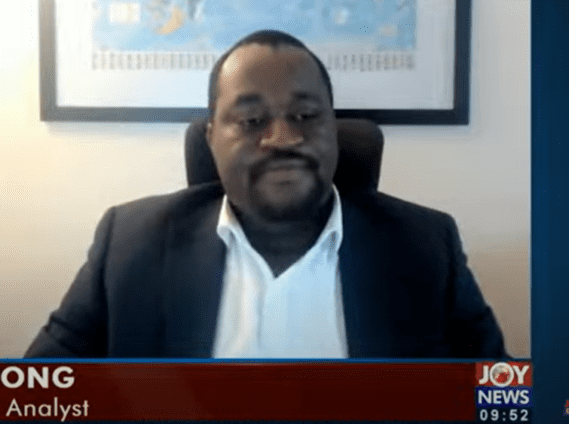
Economist and Political Risk Analyst, Dr. Theophilus Theo Acheampong has argued that jurisdictions and firms that promote sexual inclusiveness enjoy a positive net economic benefit for it.
He said this in rebuttal to a statement passed by Ningo-Prampram MP which sought to suggest that sexual inclusiveness at workplaces etc was costly and detrimental to the economic situation of states and firms.
Speaking on JoyNews’ PM Express, Thursday, Dr. Theophilus Acheampong noted that though he agrees that there will be some cost to the promotion of sexual inclusive policies, researched works showed that these sexual inclusive policies often came with positive economic benefits for states and firms that enforced them.
He explained that “on the economic cost argument, I have had a chance to look at a lot of the published work within the academic literature, not in Ghana, in other jurisdictions. And actually, in places where they have implemented some of these, you know, more inclusive type of policies the net economic benefit after a period of time, however, they measured it is actually positive.
“So I just think it’s a point to clarify there. It does come with a cost and I fully support Sam on that point, but over a longer period of time when you look at the evidence base from the published work, you do see some evidence that actually indicates that the economic benefit is net positive.”
“Inclusiveness or diversity in the workplace will actually translate into improved financial outcomes for the firm and the data clearly supports this,” he emphasized.
Citing research papers, the economist stated that they tend to show that financial outcomes for firms have been positive after their enforcement of more inclusive laws.
“And one of the works which I found which were published just recently in March of 2021 looked at how the market perception of state-level same-sex marriage legalization impacted certain firms or reactions to firms headquartered in a particular state.
“And they state ‘we find positive market reactions to firms headquartered in states that legally recognize marriage equality, Further we find that the market views companies more favourably in (1) first-mover states before the Supreme Court ruling of United States vs Windsor and (2) states that have stronger anti-discrimination laws for the LGBT community,” he said.
Latest Stories
-
Angry Tema Community 25 residents threaten to sleep at GWL over water shortage
8 minutes -
BoG takes financial literacy drive to Techiman, vows to protect depositors
8 minutes -
‘Stop the distractions’ – Akosua Manu demands answers over GH¢49.7m South Africa evacuation cost
9 minutes -
Formula 1 to return to Africa with Rwanda Grand Prix in early 2030s
16 minutes -
Mahama says Ghana is safer today as he commissions 85-bed ward at Police Hospital
20 minutes -
LA 2028: Black Queens face Zambia in final Olympic qualifier
29 minutes -
WAFU Zone B: Black Starlets seal semifinal place with 3-1 win over Benin
36 minutes -
Black Queens thrash Mauritius 7-0 to advance 10-0 on aggregate in Olympic Qualifiers
45 minutes -
Kaizen as a strategic pathway for micro business scale-up in Ghana
49 minutes -
Minister orders suspension of Obuasi SHS headmaster over alleged sexual misconduct following JoyNews investigation
53 minutes -
Over 38,000 commercial, 150,000 residential customers unbilled – Ghana Water MD
1 hour -
Several injured as Sprinter bus collides with ‘trotro’ at Odorkor
1 hour -
Ghana records progress on reparatory justice agenda – Ablakwa
2 hours -
Mahama commissions Christian Tetteh Yohuno Ward Complex at Police Hospital
2 hours -
Vice President calls for wider access to Ghana’s political party histories
2 hours