

Audio By Carbonatix
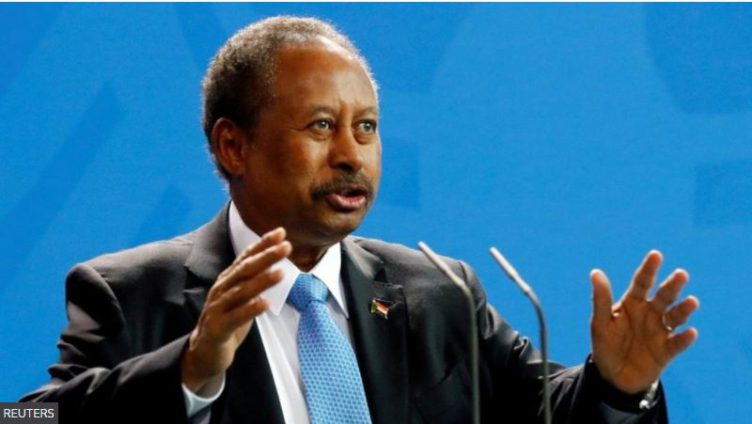
Sudan's ousted Prime Minister Abdalla Hamdok is to be reinstated, after being placed under house arrest during a sudden military coup last month.
All political detainees will be released as part of a new agreement between the military, civilian leaders and ex-rebel groups, mediators said.
On October 25, Sudan's military general suddenly declared a state of emergency and dissolved civilian leadership.
It sparked weeks of mass protests that left scores of people dead.
The deal was reached late on Saturday night, and is to be signed into action later on Sunday, the head of Sudan's Umma Party, Fadlallah Burma Nasir, confirmed.
The group of mediators, which included academics, journalists and politicians, released a statement outlining the terms of the agreement.
It says that Mr Hamdok and his cabinet members who were detained during the coup will be released and that he will return to his position as prime minister.
It also says the rules governing Sudan's transition towards democracy will be restored.
Sudan's military and civilian leaders have been in a fractious power sharing arrangement since August 2019, after the country's long-term authoritarian president, Omar al-Bashir, was overthrown.
That arrangement was thrown into crisis last month when military leader, Gen Abdel Fattah Abdelrahman Burhan, dissolved the civilian arm of the government and arrested its leaders.
He said it was not a "coup", but a move needed to prevent a civil war that was threatening to erupt because political groups had been inciting civilians against the security forces. He appointed himself as the head of a new ruling council, with military and ex-rebel leaders by his side.
Across many cities, including the capital Khartoum, anti-coup protesters put up makeshift barricades and burnt piles of tyres, angry that their already-fragile path to democracy had been hijacked. The army responded violently, and are accused of shooting protesters.
The new agreement comes ahead of more rallies that were planned for Sunday.
The international community condemned the coup and demanded the release of political prisoners. The World Bank froze its aid to Sudan, and the African Union (AU) suspended the country's membership of the bloc.
Coups are not uncommon in Sudan, and there have been several failed attempts since 2019, including one just a few weeks before the latest power grab.
Latest Stories
-
GoldBod recovers GH¢38.7m of GH¢55.8m outstanding receivables; remainder subject to legal action – Sammy Gyamfi
34 seconds -
GEXIM Bank donates GH¢200,000 worth of medical equipment to Korle-Bu Child Health Department
4 minutes -
Majority rejects Minority’s claims over GH¢49.7m South Africa evacuation, calls for forensic probe
5 minutes -
GEXIM urges banks to support refurbishment of Korle-Bu Teaching Hospital’s Child Health Department
9 minutes -
Don’t appoint your cheerleader as referee
13 minutes -
Ghana needs stronger international cooperation to fight cybercrime – CSA
15 minutes -
CSA warns of growing cyber threats as Ghana’s digital dependence increases
22 minutes -
USTED dean warns GAUA strike could disrupt Ghana’s restored academic calendar
34 minutes -
Bechem meat processing factory 50% complete, set for March 2027 completion – Kwakye Ofosu
48 minutes -
NDC can appoint whoever they want to EC, but Ghanaians will make a decision in 2028 – Titus Glover
53 minutes -
GoldBod initiative has created over 1,300 public and private sector jobs – Sammy Gyamfi
56 minutes -
Financial wellness key to retaining Ghana’s skilled workforce – Merban Capital CEO, Benjamin Ackah-Nyamike
58 minutes -
Sidney Nii Oko Bampoe & Isaac Akuetteh Addo
1 hour -
Haruna Iddrisu calls for ‘Big Push’ investment in health, education, sports and agriculture
1 hour -
Ghanaian youngster Prince Amoako Jnr reaches new milestone with FC Nordsjælland
1 hour