

Audio By Carbonatix
Talithakum Ghana Network, a branch of the international Catholic network fighting modern slavery, has raised alarm over what it says is the persisting human trafficking canker in Ghana.
It says human trafficking continues to flourish in Ghana’s rural and urban communities, fueled by poverty, systemic neglect, and a "culture of silence”.
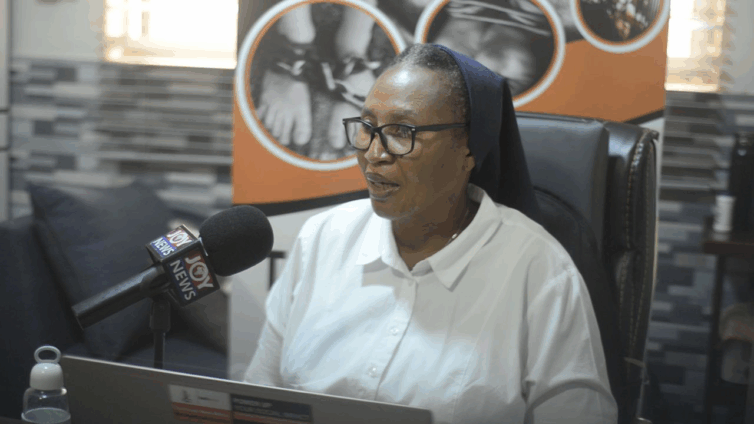
At a recent awareness campaign in observance of the International Day Against Human Trafficking, the Network's national coordinator, Reverend Sister Oliviah Umoh, offered a sobering account of the depth and complexity of the issue.
“Until I took up this position, I didn’t realise how widespread it is. “It’s not just in remote areas. It’s in Accra, it’s in Tamale. It’s in homes, it’s in guesthouses, and it’s happening right under our noses,” she said.
Talithakum, comprising Catholic priests and nuns from various congregations, seeks to harness the global reach of religious communities to combat human trafficking.
The network in Ghana plays a vital role in identifying, rescuing, and advocating for victims, many of whom are young women trafficked for forced sex work or labor.
Reverend Sister Umoh described a troubling trend, that despite rising awareness, many families knowingly allow or even support their daughters to be trafficked, often under the false promise of work opportunities abroad.
The problem, she added, is systemic. Police officers, landlords, and community leaders sometimes rent out facilities to traffickers or ignore clear signs of exploitation.
Parents are failing. A mother will hear rumors that her daughter is being taken abroad for prostitution and still encourage her to go because of poverty.
“There are guesthouses, homes, and hotels where trafficked girls are kept and forced into prostitution. People know and say nothing. Even law enforcement is sometimes complicit,” she said.
July’s International Day Against Human Trafficking serves as an annual rallying point for Talithakum and its partners to raise awareness, build collaborations, and call for policy reforms.
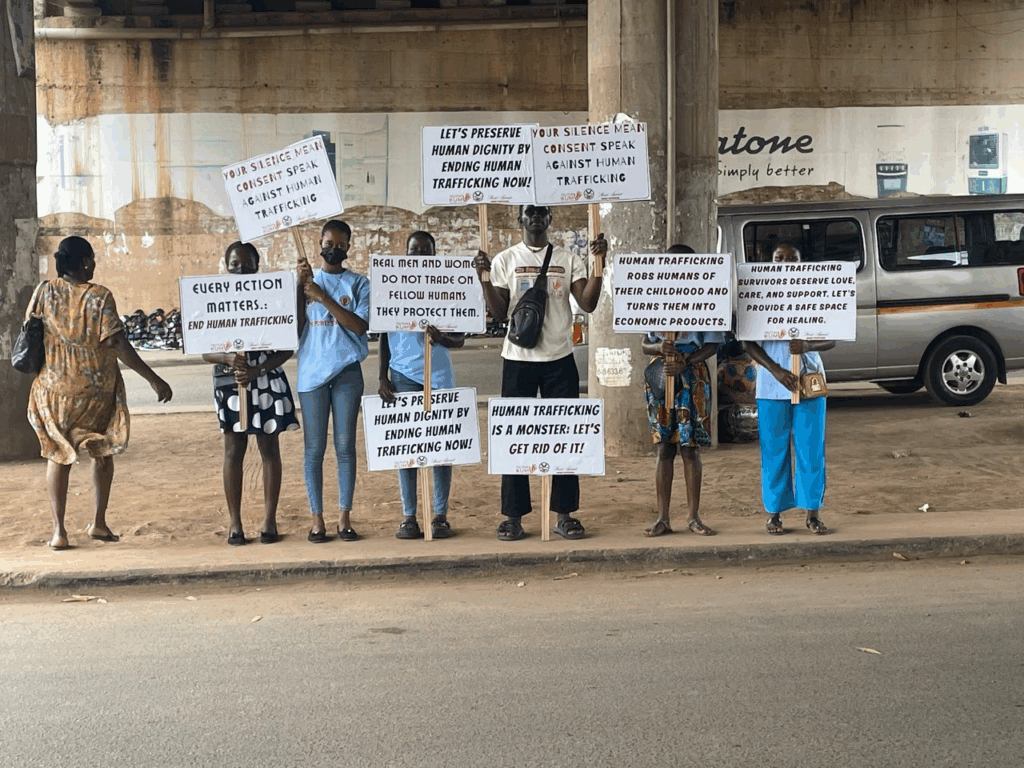
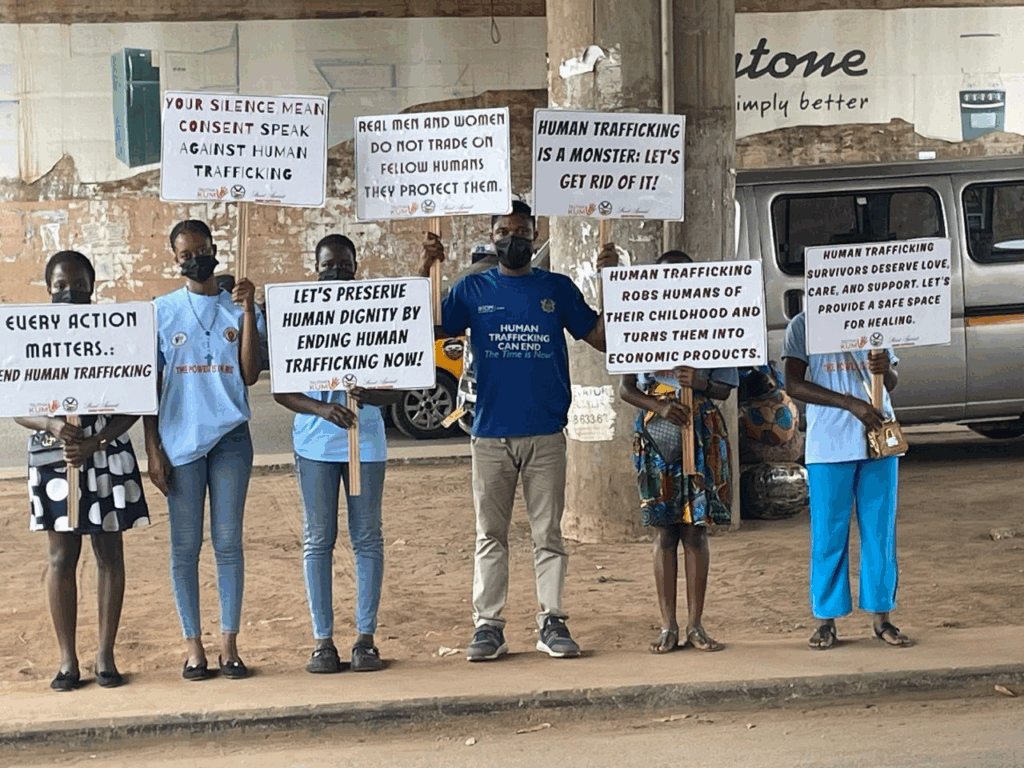
Talithakum Ghana Network stormed the streets with placards with strong wording to send messages of advocacy and action.
Yet Sister Umoh stressed that one day of action is not enough and concluded with a stark warning.
“Human trafficking happens every hour. We need everyone, including governments, churches, civil society, and individuals, to take up this fight every day.
“As a country, we are all failing, from the state, to families, to society. If we do not mobilize, human beings will continue to be sold like commodities, and the traffickers will continue to win,” she said.
Latest Stories
-
Inflation to average 11.3% in 2027 – Fitch Solutions
23 minutes -
I didn’t campaign for NDC to come and do this nonsense – Kpebu on EOCO
25 minutes -
Fitch Solutions maintains its policy rate forecast of 14% by December 2026
31 minutes -
Diaspora Nasara Caucus congratulates Mohammed Ali Suraj, new NPP executives
2 hours -
Dr Antwi-Boasiako’s cybersecurity book showcased at UN crime prevention congress
2 hours -
We will empower the grassroots and protect every vote – NPP’s 1st Vice Chair Kojo Bamba
2 hours -
I do not see myself as better than anyone – NPP’s 1st Vice Chair Kojo Bamba
3 hours -
Police blur the line between invitations and arrests – Reindorf Twumasi Ankrah
3 hours -
Turning invitations into arrests is making citizens reluctant to assist police – Twumasi Ankrah
4 hours -
The Traffitech-GH SMS spot-fine system: The good, the sad, and the funny – Bright Simons writes
4 hours -
Hawa Koomson pledges experienced and mature leadership of NPP women’s wing
5 hours -
Young woman found dead at Kasoa Peace Town
6 hours -
Playback: The Law examined lawful arrest in Ghana
6 hours -
Mahama urges African governments to treat healthcare as an investment, not budget cost
7 hours -
Bawumia congratulates John Boadu and new NPP executives, pledges support ahead of 2028
7 hours