

Audio By Carbonatix
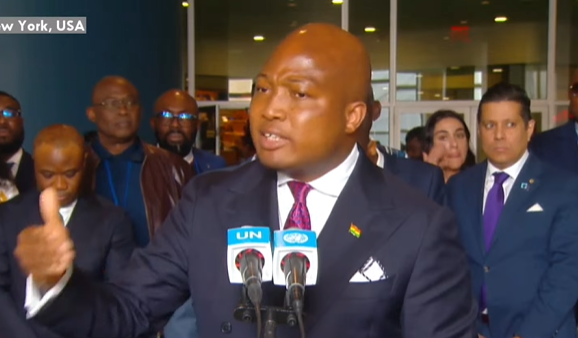
Minister for Foreign Affairs, Samuel Okudzeto Ablakwa, has declared that the trafficking and enslavement of Africans constitute the gravest crime against humanity, following the adoption of a landmark United Nations resolution led by Ghana.
Speaking in the United States after the United Nations approved the resolution on Wednesday, March 25, Mr Ablakwa said the global body had taken a clear and decisive moral position.
“Today, through this resolution, the world has spoken with clarity and truth. We have affirmed that the trafficking of enslaved Africans and their racialised chattel enslavement is the gravest crime against humanity,” he said.
He stated that the scale, structure, and enduring consequences of the transatlantic slave trade demand recognition at the highest level of global conscience, stressing that such acknowledgement is essential for healing and for preventing similar atrocities in the future.
According to him, the resolution is not intended to apportion blame or reopen historical wounds, but rather to ensure that the realities of slavery are neither denied nor forgotten.
“This resolution is not about apportioning blame across generations or nations. It is not about reopening old wounds. It is about ensuring that those wounds are neither forgotten nor denied,” he stated.
Mr Ablakwa noted that while history is complex and layered, certain events stand apart due to their scale and lasting impact on humanity.
He said recognising the transatlantic slave trade in this light does not diminish other historical experiences but strengthens collective moral awareness.
“It recognises that even within complexity, there are moments in history defined by their scale, their systemisation, and their impact on humanity,” he explained.
He added that the adoption of the resolution reinforces a renewed global commitment to remembrance, education, dialogue, and cooperation.
“What we have achieved today helps all of us in our renewed commitment to remembrance so that future generations inherit truth, not silence… and to cooperation so that we address the enduring legacies of history in ways that unite rather than divide,” he said.
The resolution, spearheaded by Ghana, has been widely described as a major step in advancing global conversations on historical justice and the long-term effects of slavery.
Latest Stories
-
National Sports Fund needs strong leadership from the top – Administrator David Wuaku
3 minutes -
JoySports Exclusive: Steve McLaren in talks with GFA after expressing interest in Black Stars job
8 minutes -
Fire guts auto parts warehouse at Bubuashie, one fire officer injured
15 minutes -
I owe my victory to coach Ofori Asare – Allotey after winning WBA Africa Gold Super Flyweight belt
19 minutes -
Church of Pentecost supports over 2,000 BECE candidates in Obuasi with career guidance seminar
2 hours -
Brandon Asante and Coventry all but promoted to Premier League despite Sheffield Wednesday draw
2 hours -
GPL 2025/26: Late Kwartemaa strike downs Hearts in Tema
2 hours -
Ghana Faces Sierra Leone Moment as Prosecutorial Powers come under strain
3 hours -
Don’t consume fish or seafood from Tema Shipyard until further notice – FDA warns
3 hours -
Why volunteering might be Africa’s most underrated career accelerator
3 hours -
ActionAid Ghana raises concern over gender gaps in Feed Ghana Programme
3 hours -
Windstorm wreaks havoc in Gushegu, displacing nearly 2,000 residents and damaging schools
3 hours -
Friends of Bridget Bonnie Marks her 35th birthday with donation to Kasseh Model Health Centre
4 hours -
From Ekumfi Kokodo to the Pulpit Stage: Essi Donkor’s gospel journey takes shape
4 hours -
Landfilling waste management creates no value, it’s an economic waste
4 hours