

Audio By Carbonatix
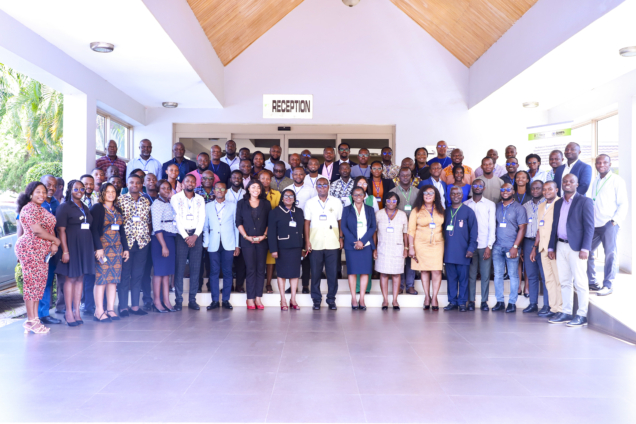
The Regional Transport Research and Education Centre Kumasi (TRECK) at the Kwame Nkrumah University of Science and Technology (KNUST), Kumasi in collaboration with the World Bank and the GIMPA Training and Consultancy, has rolled out a professional certificate course on Environmental and Social Risk Management (ESRM), focusing on land acquisition and involuntary resettlement.
The short course aims to equip professionals with the knowledge and tools to effectively manage risks and impacts related to development-induced displacement and land acquisition, a key challenges in the implementation of infrastructure and investment projects.
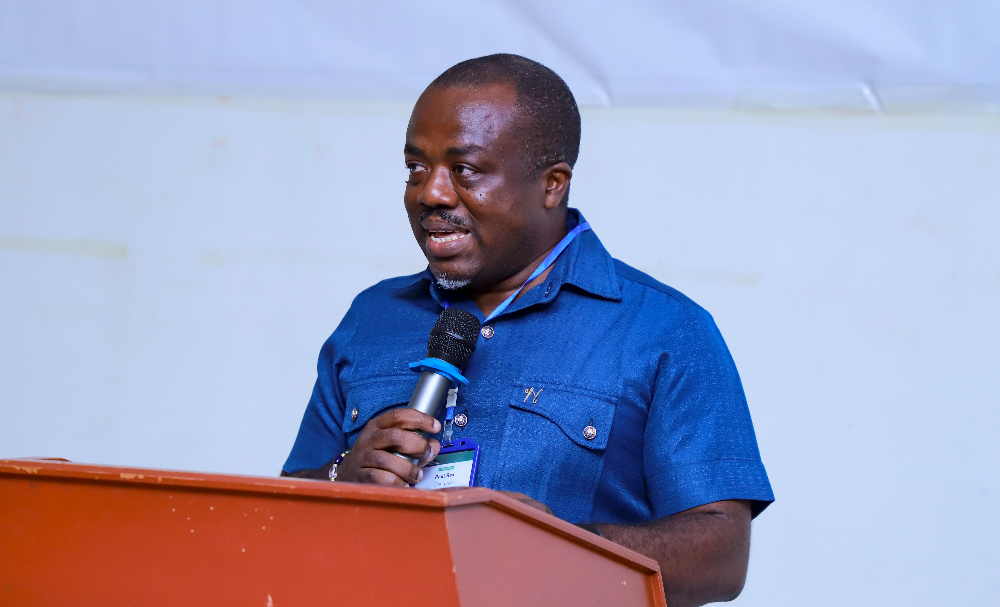
Speaking at the launch, Dr. Paul Rex Danquah, Senior Consultant at GIMPA Training and Consultancy, emphasised the relevance of the course in addressing long-standing land disputes in Ghana.
“Some of the key problems in Ghana are centred around land acquisition and resettlement. It’s our expectation that after this training, participants will be well equipped to go back to their institutions and drive change,” he said.
The course targets project managers, staff of ministries and government agencies, consultants, regulators, private sector practitioners, development workers, researchers, and students.
The initiative, first in a series of ESRM training programmes aimed at building capacity across Africa. Plans are underway to extend the programme to countries such as Liberia, Sierra Leone, and Nigeria.
Mr. Emmanuel Anyang Abeka, a representative from the World Bank, reaffirmed the Bank’s support for the initiative.
“We are supporting the sectors of excellence to move into the West African sub-region. We are currently working with them to target Liberia and Sudan, and eventually South Sudan. The Bank is committed to supporting the Ghana Centre of Excellence to become sustainable and stand as one of the best in the country in terms of training,” he noted.

Prof. Helen Essandoh, Director of TRECK-KNUST, highlighted the critical role of ESRM in development planning, stressing the importance of identifying and engaging affected communities during land acquisition processes.
“When you want to implement a project, you need space and that space is usually occupied. If the people who live there are not properly consulted and resettled, disputes can arise. This course is crucial in building the capacity of professionals to manage such risks responsibly,” she said.
TRECK-KNUST is a World Bank-recognised African Centre of Excellence in Transport and Logistics, dedicated to research, training, and capacity building within the transport and development sectors.
Latest Stories
-
Mr President, Ghana was mentioned at the UN; why aren’t we talking about it?
2 hours -
Accra to convene Africa’s regulators and markets on tokenisation at AVAS 2026
2 hours -
The Paradox of Plenty — When every smartphone becomes a newsroom
2 hours -
GTA sensitises taxi drivers in ‘Know Ghana’ tourism campaign
4 hours -
Archbishop Agyinasare calls for responsible speech amid growing social media abuse
4 hours -
‘It will be inexcusable for gov’t not to honour payment of teachers’ arrears by 30th October’ – Haruna Iddrisu
4 hours -
Forbes’ World’s Best Employers 2026: No Ghanaian firm ranked among 900 companies
4 hours -
Electronic processing of teachers’ data: ‘The decision is the Controller’s’ – GES boss
4 hours -
Teachers’ Strike: Haruna Iddrisu questions paper-based processing of promoted teachers’ data
4 hours -
Savannah Region: Kunfusi bridge collapses again, leaving nearly 4,000 residents cut off
4 hours -
Teachers’ strike: GES targets Monday deadline to submit promotion data to Controller
4 hours -
Inflation to average 11.3% in 2027 – Fitch Solutions
5 hours -
‘I didn’t campaign for NDC to come and do this nonsense’ – Kpebu on EOCO’s conduct
5 hours -
Fitch Solutions maintains policy rate forecast of 14% by December 2026
5 hours -
Diaspora Nasara Caucus congratulates Mohammed Ali Suraj, new NPP executives
7 hours