

Audio By Carbonatix
When the Minister of Finance stood up to present the 2026 Mid-Year Budget Review, I listened closely, the way many of us in this sector do every year. Health got a mention.
Education got a mention. Roads got a mention. Agriculture got a mention. Tourism, Culture and the Creative Arts, the sector that keeps our hotels open, our tour guides working, our airlines flying, our artisans selling and our musicians performing, was not mentioned at all. Not one line was set aside for it.
This is not a small oversight. I have said for years that tourism is one of the pillars we need if we are serious about moving Ghana's economy away from depending on just a few exports. When a sector this important is left completely out of a major budget statement, it tells you exactly where that sector sits in the country's real spending priorities, no matter how good it sounds in speeches.
Leaving tourism out of the budget was not an accident. It was a choice. And it is one I believe we must work together to reverse in future budgets.
A SECTOR THAT DESERVES MORE SUPPORT
I have watched this sector grow over the past ten years, often against the odds. The Year of Return in 2019 turned Ghana into a symbol of homecoming for the African diaspora across the world. Beyond the Return carried that momentum forward. Our heritage sites, beaches, festivals and hospitality businesses still pull in international attention today, but let's be honest about why: it is mostly private effort, diaspora goodwill and the sheer hard work of operators, not steady government investment, that keeps this going. Imagine what this sector could do if we treated it as the genuine growth engine it is and funded it that way. When the Black Star Experience was launched at the Black Star Square, many of us felt we were finally about to push things a notch higher.
OUR NEIGHBOURS ARE NOT STANDING STILL
Ghana does not compete for international visitors, diaspora tourists or tourism investment on its own. We are up against our neighbours, and several of them are moving fast.
The Gambia recently held a national Tourism Stakeholder Convergence to launch a new, government-approved Marketing, Branding and Investment Promotion Strategy under what it now calls Destination Gambia. It has adopted a Team Gambia approach that puts the private sector at the centre of its international promotion, including a bigger presence at major travel fairs like FITUR. The Gambia is also preparing to host the West African Food Festival this October, using food and cuisine as a fresh way to sell its culture to the world.
Senegal, which will host the 2026 Youth Olympic Games, is running a Vision 2050 tourism master plan worth trillions of CFA francs. It is built around one national campaign: Destination Senegal, Land of Teranga. Dakar, Saint-Louis, Saly and Ziguinchor are being developed and marketed together as a single national offer, backed by real government money going into coastal infrastructure.
South Africa has gone further still. Its Department of Tourism was given a budget of R2.54 billion for the current financial year, with money deliberately directed to provinces, townships and small towns that had previously been overlooked. It also introduced a new Electronic Travel Authorization to make entry easier for visitors. The results speak for themselves: South Africa welcomed a record 10.5 million international visitors in 2025, and domestic travellers alone generated more than R111 billion in tourism revenue that same year. That is what steady, well-funded political commitment can do.
Rwanda tells the same story. Its tourism revenue climbed to $685 million in 2025, up from $647 million the year before, on the back of 1.49 million visitor arrivals. Gorilla trekking alone brought in $248 million, and its conference and events business (MICE) grew to nearly $95 million. Rwanda has built this through years of disciplined, government-backed brand-building, including its well-known Visit Rwanda partnerships that put the country's name in front of a global audience through sport. It is a small country with a fraction of Ghana's natural and cultural assets, yet it keeps growing its tourism revenue year after year because it has decided, deliberately, to invest in the brand and protect that investment.
Nigeria has entered this race with real seriousness too. Its Ipada initiative, a Yoruba word meaning return, is a structured, multi-year programme to bring people of African descent home, positioning Lagos as a gateway for the diaspora and for global admirers of African culture. This follows the very idea that Ghana pioneered with the Year of Return. Nigeria's Diaspora Commission and its Tourism Development Authority have since partnered to rebrand the country's tourism assets and attract fresh investment, and Nigeria has launched a national compendium documenting the tourism and investment potential of all thirty-six of its states.
Ghana was the country that first showed the world what diaspora tourism could achieve. We cannot afford to sit back and watch other nations put real money behind the very idea Ghana gave to the whole continent.
WHAT GHANA STANDS TO LOSE
We do not have the luxury of resting on what we have already achieved while The Gambia, Senegal, South Africa, Rwanda and Nigeria pour real investment into the same market we helped build. Every dollar The Gambia spends sharpening its brand, every rand South Africa puts into provincial tourism infrastructure, every franc Rwanda spends protecting its global visibility, and every naira Nigeria commits to Ipada is chasing the same international traveller, the same diaspora family and the same conference delegate that Ghana also wants to attract.
A sector left out of the Mid-Year Budget Review is a sector with no real money to market itself abroad, no real funds to maintain its heritage and cultural sites, no support to train the guides, chefs and hospitality workers who represent Ghana to the world, and no seat at the table when the country decides what matters most. The over reliance on the Tourism Development Fund administered by the Ghana Tourism Authority must give way to major national budget funding similar to what the “big push” is to our roads.
A DIRECT REQUEST TO THE MINISTRY OF FINANCE
This is a respectful and direct appeal to the Honourable Minister of Finance and to the Ministry as a whole: please take another look at what is allocated to the Ministry of Tourism, Culture and Creative Arts. Give this sector a clear, protected line in the national budget, not scraps from whatever is left over, but a deliberate investment that matches what it has already proven it can do: create jobs, earn foreign exchange, and put young people to work.
The people who make up Ghana's tourism, culture and creative arts community, hoteliers, tour operators, festival organisers, musicians, artisans and heritage custodians, are ready to deliver. What this sector needs now is not another strategy document sitting on a shelf. It needs steady, protected and predictable funding, in line with what our neighbours are already committing.
A CALL TO THE SECTOR
Here is why this matters, in plain numbers. In 2025 alone, Ghana welcomed over 1.3 million international visitors and earned an estimated $4.34 billion from tourism, one of our largest sources of foreign exchange, alongside gold, cocoa and oil. But look closely, and the warning signs are there: that figure is actually down from $4.82 billion in 2024, not because fewer people came, but because the average visitor is now spending less, about $3,320 in 2025, down from $3,743 the year before. That is what happens when a sector is left to survive on its own momentum instead of being fed with fresh investment, better products and stronger marketing. Meanwhile, domestic travel is doing its part, with almost 1.8 million domestic visits recorded across the country in the same year, proof that Ghanaians themselves believe in what we have.
This is the story we should be telling the Ministry of Finance: a sector already worth billions of dollars, already creating jobs in every region, already competing on the same stage as gold and cocoa, but being asked to do it all on it’s own. That is not a funding gap we can afford to ignore.
So to everyone working in tourism, hospitality, culture and the creative arts, this is our moment to speak with one voice. Let's put the jobs, the numbers and the growth potential in front of the Ministry of Finance in terms it cannot brush aside. Ghana's tourism, culture and creative arts story is too valuable, and too hard-won, to be left out of the very budget that is meant to secure its future.
-
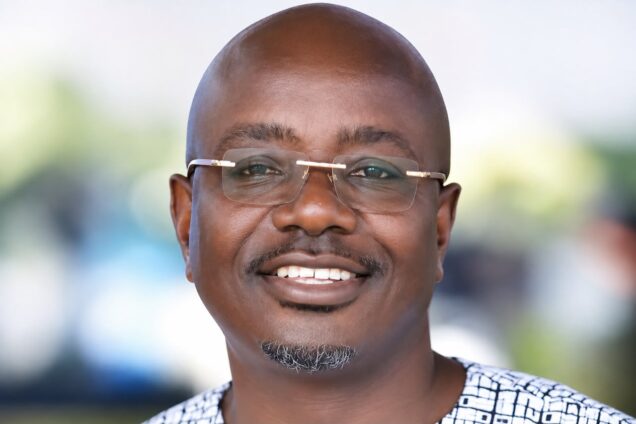
The author, Akwasi Agyeman, is the Founder and CEO of AFCHAT and former CEO of the Ghana Tourism Authority.
Latest Stories
-
Don’t let speed of information become your judgement – CJ tells new lawyers
33 minutes -
World Cup visa scandal: People have leveraged public office to facilitate fraud – Senyo Hosi
38 minutes -
Glut! Farmers count losses as prices crash, customers happy
1 hour -
GSA postpones auction of unserviceable vehicles
1 hour -
Man charged with attempted murder after stabbing
1 hour -
World Cup visa scandal: Senyo Hosi says issue goes beyond calls for Sports Minister’s resignation
1 hour -
Yaw Ampofo Ankrah hasn’t taken or received any money to facilitate visas – Lawyer insists
2 hours -
World Cup visa scandal: Senyo Hosi urges focus on constitutional accountability
2 hours -
La Beach demolition: Senyo Hosi condemns lack of consultation
2 hours -
Russian glide bomb attack on Zaporizhzhia kills at least 15 people
2 hours -
Jinapor warns underperforming energy sector CEOs of consequences, says no protection for failure
2 hours -
Fire destroys head of tipper truck on Lower Volta Bridge
2 hours -
Palmer signs new Chelsea contract until 2034
2 hours -
World Cup visa scandal: Mahama will act on corruption allegations – Abass Nurudeen
2 hours -
Abass Nurudeen accuses Minority of ‘scandal scavenging’ over World Cup visa controversy
2 hours