

Audio By Carbonatix
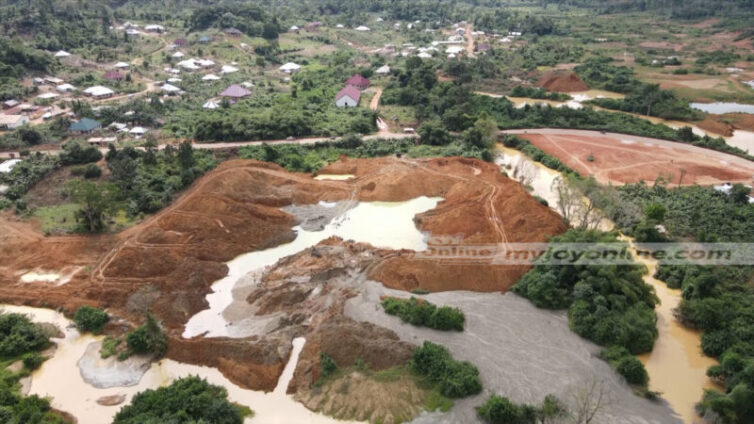
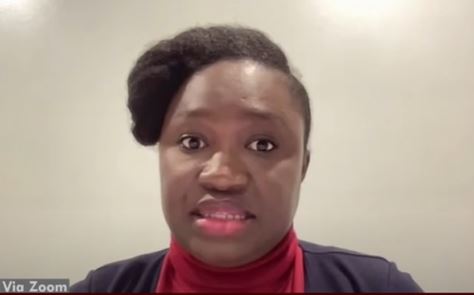
A policy analyst and gender advocate, Dr Araba Etrew, has called for the declaration of a state of emergency in Ghana to address the alarming situation of illegal mining, commonly known as galamsey.
According to Dr Etrew, the galamsey crisis is escalating, and if immediate action is not taken, the country will face consequences it may not be able to manage in the near future.
“What I want to see that I’m not seeing is a state of emergency, we haven’t declared that. If we can declare a state of emergency and say the ministry has locked up our ocean and for the sea to rest, then we can declare a state of emergency over our forest belt, on our water bodies so that the rivers will rest, the forest belt will also rest,” she said.
Speaking on Newsfile on Saturday, October 5, she said that the government needs to demonstrate strong political will and avoid turning the fight against galamsey into partisan politics.
Dr. Etrew warned that the country cannot afford to wait until the situation worsens, especially as the mining practices currently in use are unsustainable.
She further highlighted the inconsistency in the country’s approach, pointing out that while Ghana recently signed the Presidential Compact on Water, Sanitation, and Hygiene (WASH), which aims to provide $1.7 billion annually for WASH services, the country’s water bodies are being destroyed by galamsey.
“It is as if we’re just signing onto international treaties without concrete action back home,” she stressed.
Dr Etrew also questioned how Ghana could fulfill the commitments of the compact when its water bodies and forests are already being devastated by illegal mining, noting that Ghana is the first country in West Africa to sign onto the compact.
“I feel that if organised labour is the way to go, then we need to sacrifice. Our ancestors did the sacrifice for us to get independence,” she said.
She reiterated the need for a collective effort, urging all sectors of society to unite in the fight against galamsey.
“We need civic education and massive reforms everywhere across board in both the private sector and private sector. NCCE and civil society organisations, media organisations and educational sectors, everybody has to come on board on this,” Dr Etrew added.
Latest Stories
-
Ghana explores centre of excellence for hearing, communication and cochlear implant care
1 hour -
Schizophrenia-related disorders lead mental health cases recorded in Ghana
1 hour -
Dutch authorities enlist Ghana in hunt for fugitive drug lord Bolle Jos
2 hours -
Ghana housing finance conference adopts communiqué to improve affordable housing access
6 hours -
Special Initiatives Minister urges Wa Technical Institute to enrol more girls as EU-backed solar training lab opens
7 hours -
In the matter of my first year at the Bar
7 hours -
ActionAid Ghana calls for an end to child marriage, greater investment in girls’ rights
7 hours -
Newsfile to tackle World Cup visa scandal, beach demolitions, education strikes, BRICS bid
7 hours -
UK-Ghana Trade & Investment Summit: Trade Resource Centre to help businesses maximise UK-Ghana trade opportunities
8 hours -
Embassy of Denmark celebrates World Maritime Day
8 hours -
Linking LEAP to productive inclusion could cut extreme poverty by 2030 – UNICEF
9 hours -
Trade Ministry backs use of creative arts to rehabilitate prison inmates
9 hours -
Negotiations with government to continue despite strike suspension – GNAT
9 hours -
‘Ghana cannot afford to waste public resources; every cedi has a job’ – Ato Forson
9 hours -
Ghana expects economic boost as World Assemblies of God Congress brings 10,000 delegates to Accra
9 hours