

Audio By Carbonatix
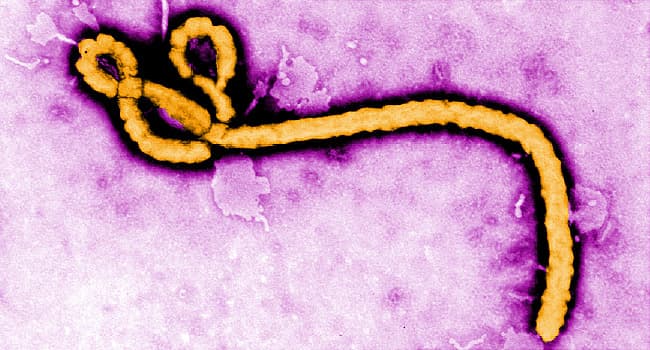
The World Health Organisation (WHO) has deployed a team of health experts to Uganda to support the country's response to a confirmed outbreak of Sudan virus disease, a viral illness similar to Ebola.
Uganda has reported its first confirmed case of Sudan virus disease: a nurse from Mulago National Referral Hospital in Kampala.
No other health workers or patients are showing symptoms. 45 contacts, including health workers and family members, are under close monitoring. The urban location of the case necessitates a rapid and intense response.
To accelerate early response, WHO has allocated $1 million from its Contingency Fund for Emergencies. The funding will facilitate the rapid deployment of medical supplies, including personal protective equipment (PPE), from WHO's Emergency Response Hub in Nairobi.
Although there are no licensed vaccines available for Sudan virus disease, WHO is working closely with developers to deploy candidate vaccines as an additional public health measure.
These vaccines will be rolled out once all necessary administrative and regulatory approvals are obtained.
WHO Regional Director for Africa, Dr Matshidiso Moeti stated that a comprehensive response is being established, and the organisation is supporting the government and partners to scale up measures to quickly identify cases, isolate and provide care, curb the spread of the virus and protect the population.
“Uganda’s robust expertise in responding to public health emergencies will be crucial in ending this outbreak effectively,” he said.
There have been eight previous outbreaks of the Sudan virus disease, with five occurring in Uganda and three in Sudan. Uganda last reported an outbreak of Sudan virus disease in 2022.
“Banking on the existing expertise, we are accelerating all efforts, including expertise, resources and tools to save lives and bring the outbreak to a halt swiftly,” said Dr Kasonde Mwinga, WHO Representative in Uganda.
Sudan virus disease is a deadly viral illness that affects humans and primates, caused by the Sudan virus, a close relative of the Ebola virus.
Historical outbreaks of Sudan virus disease have reported mortality rates ranging from 41% to 100%. Currently, there are no licensed treatments or vaccines available.
However, providing supportive care early on has been proven to substantially decrease the number of fatalities.
Latest Stories
-
2028 Olympic Games qualification ‘really tough’ – Black Queens coach Björkegren
6 minutes -
GRFU, GOC Women’s Commission hold breast cancer awareness, expresses gratitude to Sunda International Ghana
8 minutes -
COCOBOD raises GH¢3.4bn as Cocoa Capital PLC lists inaugural commercial paper on GFIM
26 minutes -
No Party Card, just a Party Microphone! A Ghanaian story of Elections, Referees and Convenient Amnesia
28 minutes -
Minority welcomes suspension of teachers’ strike, demands timely payment of promotion arrears
38 minutes -
Customary ownership accounts for 80% of land; it complicates land administration – Lands Commission
39 minutes -
NRSA to auction vehicles of non-subscribers who fail to pay towing charges within 21 days
46 minutes -
WAFU B U17: Black Starlets target AFCON slot after booking semi-final place
50 minutes -
Ghana faces $6.1bn debt-service burden from 2027 to 2029 due to Akufo-Addo’s DDEP – Haruna Iddrisu
58 minutes -
GoldBod targets 150 hectares of forest reclamation in 2027
1 hour -
Despite substantial accommodation capacity, room demand still weakens – GSS report
1 hour -
No amount of foreign exchange is worth a lost forest – GoldBod
1 hour -
Chelsea’s defensive crisis: Alonso’s system, missing pieces, or individual errors?
1 hour -
Digital VAT collection to cover mobile payments, not just bank cards – GRA
1 hour -
John Darko denies role in SIC settlement after EOCO interrogation
2 hours