


Audio By Carbonatix
Ghanaians food manufacturing industries have been urged to adopt aesthetic presentations of local cuisines.
Pro Vice-Chancellor of the Kwame Nkrumah University of Science and Technology, Professor Ellis Owusu-Dabo, says adding value to indigenous foods will engage export potentials, generate income and sustainably preserve local dishes.
He spoke at this year’s edition of the KNUST Food Festival aimed at contributing to the attainment of the UN Sustainable Development Goals.
“The presentation of the food type brings value. As a country, we are interested in value addition as far as our products are concerned. So that, we will be able to export these products and seek for partners who will be interested in ensuring that the manufacturing chain is enhanced,” he said.

The 2022 edition of the KNUST Food Festival brought together students and staff from diverse cultural backgrounds.
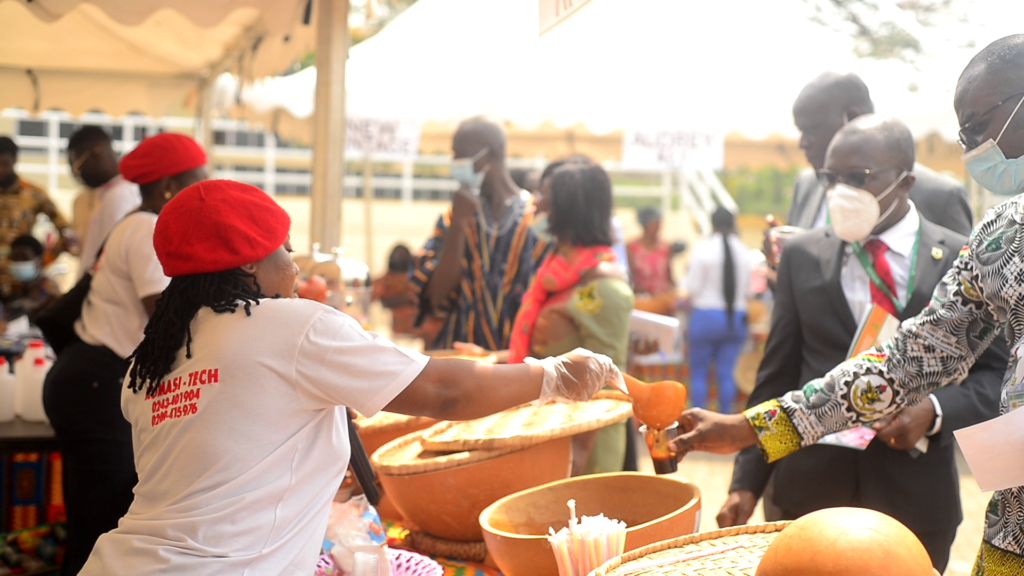
It was a platform for the rich display of the Ghanaian culture and heritage through local cuisines and dances.
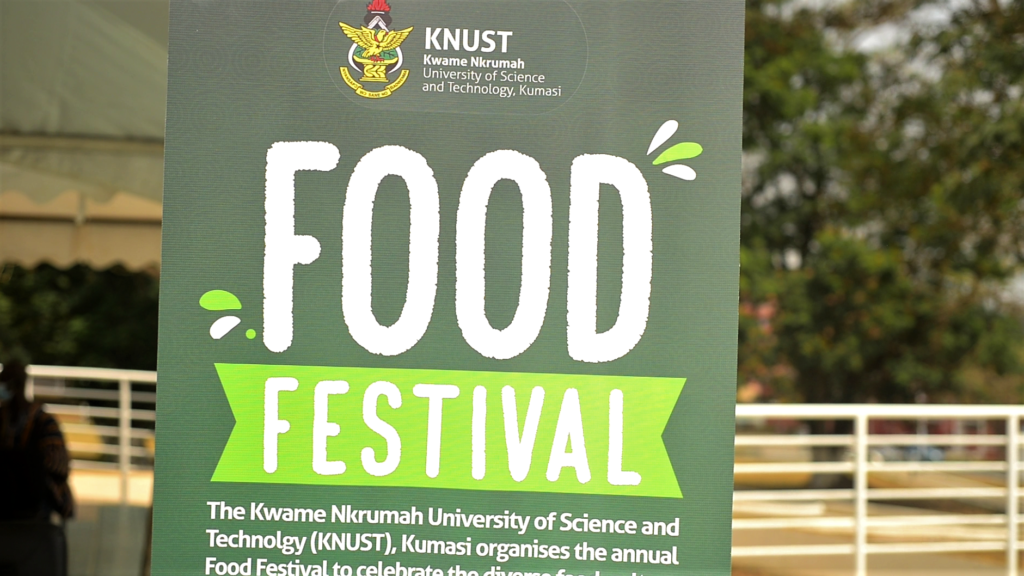
Dubbed “Achieving the SDGs: Our Food, Our Culture, Our health”, the event saw various departments at the university and local businesses showcasing their indigenous foods and agricultural products.
Ghana’s local delicacies stand at a gradual extinction due to the influx of exotic cuisines over the last decade.
Bemoaning the diminishing popularity of Ghanaian dishes, Keynote speaker, Professor Daniel Duah, called for the integration of culture into the 2030 SDG Agenda.

According to him, the protection and promotion of diverse cultural expressions are the core component of human and sustainable development.
“Researchers argue that culture must be regarded as the fourth pillar of sustainability.
“Cultural aspects such as the development of cultural liberties, active participation in cultural life, the preservation of tangible and intangible cultural heritages such as food, clothing, values, and protection of diverse cultural expression,” he said.
Ashanti Regional Director of Agriculture, John Manu, assured the government’s flagship program, “Planting for Food and Jobs” aims at creating a thriving environment for local agricultural businesses.
“Currently, the national policy is to promote planting for food and jobs. So, the government is subsidizing seeds and fertilizers for farmers so that they can produce more of our local foods,” he said.
Latest Stories
-
ECG procurement is where politicians ‘milk’ the company – Ben Boakye
58 minutes -
IPPs’ contractual arrangements partly to blame for energy sector problems – TUC’s Dr Otoo
1 hour -
Like Benzema & as good as Haaland – Alonso on Joao Pedro
1 hour -
Check out 41 countries Ghanaians can visit without a visa on ordinary passports
1 hour -
I disrupted pre-season travel plans to prepare players – Arteta
1 hour -
Richarlison’s move to Vasco da Gama falls through
2 hours -
Dictator meme shows lack of human awareness – Mbappe
2 hours -
2030 World Cup: Moroccan official told to stop making 2030 final promise
2 hours -
Mourinho compares Mbappe and Vini Jr to fruit trees after boos
2 hours -
Lewis Hall signs new contract with Newcastle until 2031
2 hours -
Signed instead of Rashford, Gordon is proving worth at Barca
2 hours -
2026 BECE automatic placement rate hits 87.3%, highest since 2021 — CSSPS data
2 hours -
Ghanaian youngster Zayan Omar joins Spanish side Málaga
2 hours -
New Man City signings desperate to win – Dias
2 hours -
Morocco rejects Spain blame game, warns against using kingdom as political pawn
2 hours