

Audio By Carbonatix
April 25 is marked to be celebrated as World Malaria Day, never mind the worries and disappointments some of us continue to harbour as to why the deadly malaria disease is still around, haunting those of us in the tropics.
Though age-old, it remains one of the deadliest and highest-killer diseases for decades. Latest figures from the World Health Organisation (WHO), estimate approximately 250 million malaria cases and more than 600,000 deaths per year around the world.
Tragically, three-quarters of those deaths are children under the age of five, mostly in sub-Saharan African countries as well as in India and South-East Asia.
In Ghana, malaria is said to be both endemic and perennial throughout the country. In 2022, WHO estimated that there were 5.3 million confirmed cases with 11,557 malaria-associated deaths.
The statistics are quite scary and immediately point to the urgency needed to tackle the disease. Comparing the number of deaths as a country, to Covid-19, in both 2020 and 2021 when the pandemic was at its peak, the emphasis then, as compared to malaria, seemed misplaced.

Notable then was the alacrity with which within a matter of 12 months Scientists in the West were able to research and companies invested heavily to come out with vaccines that to date have abated the Covid-19 virus to a minimum.
As the World celebrates World Malaria Day next week as a day set aside for a global focus on continued investment and sustained commitment and control of malaria, one is tempted to ask if there is now any optimism in sight to end the disease.
Media briefing
That optimism remains one's take coming out of a media briefing hosted last Tuesday by the Johns Hopkins Bloomberg School of Public Health. The good news gathered from the briefing was on the status of malaria and the pivotal role that the Institute is playing as the world continues to fight against the global disease into the future.
Dr Jane Carlton, Professor at the Department of Molecular Microbiology and Immunology at the Johns Hopkins and Bloomberg School of Public Health and a Director of the Johns Hopkins Malaria Research Institute, together with Dr Conor Mcmeniman, Assistant Professor in the Department of Microbiology and Immunology, briefed the media on measures in place for now and the future and a belief that the future is bright for a malaria-free world.
Optimism
Their presentations were complete with optimism about the current and upcoming research efforts by the Johns Hopkins Malaria Research Institute. According to them, the Institute is busy tackling the age-long disease from many angles.
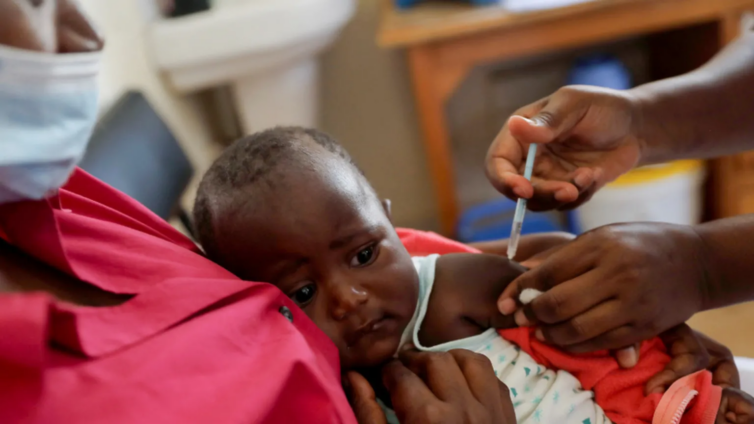
In the past year, WHO has reportedly recommended the use of two ground-breaking malaria vaccines for the prevention of plasmodium falciparum malaria, the most serious form of the disease in children living in malaria countries. Ghana and Kenya are two of the countries already piloting the vaccines.
These vaccines can apparently control up to 75 per cent of malaria infections.
Available figures show that there has been about a 13 per cent drop in the mortality rate of children who were victims in the piloted countries.

In addition to the vaccines, new advanced bed nets recommended by WHO are already out there and expected to mitigate a common mode of insecticide.
Further advanced research and important strides have also been achieved in understanding the biology of malaria-causing mosquitoes. In particular, the chemistry of mosquitoes attracted to human scents has excitingly been made, thanks to the John Hopkins Malaria Research Institute.
Work continues assiduously to gain a better understanding of the biology of malaria vectors.
Even though the fight to eliminate malaria has slowed down with some unprecedented challenges with the Covid-19 pandemic diverting valuable resources, and the effects of climate change with increasing hot weather and floods, researchers have awesomely not rested on their oars in their commitment to eliminate this age-old menace.
There is no doubt that a lot has been done and measures are in place for a complete elimination. Already, elimination has been achieved in an expanding list of countries including Azerbaijan, Belize and Tajikistan with several other countries reportedly on track to eliminate the disease.
With world commitment through cutting-edge research collaborations as was done for Covid vaccines, the world should achieve a malaria-free environment. There seems to be light at the end of the tunnel.
It would mean enjoying nature's free and healthy air out there on hot, sweaty nights without any fear of mosquito bites. Or travel the world without fear of catching the deadly malaria disease.
What a pleasant relief it would be for all. One certainly cannot wait.
*****
The writer can be contacted via email at vickywirekoandoh@yahoo.com
Latest Stories
-
Two-year-old girl dies in domestic fire at Cantonments
34 minutes -
Asiedu Nketiah urges better working conditions for journalists
43 minutes -
JoyNews’ Precious Semevoh wins climate change reporting award at Bono GJA Awards
50 minutes -
Kumasi Central Market phase 2 to begin in October after years of abandonment
55 minutes -
Sentuo offers fuel supply reassurance as NPA sees steady output through December
2 hours -
Ghanaian smock showcased at Lesotho Tourism Summit
2 hours -
Four pupils to one desk: The painful plight of schools in New Juaben North
3 hours -
Ipswich launch investigation into racist abuse of Abdul Fatawu
3 hours -
Arrest of Techiman nurse is purely political persecution – ‘Ghana Jollof’
3 hours -
Isak nets winner as Liverpool edge Bournemouth
4 hours -
I dare gov’t of Ghana to extradite me; they can never do it – ‘Ghana Jollof’ speaks
4 hours -
Semenyo scores twice as Manchester City beat Sunderland 5-3 in eight-goal thriller
4 hours -
Parliament calls for government-private sector collaboration to improve waste management
4 hours -
Volta Region described as cleanest so far in Parliament’s nationwide sanitation monitoring
4 hours -
Parliament urges MMDAs to enforce sanitation bylaws to curb indiscriminate waste disposal
4 hours