

Audio By Carbonatix
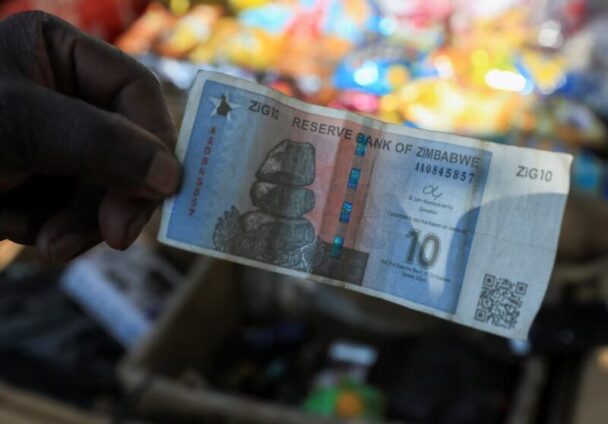
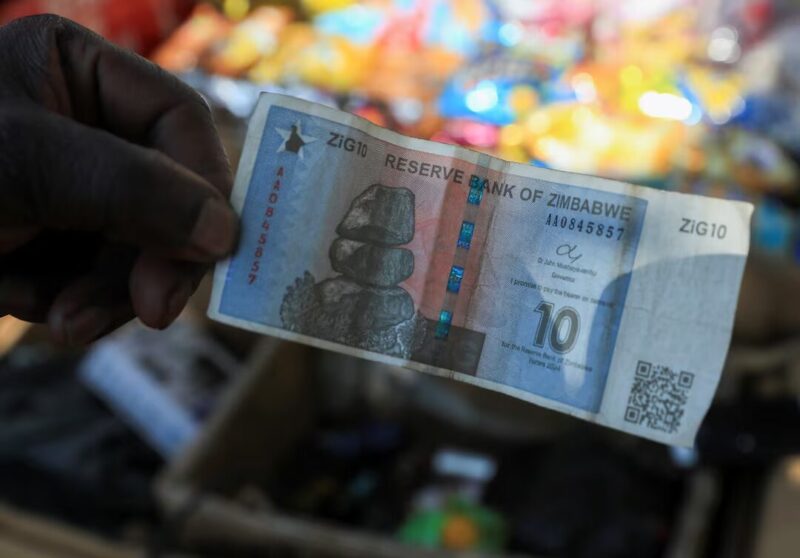
Five months after its launch, Zimbabwe's new currency is under pressure as increased grain imports eat away at foreign reserves, putting at risk the government's plan to make it the only currency in the market by 2026.
The gold-backed ZiG, which stands for Zimbabwe Gold, is the country's sixth attempt at a stable currency in 15 years. It was introduced in April at a rate of 13.6 ZiG per U.S. dollar and has since lost almost 80% of its value on the black market.
The country's central bank on Thursday said it had injected $64 million into the foreign exchange market this month to address dollar demand.
"Over the past weeks, the Reserve Bank witnessed a build-up in pipeline demand for foreign currency at banks, reflecting transitory foreign currency supply and demand mismatches, thus, exerting undue pressure on the foreign exchange market," central bank governor John Mushayavanhu said in a statement.
This was despite an injection of $50 million by the Reserve Bank in July, he said, adding that the bank would continue to intervene as needed to ensure the stability of the ZiG.
Independent economist Prosper Chitambara said the devaluation pointed to a lack of confidence in the new currency, which locals have been reluctant to embrace.
Persistence Gwanyanya, a member of the Reserve Bank of Zimbabwe's Monetary Policy Committee, told Reuters that although uptake had been slow, it was too soon to consider the new currency a failure.
Gwanyanya said the government could increase the use of the ZiG by charging more taxes in the local currency. "Government more than any other should show a preference for its own currency and there is a need for urgent intervention by injecting more foreign currency on the market," he said.
But market traders are not convinced.
"The ZiG has been getting weaker so it does not make business sense to transact with it. I do not have faith in the ZiG. We have been here before with the Zimdollar," Maynard Maketo, a street hawker selling candy and recharge cards said.
According to Pricecheck, a website that tracks the exchange rate, the ZiG is trading between 20 ZiG and 26 ZiG to $1 on the black market and 13.9 ZiG to $1 on the official exchange.
Carol Munjoma, a trader in downtown Harare who sells groceries, transacts exclusively in U.S dollars.
"Where I buy these groceries, they do not accept ZiG. So to protect my business I charge in U.S dollars. The ZiG would have to be stable to be accepted here," the mother of two said.
In July, central bank chief Mushayavanhu told Reuters that authorities would stick to promises to build trust in the new currency, a sentiment echoed by Gwanyanya.
"It is too early to consider that this may be the death of the ZiG," said Gwanyanya.
Latest Stories
-
Daily Insight for CEOs: Accelerating performance before year-end
1 minute -
Apples versus Pears: Which fruit is better for blood sugar?
4 minutes -
‘Ghana believes in you’ – Sports Minister sends goodwill message to Black Princesses ahead of World Cup
5 minutes -
Improper EV home charging can overload circuits and cause fires – Ing. Ato Roberts
11 minutes -
Why dieting alone may not be enough for weight loss – experts explain obesity complexities
20 minutes -
‘Layer upon layer of miracles’: How Nepal flood survivors were rescued from tunnel
23 minutes -
Roads Minister praises Astee and P&W Ghanem for quality work on Upper West Big Push road projects
25 minutes -
Chief Justice spoke the truth at the wrong place -Dr Jabir Mohammed
29 minutes -
51-year-old drug ‘pusher’ in Accra and his 42-year-old wife arrested by NACOC
30 minutes -
NADMO intensifies monitoring in Daboya as Bagre Dam spillage raises flood fears
31 minutes -
8 Foods that can help you sleep better at night, according to nutrition experts
34 minutes -
JoyNews Republic Bank Habitat Fair clinic set for September 11–13 at Marina Mall
35 minutes -
Parents troop to Joy FM Back-to-School Fair for school deals and discounts
38 minutes -
Government brings home remains of Ghanaian killed in alleged South Africa mob attack
39 minutes -
41 more Ghanaians return home from South Africa after xenophobic attacks
42 minutes