

Audio By Carbonatix
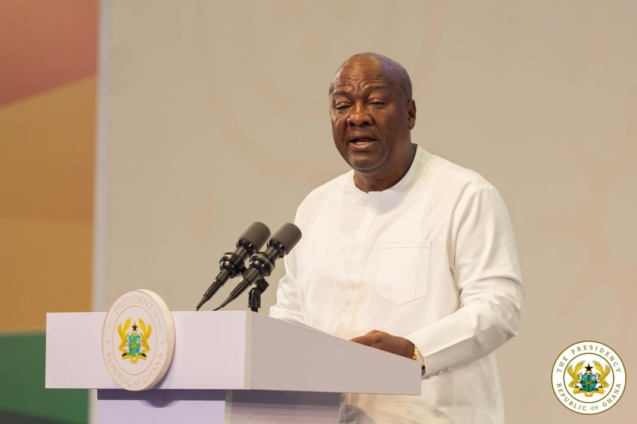
The claim that President John Mahama has been appointing “young, inexperienced, and unmeritorious” individuals to government positions warrants deeper interrogation, particularly the conflation of youth with inexperience and incompetence. It is my contention that most of these criticisms often stem from misplaced assumptions about governance, meritocracy, and age.
Distinguishing Youth from Inexperience and Incompetence
Youth is not synonymous with inexperience, nor does it automatically equate to incompetence. For instance, a 46-year-old professional with a solid academic background and years of experience in finance may outperform an older individual, even one with a storied career in private circles. The argument that age is a determinant of competence ignores the failures of supposedly “experienced” leaders who have, despite their resumes, led Ghana to economic crisis and financial instability.
Consider the juxtaposition of technocratic competence with moral and civic responsibility. Ghana has witnessed older, self-proclaimed investment experts, known for their religiosity and symbolic appearances in white apparel, whose decisions have left the economy in dire straits. This demonstrates that capability in governance is not about age but preparation, vision, and leadership skills.
The Danger of Meritocracy as an Absolute Principle
The insistence on meritocracy as the sole yardstick for governance is problematic and potentially dangerous. While the idea that the most qualified should lead appears sound, it assumes a narrow definition of “merit” that often excludes broader considerations like moral judgment, civic virtue, and empathy.
Historically, Ghana offers vivid examples of the limitations of technocratic governance devoid of civic accountability. Kwame Nkrumah’s administration was not staffed solely by technocrats with elite credentials; it included activists, union leaders, and community organizers whose commitment to nation-building extended beyond academic accolades. Yet it delivered landmark achievements like the Akosombo Dam, the Tema Motorway, and free education.
More recently, Ghana’s over-reliance on technocratic expertise in macroeconomic management has sometimes ignored grassroots realities. Take, for instance, the structural adjustment programs of the 1980s. These policies were drafted by credentialed economists, but their singular focus on fiscal discipline and GDP growth undermined social safety nets, leading to widespread hardship. In contrast, social interventions like the Livelihood Empowerment Against Poverty (LEAP) policy have been championed by leaders often derided as “populists” rather than technocrats.
Lessons from History: Governance Beyond Credentials
The critique of Mahama’s appointments echoes an old debate about who is qualified to govern. Throughout history, political meritocracy has taken different forms. In ancient China, Confucian philosophy emphasized virtue and ability, but these were tied to moral and civic responsibilities. Similarly, in Ghana, Nkrumah’s vision of self-reliance and national pride rested not only on technocratic efficiency but on leaders who could inspire solidarity and sacrifice for the common good.
In contemporary Ghana, the “technocratic meritocracy” paradigm often divorces governance from the moral and social fabric of the nation. The idea that only those with certain academic or professional credentials can lead ignores the lived experiences of citizens. For example, appointing a “seasoned economist” to head a rural development agency may result in policies detached from the realities of rural life, whereas a younger leader with grassroots experience could design more impactful interventions.
The Myth of Technocratic Superiority
The global failure of technocratic governance offers cautionary lessons. The elites who governed the United States between 1940 and 1980 achieved significant milestones, from rebuilding post-war economies to dismantling segregation. However, the technocratic elites of the past four decades have presided over rising inequality, financial crises, and decaying infrastructure. Similarly, in Ghana, technocrats have presided over policies that prioritize debt sustainability metrics over citizens’ well-being, deepening inequality and unemployment.
The moral deficit in governance today is evident in how public discourse has become narrowly technical, focused on GDP and debt-to-GDP ratios, with little attention to questions of inequality, dignity, or the moral obligations of leadership. This approach not only alienates citizens but also undermines their confidence in public institutions.
The Importance of Broader Public Discourse
Governance is not merely a technical exercise; it is a civic project that requires solidarity, empathy, and moral vision. The excessive focus on “meritocracy” as defined by academic or professional credentials erodes the social standing of workers and grassroots leaders, creating a sense of alienation and disempowerment. For Ghana to thrive, it needs leaders who understand the everyday struggles of its citizens and can connect with them on a human level.
Conclusion
Criticism of Mahama’s appointments should go beyond reductive claims of youth, inexperience, or a lack of merit. Governance in Ghana, as in any democracy, is about balancing competence with civic virtue and moral judgment. The real question is not whether appointees are young or credentialed, but whether they possess the vision, empathy, and practical wisdom to address the nation’s pressing challenges. Ghana’s history and current situation demand a rethinking of leadership that prioritizes inclusive governance over narrow definitions of merit.
Latest Stories
-
Ghanaian Coaches dominate Ghana Premier League 2026/27 dugouts
26 minutes -
Black Maidens drawn against Nigeria, Togo and Niger in WAFU B U-17 Cup
33 minutes -
GMTF Administrator hails NHIA boss on first anniversary
1 hour -
Today’s Front pages: Friday, September 4, 2026
2 hours -
From Kantamanto to the TEDx Stage: How waste became innovation
2 hours -
MMDCEs charged to ensure Landing Beach Committees do not sell premix fuel beyond approved prices
2 hours -
The Inconvenient Truth: Democracy does not fail in The Chamber, it fails in the Committee Room
3 hours -
There is absolutely nothing wrong with what the Chief Justice said
3 hours -
App launched to help Ghanaians verify prospective partners’ marital status before marriage
3 hours -
‘I have gone through a lot these past 2 days’ – A-Plus reveals after New Winneba violence
3 hours -
DBG takes GH¢2.5bn development funding beyond Accra as it pushes industrial transformation
3 hours -
Vice President Jane Opoku-Agyemang calls for accurate teaching of slavery history in schools
3 hours -
Ghana has duty to preserve slave-trade sites and tell their full story – Vice President
3 hours -
West Africa can be self-sufficient in rice production – John Dumelo
3 hours -
Over 300 arrested over extremist recruitment attempts along northern border – Agalga
4 hours