

Audio By Carbonatix
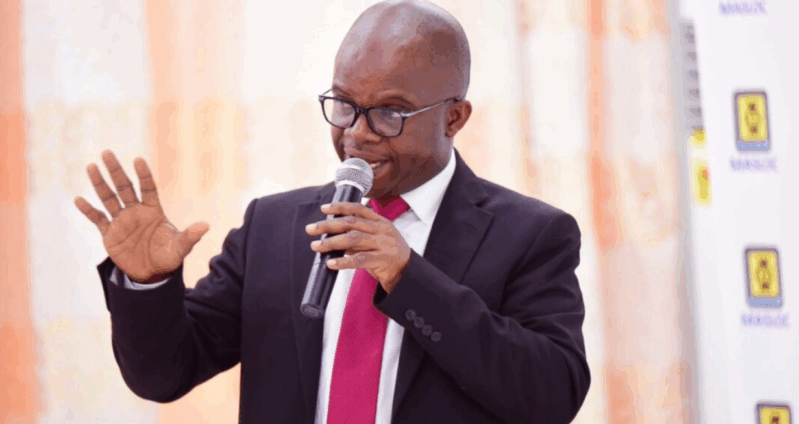
Former Deputy Finance Minister, Dr Stephen Amoah, says it is too early to make a definitive judgment on the economic performance of the Mahama administration, warning that claims of success or failure within the government’s first year amount to propaganda rather than objective analysis.
Speaking on Joy FM's Top Story, Dr Amoah argued that a fair assessment of the government’s performance must be based on key macroeconomic indicators, flagship policy delivery, and institutional reforms, rather than political narratives.
“Honestly speaking, it will be extremely difficult for any honest person to say that the government has done well or otherwise, except those who just want to play propaganda,” he said.
According to him, a meaningful evaluation of the government’s economic performance requires careful consideration of primary macroeconomic indicators, including growth, inflation, fiscal balance, and reserves, as well as the status of flagship programmes promised to Ghanaians.
Dr Amoah noted that many of the current economic conditions reflect global economic challenges and inherited trends, rather than the direct impact of new government policies.
He recalled that Ghana’s economic recovery was already underway before the change of government, citing improved growth figures, a strengthening primary balance, declining inflation, and improved foreign reserves.
“By the end of 2024, provisional growth figures were around 6.3 per cent, even higher than the 5.6 per cent presented earlier, and inflation had declined from a peak of 54.1 per cent to about 22 per cent,” he said.
Dr Amoah explained that new economic policies, particularly those requiring parliamentary approval, take time to design, pass, and implement, making it premature to attribute current outcomes to the new administration.
He referenced flagship initiatives such as the 24-hour economy and the Big Push, noting that it is impossible at this stage to measure their contribution to economic growth or express them as a percentage of GDP.
“You cannot record any component of these programmes yet and say this is what they have contributed to GDP,” he stated.
According to the economist, 2026 will be a more appropriate period to critically assess the government’s economic impact, as policy implementation, structural reforms, and growth outcomes would then be clearer.
“This is the year we should begin to critically examine the government’s contribution to growth, job creation, and improvements in welfare, compared to where the economy was when they took over,” he added.
Dr Amoah stressed that both excessive praise and outright condemnation at this stage undermine serious economic discourse.
“Personally, I cannot place this government in any appraisal position yet—neither to say they have done well nor that they have done badly,”
Latest Stories
-
Promotion pay row: Gov’t gives teachers September to complete salary adjustments
5 minutes -
Financial irregularities plummet by 62.9% as state tightens fiscal controls
5 minutes -
DVLA to expand mobile services to underserved communities in Ghana’s Eastern Corridor of the Northern Region
21 minutes -
GUTA urges GPHA to act swiftly to end Tema Port congestion to avert rising business costs
21 minutes -
Port congestion could undermine 24-hour economy policy – GUTA
22 minutes -
NSA opens three-day window to resolve national service biodata mismatches
32 minutes -
Abu Jinapor highlights increased gold exports after Domestic Gold Purchase Programme
36 minutes -
NPP UK branch calls for independent audit into gold purchasing operations and parliamentary probe
1 hour -
Zanetor Agyeman-Rawlings pledges decisive action on climate change, galamsey and environmental degradation
1 hour -
Bawumia was brainchild behind Domestic Gold Purchase Programme – Samuel Jinapor
1 hour -
Fuel prices set to go up from September 1, Petrol to sell at GHC 16.69 and Diesel, GHC 17.90 – COMAC
1 hour -
Our World Our People withdrawn due to curriculum duplication, not politics – Adutwum’s spokesperson
1 hour -
GANRAP is essentially a rebranding of Domestic Gold Purchase Programme – Abu Jinapor
1 hour -
I am tired of being in opposition, my goal is to win in 2028 – Boakye Agyarko
2 hours -
Ghana’s road maintenance funding gap deepens as only 37% of needs met – World Bank
2 hours