

Audio By Carbonatix
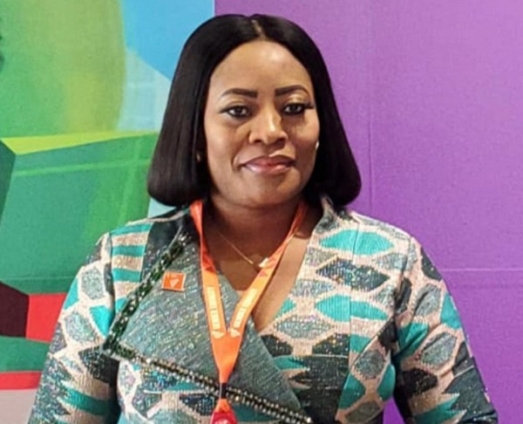
Ghanaian media personality and gender advocate Josephine Oppong-Yeboah has called for stronger access to justice for women and girls to promote inclusive and equitable legal systems.
She said many women and girls worldwide face structural barriers that limit fair and equal access to justice.
Strengthening equitable access to legal systems would help eliminate discriminatory laws, policies and practices that hinder the growth and well-being of women, particularly in the Global South, Ms Oppong-Yeboah said.
She made the remarks in a media interview ahead of this year’s International Women’s Day celebrations on March 8.
This year’s theme, “Give to Gain,” promotes a mindset of generosity and collaboration to advance opportunities for women.
Ms Oppong-Yeboah said the theme highlights the power of reciprocity and collective support.
“When people, organisations and communities give generously, opportunities and support for women increase, helping them to thrive,” she said.
“We can all give our support to gain advancement for women and girls.”
She added that contributions such as donations, knowledge-sharing, resources, infrastructure, advocacy, education, training and mentoring could help create a more supportive and interconnected environment for women’s advancement.
Ms Oppong-Yeboah also noted that many young women in several countries, including the United States and Ghana, face career stagnation due to workplace policies that inadvertently disadvantage women.
Citing data from Fora: Network for Change, a nonprofit focused on gender equity in the workforce, she said 93% of Canadian women and gender-marginalised workers aged 18 to 29 reported seeing no clear pathway to promotion in their workplaces.
She said women often face intersecting barriers to justice, including high legal costs, limited legal aid and systemic biases.
Socioeconomic factors such as poverty, caregiving responsibilities and geographical isolation, particularly for rural women further restrict access to justice, she added.
Ms Oppong-Yeboah said discriminatory legal frameworks, fear of retaliation and insensitive court systems also discourage many women from reporting abuse or seeking redress.
Latest Stories
-
NAGRAT urges gov’t to communicate early if September deadline cannot be met
31 minutes -
We trust government to meet September deadline on teachers’ promotions – NAGRAT
42 minutes -
“We dare not fail” – Gov’t promises to honour teachers’ promotion pay deal
49 minutes -
The GH¢19.8 billion mirage: Inside Ghana’s state enterprise turnaround
57 minutes -
Luv FM High School Debate: KNUST SHS and Osei Adutwum SHS set up thrilling final after dramatic semi-finals
1 hour -
KNUST AI Coordinator urges structured adoption of AI in teacher education
1 hour -
Nepal rescuers blast hillside in search of hydropower workers as families wait anxiously
2 hours -
Teachers who pass promotional exam to get January 2026 start date after gov’t resolves promotion dispute – Dr Apaak assures
2 hours -
NSMQ 2026: St. John’s School rally from slow start to book semi-final spot
2 hours -
Promotion pay row: Gov’t gives teachers September 2026 to complete salary adjustments
2 hours -
Financial irregularities plummet by 62.9% as state tightens fiscal controls
2 hours -
DVLA to expand mobile services to underserved communities in Ghana’s Eastern Corridor of the Northern Region
2 hours -
GUTA urges GPHA to act swiftly to end Tema Port congestion to avert rising business costs
2 hours -
Port congestion could undermine 24-hour economy policy – GUTA
2 hours -
NSA opens three-day window to resolve national service biodata mismatches
2 hours