

Audio By Carbonatix
The Director of Communications for the Bawumia Campaign Team, Dennis Miracles Aboagye, has argued that Ghanaians are facing a higher cost of living than in 2024 despite improvements in key macroeconomic indicators.
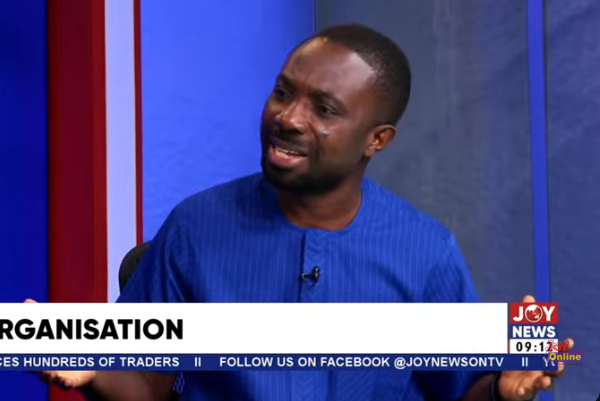
Speaking on JoyNews’ AM Show on Tuesday, 7 April, Mr Aboagye said both data and everyday experiences suggest a growing disconnect between economic statistics and the realities faced by citizens.
“The truth of the matter is that the Ghanaian today is worse off in terms of their cost of living than they were in 2024. It’s the data. There’s no lie about that,” he stated.
He acknowledged that indicators such as inflation, fuel prices and the exchange rate have shown signs of improvement but maintained that these gains have not translated into relief for ordinary households.
“The dollar has come down. Inflation has come down. Fuel has come down. And that is true… but there’s a disconnect. And we’re only drawing the government’s attention to that disconnect because it may not have realised,” he said.
Mr Aboagye questioned why improvements in macroeconomic indicators had not been reflected in the daily lives of citizens.
“Why is it that for the first time in this country, we see all these macroeconomic indicators improving drastically, massively, and yet it’s not reflected in our lives? There is a problem. Can you look at it?” he asked.
He noted that earlier concerns raised by the People’s Forum in December 2025 about rising living costs were initially dismissed but, according to him, recent developments have reinforced those concerns.
“Today, the reality is hitting us. If you like, go to the market and ask them; they’ll tell you. They cannot afford electricity. They cannot afford water,” he said.
Mr Aboagye also highlighted recent increases in utility tariffs as a major burden on households.
“In 12 months, you have a government that increases electricity by 24%. Then you have water increased by 15%. And those are the things that we’ve been speaking about all day long,” he noted.
He further pointed to rising fuel prices and their impact on transport fares, arguing that these increases have worsened economic hardship.
“This morning, as we speak, transport fares have gone up… I have to be able to afford fuel, pay my overhead, and maintain my buses,” he said.
Comparing past and current conditions, he questioned the government’s claims of economic progress, stating that despite improvements in inflation and exchange rate figures, living costs have continued to rise.
Mr Aboagye maintained that rising living costs remain the most pressing concern for many Ghanaians despite reported improvements in macroeconomic performance.
Latest Stories
-
Ghana needs a law to sustain constitutional reforms – CDD-Ghana
2 hours -
COVID fumigation audit: Auditor-General has a lot of questions to answer – Akwatia MP
2 hours -
Stranded Ghanaian medical graduates in Cuba appeal to Mahama for immediate return
2 hours -
GNFS contains fire outbreak at Teshie Lekma Road near Lekma Hospital
8 hours -
Samia Nkrumah rejects the narrative that Ghanaians were happy after Nkrumah’s overthrow
10 hours -
A Mother’s pain: Tribute by Ivan Baidoo’s mother
10 hours -
‘Forgive us for staying away’ — Samia Nkrumah leads family back to Nkroful, pledges to preserve Nkrumah’s legacy
10 hours -
Ernest Nuamah scores twice as Lyon beat Rennes
10 hours -
‘My dear Ivan’ – A father’s tribute to a son tragically killed
10 hours -
GNPC Explorco advances Voltaian Basin drilling preparations with 13.5km access road
10 hours -
Cabinet approves facility manager for Borteyman Sports Complex – Kofi Adams
11 hours -
Sanitation is improving; critics may be ‘living in another world’ – Salaga South MP replies Bekwai MP
11 hours -
Government must do more to tackle sanitation crisis – Bekwai MP
11 hours -
World Cleanup Day: GFF begins sanitation education in local communities
12 hours -
EU Ambassador, IGP discuss stronger cooperation on policing and security
12 hours