

Audio By Carbonatix
A member of the NDC Communications Team, Hamza Suhuyini, has argued that Kumasi would have experienced severe power outages throughout 2024 if not for investments made under the previous National Democratic Congress (NDC) administration, particularly the Ameri power plant.
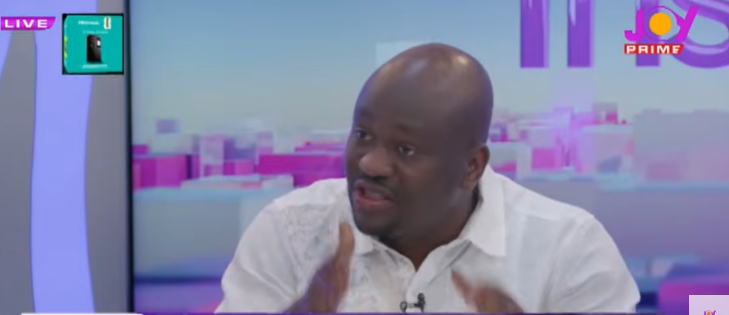
Speaking on Prime Insight on Joy Prime on 2 May, Mr Suhuyini said the New Patriotic Party (NPP) has overstated its achievements in the energy sector while relying on infrastructure developed during the NDC era.
“Without Ameri, Kumasi would have gone through the whole of 2024 with intense power outages, but thanks to the investment architecture that was built under the NDC regime, they were able to rely on that,” he said.
He added that authorities were compelled to act swiftly during the election period to prevent public dissatisfaction.
“In the run of the 2024 election, they had to quickly move to Kumasi to prevent an embarrassment,” he noted.
Mr Suhuyini maintained that the relative stability in Ghana’s power supply in recent years cannot be attributed solely to the NPP, but rather to investments undertaken between 2014 and 2016 during a period of acute power crisis.
“I have always argued that when it comes to the energy sector, we have allowed the NPP so many years of latitude to continue to box in their own created bubble of deception. They claim stability, but that stability was built on investments we made,” he said.
He explained that the NDC administration openly acknowledged the challenges facing the sector at the time, including inadequate investment and mounting debt, and took steps to address them.
“From day one, we were quite candid to the good people of this country. One of the towering challenges had to do with the failure of investments in the energy sector and the crippling debt that threatened its viability,” he stated.
According to him, these concerns were highlighted at national forums and in the President’s State of the Nation Address, with former President John Dramani Mahama spearheading reforms and investment initiatives.
“That is why plans like Ameri came into being,” he added, noting that the approach focused on both expanding generation capacity and stabilising the sector financially.
Mr Suhuyini also pointed to the introduction of the Energy Sector Levies Act (ESLA) as part of efforts to address liquidity challenges in the sector.
“One aspect had to do with generation, another had to do with ESLA in terms of financial support for the sector,” he explained.
However, he accused the NPP government of mismanaging ESLA funds.
“They collateralised it and got in excess of about GH₵10 billion, and only succeeded in using less than GH₵4 billion or so to pay BDCs. Where did the rest go?” he questioned.
He further rejected claims that the NPP maintained uninterrupted power supply during its tenure, arguing that the party later relied on what it had previously described as excess capacity to meet rising demand.
“When reality began unfolding, they saw the need for that excess capacity and had to rely on a chunk of it to cope with increasing demand,” he said.
Mr Suhuyini added that the NDC had anticipated financial challenges in the sector and introduced measures to address them, but alleged that these efforts were undermined under the NPP administration.
“We anticipated the liquidity challenge, but we provided a vehicle to deal with the liquidity challenge, and that had to do with ESLA,” he said.
“But because of the way they handled ESLA, they still had ongoing liquidity challenges. If you misappropriated funds that were meant to come from ESLA, you definitely have ongoing liquidity challenges, and that was the issue,” he added.
He argued that current power challenges should be traced to past policy decisions rather than the present administration.
“If there’s any leadership challenge that is causing dumsor, then that leadership challenge emanates from the failure in policy direction when the NPP was in power,” he said.
“It cannot be as a result of the less than two years presidency of his excellency John Mahama, and so these facts ought to be carefully monitored.”
Mr Suhuyini maintained that forward planning by the NDC helped the country avoid deeper energy challenges.
“You simply needed to unlock your excess to meet the increasing demand. That is progressive thinking. That is what governments ought to do,” he added.
Background
The Ameri power plant was introduced in 2015 as an emergency response to Ghana’s power crisis, widely referred to as “dumsor”. The government at the time entered into a build, own, operate and transfer (BOOT) agreement with a United Arab Emirates-based company, Ameri Energy, for a five-year period.
The plant, with a generation capacity of about 250 megawatts, comprises 10 units of 25MW each and runs on natural gas. It was designed to quickly boost electricity supply at a time when the country was facing severe shortages.
Latest Stories
-
Ghana concludes evacuation of citizens from South Africa; total returnees reach 1,900 – Ablakwa
9 minutes -
Africa must define its own green transition path – Prof Fatima Denton
31 minutes -
WASSCE 2026: English Language performance falls to 62.4% – WAEC
54 minutes -
WASSCE 2026: Social Studies records sharp rebound as Maths, Science also improve
1 hour -
2026 WASSCE entry rises by 11% as 512,862 candidates sit exams
1 hour -
WASSCE 2026: English Language performance falls to 62.4% – WAEC
1 hour -
WAEC cancels 2026 WASSCE results of 8,295 candidates over examination irregularities
2 hours -
WAEC releases provisional 2026 WASSCE results for 512,862 candidates
2 hours -
CJ’s remarks on SOEs were made in good faith, not to undermine judicial independence – Judicial Service
5 hours -
Bright Future Alliance pays courtesy call on Akufo-Addo, invites him to African Leaders of Influence Lectureship Series
5 hours -
This is an attempt to break the Minority caucus – Patricia Appiagyei on alleged GH¢70k payment
6 hours -
‘OSP hasn’t contacted me’ – Patricia Appiagyei assures cooperation if invited
6 hours -
I find it strange that this memo was purportedly written by me – Patricia Appiagyei
6 hours -
Ayariga calls for stronger church partnership to tackle sanitation, environmental challenges
6 hours -
I don’t think we have an industry – Patchbay Band manager
7 hours