

Audio By Carbonatix
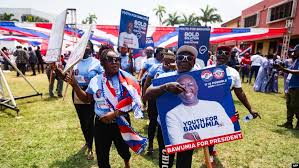
Ask any Ghanaian what keeps them up at night, and the answers cluster around a familiar set of anxieties: jobs for their children, healthcare they can afford, electricity that doesn't vanish without warning, and schools that actually teach. The NPP's newly unveiled sector policy committees appear designed with precisely those concerns in mind.
Across all 23 committees, the sectors covered map directly onto the lived realities of ordinary Ghanaians, not the interests of a technocratic elite, but the daily struggles of the market trader, the nurse, the young graduate, the farmer, and the small business owner.
The Employment and Labour committee is tasked with developing proposals for private sector job creation, TVET expansion, and youth entrepreneurship support, targeting the chronic unemployment crisis that has persisted across successive governments and which remains, polls consistently show, the single greatest concern of Ghanaian voters.
The Health Sector committee is reviewing Universal Health Coverage implementation, primary healthcare infrastructure, drug availability, and health worker retention, issues that flared publicly in 2025 as drug shortages in district hospitals made national headlines.
The Energy Committee has perhaps the most politically charged brief. Following years of load-shedding under various governments, Ghanaians remain deeply sceptical of promises on power. The committee's mandate is to develop a comprehensive energy security roadmap, one that addresses supply shortfalls, distribution inefficiencies, and the long-term transition toward renewable energy without sacrificing industrial competitiveness.
Education, another perennial battlefield, gets its own dedicated committee focused on basic school quality, the WASSCE performance crisis, tertiary expansion, and the urgent need for a STEM-driven curriculum overhaul to position Ghana for a digital economy.
Other committees cover agriculture and food security, roads and infrastructure, digital transformation, gender and social protection, financial inclusion, trade and industry, and local governance, between them constituting a near-complete policy atlas of Ghana's developmental challenges.
"We are not guessing at what Ghanaians need," one NPP official told this portal. "We are listening, we are researching, and we are building solutions."
The proof, of course, will be in the implementation. But for now, the framework sends an unmistakable message: under Bawumia, the NPP sees every pain point. And it is coming with answers.
Latest Stories
-
Ghana’s film industry: The Nokia of African cinema?
2 hours -
British Council supports two Ghanaian creatives for UK cultural exchange opportunities
2 hours -
Torres scores twice on PSG debut to salvage draw
3 hours -
Gordon makes two assist on debut as Barcelona thrash Elche 5-0
3 hours -
Salah scores first two Trabzonspor goals
4 hours -
Alvarez booed by own fans in Atletico draw
4 hours -
Trump says Canada wants ‘benefits’ of being US state after trade talks collapse
4 hours -
TikTok to pay $400m to US in one of largest child privacy settlements
4 hours -
Asante Kotoko management doesn’t involve me in supporters mobilization – McBrown
4 hours -
Frustration builds in Indiana town struggling without power for 12 days
4 hours -
‘Jesus was accused; he kept quiet’ – Afenyo-Markin on Sammy Gyamfi allegation
4 hours -
NSMQ 2026: Accra High steals one-eighth ticket from Sunyani SHS in stunning final-round twist
4 hours -
Kejelcha breaks men’s half marathon world record by 29 seconds
4 hours -
Nkoko Nkitinkiti programme has failed – Afenyo-Markin claims
5 hours -
NDC yet to deliver key 2024 campaign promises – Afenyo-Markin
5 hours