

Audio By Carbonatix
Climate experts, government officials, and agricultural stakeholders have gathered in Accra for a three-day stakeholder engagement workshop focused on strengthening inclusive climate adaptation tracking and reporting within Ghana's agriculture sector.
Organised by the Alliance of Bioversity International and CIAT, the African Group of Negotiators Expert Support (AGNES), and the University of Cape Town, in collaboration with Ghana's Ministry of Food and Agriculture (MoFA) and the Environmental Protection Agency (EPA), the event aims to build capacity and align national reporting mechanisms with global standards.
The initiative comes as changing weather patterns, droughts, and rising temperatures continue to pose severe threats to Ghana's rainfed, smallholder-dominated agriculture sector.
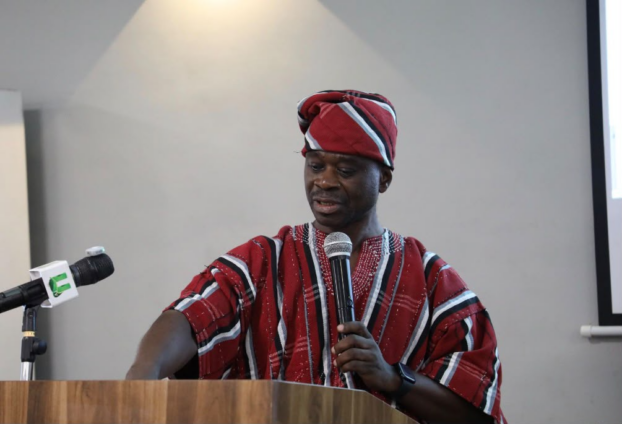
Delivering the keynote remarks, Chair of the African Group of Negotiators on Climate Change (AGN), Nana Dr. Antwi-Boasiako Amoah, emphasised that monitoring adaptation efforts must move beyond procedural paperwork to deliver concrete benefits for vulnerable communities.
"This is not only about reporting. It is about ensuring that our adaptation efforts are reaching the people who need them most and delivering results we can see, measure, and build upon," Dr. Amoah stated.
He highlighted that as Ghana scales up resilience initiatives such as promoting climate-resilient crops, early warning systems, and expanding irrigation, governments must evaluate the actual difference these projects make in farmers' lives.
"As governments, therefore, it is no longer sufficient to demonstrate that adaptation activities are being implemented," Dr. Amoah noted. "We must also be able to show whether those interventions are reducing vulnerability, strengthening resilience and reaching the people and communities that need them most." He added that "as we scale up adaptation action, our focus must increasingly shift from what we are doing to the difference those interventions are making."
Embedding Social Equity in Climate Data
A central theme of the workshop is integrating Gender Equality and Social Inclusion (GESI) considerations directly into national reporting templates to reflect the experiences of women, youth, and persons with disabilities. Warning against surface-level metrics, Dr. Amoah cautioned that traditional tracking risks overlooking marginalized groups.
"If our monitoring systems do not capture these differences, our reports may show progress while important groups remain behind," he stressed.
Reflecting on broader Pan-African priorities and international developments—such as the Belém Adaptation Indicators (BAI) adopted at COP30—the AGN Chair advocated for connecting global decision-making directly to local agricultural realities.
"The negotiating room and the farmer's field cannot exist as two separate worlds," Dr. Amoah asserted.
He pointed out that "good reporting begins long before the report is written," requiring clear institutional roles, established baselines, and structured data flows from district levels to national bodies.
As Ghana prepares its Second Biennial Transparency Report (BTR2) under the UNFCCC Enhanced Transparency Framework following its BTR1 submission in December 2024, the workshop serves as a technical foundation to map data producers, validators, and key indicators across subsectors.
Concluding his address, Dr. Amoah encouraged participants to look beyond meeting international reporting cycles to build a permanent, evidence-backed information system that drives climate finance and national policy.
"If we get this right, we will strengthen not only our reporting but also the link between evidence, policy, finance and real action on the ground," he concluded.
Latest Stories
-
I wish to experience childbirth; I’m jealous of women – Okyeame Kwame
8 minutes -
Manhyia South constituents demand apology from EOCO over attempt to ‘unlawfully’ arrest MP
12 minutes -
Twelve women have been killed in one part of South Africa since July. Here’s what we know so far
15 minutes -
OMJ Foundation commits to supporting transport, safety and livelihoods of commercial riders in Akuapem South
17 minutes -
The Reciprocity crisis: Why Ghana welcomes British Professionals while the UK relegates ours
18 minutes -
GNAT rejects gov’t fresh assurances, demands implementation of August 31 agreement
28 minutes -
Gabriel Tanko Kwamigah-Atokple appointed Patron of NDC UK and Ireland Aldershot Branch
33 minutes -
Bawumia engages Ghana Medical Association on health workforce and licensing concerns
36 minutes -
SEC shuts down Nyak-City Hostels over unlicensed investment scheme
38 minutes -
The Ladder Project engages 60 UPSA student leaders on leadership and Ghana’s next chapter
39 minutes -
National Investment Quiz: St. Augustine’s, Prempeh College advance to semi-finals
44 minutes -
Leadership is about responsibility, not titles – Sammi Awuku tells UPSA students
46 minutes -
National Investment Quiz: Corpus Christi, Wesley Girls, advance to semi-finals
51 minutes -
Phone dealer murder: 3 suspects remanded as court adjourns Teshie case
54 minutes -
Seamless Technologies CEO Calls for Strategic AI adoption to transform Ghana’s financial services sector
56 minutes