

Audio By Carbonatix
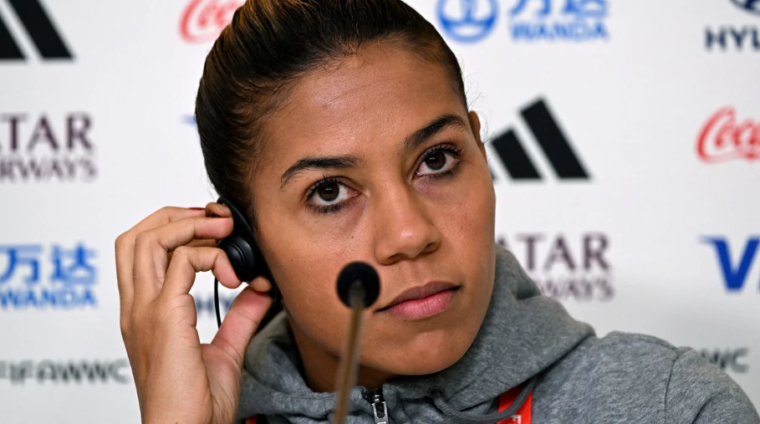
The BBC has apologised for an “inappropriate” question one of its reporters asked the captain of the Morocco women’s national team.
At a media conference ahead of Morocco’s Women’s World Cup opener against Germany, a reporter from the British news organization’s World Service asked Ghizlane Chebbak: “In Morocco, it’s illegal to have a gay relationship. Do you have any gay players in your squad and what’s life like for them in Morocco?”
The press conference moderator interjected, saying: “Sorry, this is a very political question, so we’ll just stick to questions relating to football.”
“No, it’s not political,” the journalist replied. “It’s about people, it’s got nothing to do with politics. Please let her answer the question.”
A BBC spokesperson told CNN: “We recognise that the question was inappropriate. We had no intention to cause any harm or distress.”
There was then one more question before the press conference was ended.
According to Human Rights Watch, “Moroccan law also criminalizes what it refers to as acts of ‘sexual deviancy’ between members of the same sex. Article 489 of the penal code punishes same-sex relations with prison terms of up to three years and fines of up to 1,000 dirhams ($91).”

The Athletic’s Steph Yang, who was in the room, said that “some members of the Moroccan media were audibly dismayed by the question.”
Shireen Ahmed, a reporter for CBC Sports who was also in the room, wrote that the reporter was “completely out of line.”
“Harm reduction matters and posing the question to the captain or coach was unnecessary,” she added.
“Asking a player about her teammates and whether they are gay and how it affects them when you know it is not permissible is bizarre and out of line. The captain cannot out players nor comment on policy bc [because] it could be dangerous for them, too,” Ahmed wrote.
“If reporting harms someone, it is not only unethical but dangerous.”
CNN has learned that a FIFA representative addressed the BBC journalist on site immediately after the press conference had ended.
The Moroccan Football Federation did not immediately respond to CNN’s request for comment.
Morocco began its 2023 Women’s World Cup campaign with a heavy 6-0 defeat by Germany on Monday.
World soccer governing body FIFA is allowing a variety of different armbands that highlight “a range of social causes” to be worn at the Women’s World Cup in Australia and New Zealand.
During the tournament, team captains are each allowed to wear an armband chosen from eight different social causes, including gender equality, inclusion and peace.
There is no explicit mention of LGBTQ rights in Women’s World Cup armbands, beyond the themes of “gender equality” and “inclusion.”
Latest Stories
-
Ghana to begin camping with 12 athletes after Accra Open Championships – Bawa Fuseni
21 minutes -
Anthony Joshua declines showdown with Tyson Fury but admits they ‘probably’ clash next
34 minutes -
Tyson Fury dominates Makhmudov, calls out Joshua next
53 minutes -
I have supported highway authority financially to fix roads in my constituency – A Plus
2 hours -
US, Iran fail to reach peace agreement after marathon talks in Pakistan
2 hours -
ECG kicks off Phase Two of transformer upgrades at Lashibi; brief outages expected
3 hours -
Port crises loom as 11,000 drivers threaten four-day strike
4 hours -
A source of excellence across generations – Vice President Opoku-Agyemang lauds Mfantsipim
5 hours -
(Photos) Mfantsipim School launches historic 150th anniversary
5 hours -
Knights and Ladies of Marshall group backs Catholic Bishops’ stance on anti-LGBTQ+
6 hours -
Bright Simons writes: All the Filla in the Ibrahim Mahama/E&P – Gold Fields Saga
6 hours -
Monetise Idiocy In Ghana
6 hours -
The Ghanaian prophet and the mysterious death of his scottish wife Charmain Speirs
7 hours -
Nearly 400 sentenced in Nigeria for links to militant Islamists
8 hours -
Ghana’s recovery supported by gold strength despite global oil price pressures – Standard Bank Research
8 hours