


Audio By Carbonatix
Fourteen persons have died of cholera in the Central Region since the first case was recorded in late October 2024.
One hundred and eighty cases have so far been confirmed, out of 1,929 suspected cases recorded in the region, while 28 others are still receiving treatment at various health facilities.
In a presentation at a stakeholder meeting in Cape Coast yesterday, the Disease Surveillance Officer at the Regional Health Directorate, Enoch Koomson, said 20 districts out of the 22 in the region have recorded cases.
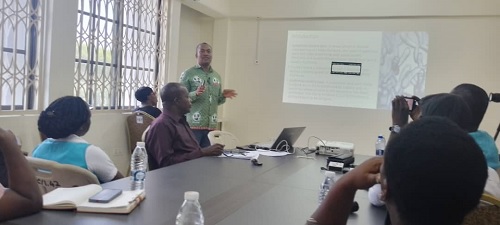
More than 4,000 contacts tracing have been done by health officials and monitored, with 17 cases picked up for treatment.
According to Mr Koomson, the Upper Denkyira East and the Assin South districts remain the only two districts in the Central Region that have not recorded any cases.
He stated that the Awutu Senya Municipality led in cases, with 565 suspected cases recorded, followed by Agona West, with 283 while Effutu followed with 259 suspected cases.
Upper Denkyira West, he said, had recorded only one case, which he even described as "imported" from the Western Region.
Mr Koomson stressed the need to improve hygiene to ensure reduced cases and to break transmission.
The Regional Health Promotion Officer at the Central Regional Health Directorate, Mathew Ahwireng, said the RHD had intensified education and urged all to avoid eating from unsanitary sources.
He advised the educational institutions to check and monitor food vendors to ensure no outbreak on the campuses saying that could be disastrous.
He urged the public to eat food at the right temperatures and to visit the health facilities promptly, stressing that treatment of cholera remained free and delays could be fatal.
Mr Ahwireng also appealed to the media to help create the needed awareness and advocacy on the outbreak to help break transmission, especially before the onset of the rainy season, saying the rainy season and its challenges could worsen the outbreak.
The Deputy Director, Public Health, at the RHD, Dr Joojo Cobbinah, said all the educational institutions were being treated as potential hotspots.
To this end, he said the RHD had engaged the University of Cape Coast health authorities in particular to encourage them to create awareness of the disease.
Furthermore, he said the RHD, together with some of the institutions, had put in place measures in case of any outbreak on the campuses, urging stakeholders to collaborate with the health directorate to urgently halt transmission of the outbreak.
He stated that hand-washing practices were critical and must be readopted.
The Regional Officer of the Food and Drugs Authority, Francisca Obeng, gave an assurance that the sachet water produced in the region was safe for drinking, according to the FDA's checks and standards.
Latest Stories
-
Gov’t working to ensure GAUA strike is called off by October 16 – Haruna Iddrisu
3 minutes -
KAIPTC Commandant calls for continent-wide strategy to tackle Africa’s maritime security threats
14 minutes -
GRIDCo investigates Mallam substation fire as power restoration continues in Accra
15 minutes -
20% digital tax is not E-Levy – GRA boss
26 minutes -
Defence Minister calls for intelligence-sharing and regional cooperation to tackle maritime insecurity
29 minutes -
Afenyo-Markin failed to comply with procedural rules in defamation suit – Sammy Gyamfi’s lawyers
40 minutes -
GRA recovered GH¢1.3bn out of about GH¢1.4 bn unpaid VAT from ECG – Anthony Sarpong
42 minutes -
KMA to extend daily toll collection to nights and weekends
44 minutes -
Ghana secures second consecutive term on UN Human Rights Council
48 minutes -
KATH Catheterisation lab targets December completion amid specialist staffing concerns
49 minutes -
Government working to address economic challenges driving youth into galamsey – Mahama
59 minutes -
Domestic Capital Africa campaign targets US$600bn pension funds for SME growth
59 minutes -
Women leaders’ wisdom and work deserve recognition – Mahama
1 hour -
NRSA to refund surplus from auctioned vehicles of non-subscribers after deducting towing costs
1 hour -
Ghana must integrate AI into mainstream education – DigiMarkt Project Board
1 hour