

Audio By Carbonatix
Space is an unforgiving realm: a vacuum devoid of air, temperatures that swing from scorching to freezing, and relentless charged particles that bombard satellites, threatening critical systems.
These harsh conditions can degrade spacecraft and jeopardise missions vital for global communication, navigation, defence, and climate monitoring.
At Missouri University of Science and Technology, researcher Emmanuel Kofi Asuako Wie-Addo is revolutionising how we prepare for these challenges.
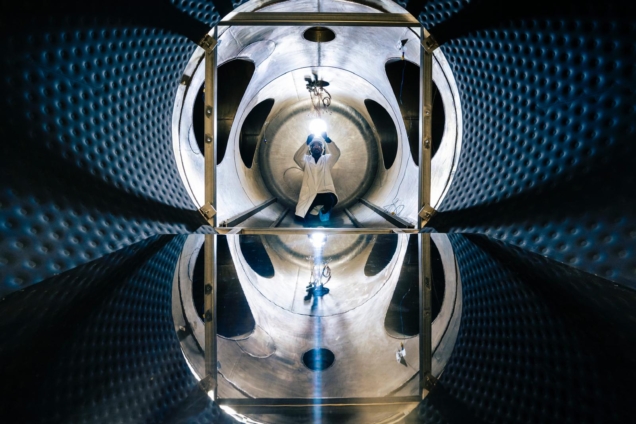
His work focuses on recreating the extreme environment on Earth using advanced vacuum facilities and custom-designed diagnostic probes.
These tools enable precise, reliable testing of satellites, propulsion systems, and instruments, ensuring they withstand the rigours of space before launch.
By preventing catastrophic failures, Emmanuel’s research safeguards billions in investments and ensures mission success.
As the global space economy races toward a projected $1.8 trillion by 2035, growing at 9% annually according to the World Economic Forum, Emmanuel’s innovations are a linchpin in this dynamic sector.
His cost-effective ground-testing solutions are tailor-made for emerging spacefaring nations, including the African Space Agency, established to drive the continent’s autonomous space ambitions.
By developing local testing facilities, emerging players in the space programme stand to minimise reliance on expensive foreign infrastructure, fostering self-sufficiency and sparking technological breakthroughs in areas like agriculture, disaster management, and rural connectivity.
The African Space Agency stands to gain immensely from Emmanuel’s research, which directly supports its mission to build robust indigenous space capabilities.
Such testing platforms will empower both public and private sectors to develop and validate technologies that address Africa’s most pressing challenges: climate resilience, food security, education, and digital access.
For instance, satellites tested in these simulated environments can enhance weather forecasting for farmers or provide internet to remote regions, transforming lives across the continent through uninterrupted missions.
By equipping Africa to lead its space programme, Emmanuel’s work positions the continent to take on more prominent roles in international missions and joint space science initiatives, forging partnerships in lunar exploration, deep-space ventures, and global climate initiatives.
Emmanuel’s vision aligns with the African Space Agency’s goal of creating a coordinated, innovative, and African-led space ecosystem.
As emerging space nations across Africa, South America, and Asia join the race, his research offers a blueprint for affordable, reliable access to space.
By strengthening Africa’s role in the $1.8 trillion space economy, Emmanuel Kofi Asuako Wie-Addo is not just testing technology—he’s launching a continent toward a stellar future.
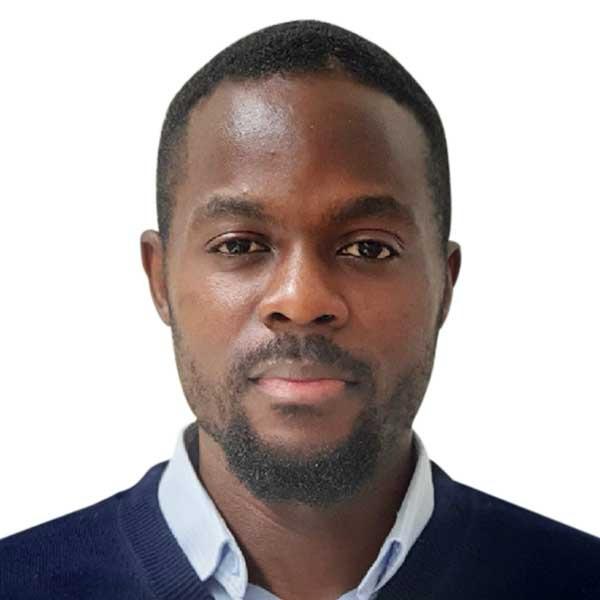
The writer, Emmanuel Kofi Asuako Wie-Addo, is of the Missouri University of Science and Technology, Rolla, USA
Latest Stories
-
Baffour Awuah cooperating with investigators after surrender and arrest – EOCO
15 minutes -
Destruction of aspirants’ posters breaches democracy—Ashanti NPP Communications Director
25 minutes -
BNI investigates Ampofo Ankrah over alleged $623,000 World Cup visa scheme
37 minutes -
NPP National Delegates Conference: Police announce road closures, diversions around Baba Yara Stadium
45 minutes -
Agric Committee demands financing plan for Pwalugu Irrigation Project before 2027 Budget
47 minutes -
Minority calls for the immediate suspension of Ghana-Colombia maritime agreement
58 minutes -
Ghanaian professional Sydney Hushie appointed UNFPA Chief of Digital Centre of Excellence
1 hour -
GHS urges health managers to use community scorecards to improve healthcare delivery
1 hour -
Ekyeamamfrom-Pivot irrigation project 90% complete but stalled over unpaid certificates
1 hour -
When the Gavel speaks, where is the choir that once sang for Wontumi?
1 hour -
NPP does not need a new chairman: It needs a brand architect
1 hour -
GNFS contains fire at Avenor North Industrial Area in Accra
1 hour -
NITA appoints Anthony Owusu-Ansah as Acting Deputy Director-General
1 hour -
RANA warns Salomey Bafoh case could have chilling effect on free expression
1 hour -
Who is the ‘hero’ Indian pilot who was stabbed on Israel-bound flight?
2 hours