

Audio By Carbonatix
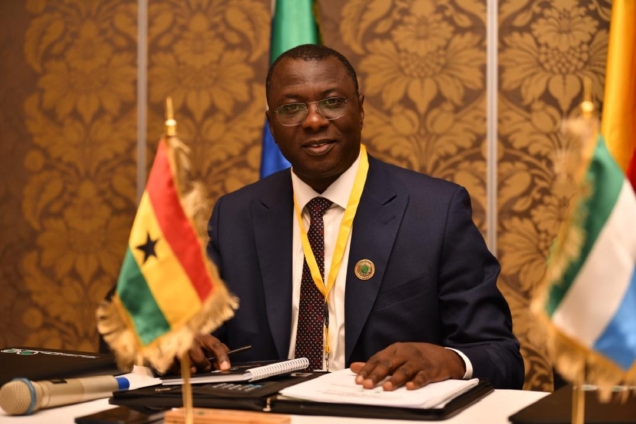
The Finance Minister, Dr Mohammed Amin Adam, has called on African governments to reform tax systems to make payment simple and fast, and friendlier to businesses and individuals.
That, the Minister said would engender compliance, increase domestic revenue, and reduce the continent’s heavy reliance on expensive international loans to finance the continent’s development.
According to the World Bank, low-income countries, including those in Africa face an estimated annual financing gap of half a trillion dollars to achieve the Sustainable Development Goals (SDGs) by 2030.
However, in most Sub-Saharan Africa economies taxes collected amount to less than 15 per cent tax-to-Gross Domestic Product (GDP), which the World Bank says is barely enough to carry out basic state functions.
During an interview on the margins of the just ended 2024 African Development Bank (AfDB) Annual Meetings in Nairobi, Kenya, Dr Amin Adam said, “we must reform our tax system to become fairer, and treat the taxpayer well.”
“I’m not saying we should overtax our people, but ensure that we bring efficiency to bear on our revenue collection and tax system… and have a system that is friendly to taxpayers and simple,” he said.
While calling for incentives to make people pay taxes, Dr Amin Adam urged taxpayers to be honest with their payment, explaining that the frequent audit and ‘harassment,’ resulted from tax avoidance and the non-disclosure of income.
“We must make sure that we bring in the informal sector because a few people are paying the taxes, therefore, we must expand the tax net and bring in more people,”the Minister said.
That, he said would not only reduce the burden on the few who paid taxes, but also expand the continent’s tax base to generate more revenue “to support our own development.”
He also called for continuous education and sentitisation of the people on the need to pay taxes, and leverage Artificial Intelligence (AI) and digital solutions to improve efficiency to make people spend less time to collect and pay taxes.
“More importantly, we must spend the tax money prudently in areas that can generate more money so that we have value for money,” Dr Amin Adam said.
Meanwhile, Ghana, last month, instituted a monthly stakeholder engagement initiative with the Diplomatic Corps as well as the trade in business community to that effect.
The engagement is to discuss, find and implement solutions to make taxes friendlier, ease the business climate, and track the progress made with solutions on the ease of doing business and increasing domestic revenue mobilisation.
The government has also echoed its commitment not to overburden taxpayers, but, use effective means to collect revenue from those who evade taxes, while making tax payment easy and fast.
Latest Stories
-
Photos: Housing solutions take centre stage at Day 2 of the 3rd Republic Bank-JoyNews Habitat Fair
30 minutes -
Video: Immunity should be exercised without creating classism – Inusah Fuseini on cocaine bust
1 hour -
Ghana Air Force passes out 293 recruits after six months of intensive training
1 hour -
EOCO vrs Baffour Awuah: EOCO should have secured warrant before arrest attempt at court – Inusah Fuseini
1 hour -
Triple fibre cuts disrupt telecom services across Northern, Oti regions – Sam George
1 hour -
Politicisation could undermine parliamentary probe into cocaine seizures – Dr Osae-Kwapong
1 hour -
EOCO chases MP: Can Section 41 cure lacuna in EOCO Act? – Inusah Fuseini asks
1 hour -
GNFS, GWL inspect fire hydrants in Ministries enclave; 23 found faulty
2 hours -
Gov’t directs release of 50,000 bags of grain to ECOWAS
2 hours -
Ghana, Germany deepen cooperation on railways, labour mobility
2 hours -
Huge crowds greet Pope in Paris for open-air Mass
2 hours -
Ghana’s Charles Amofah Elected Vice President of African Bowling Federation
2 hours -
‘I never said I’ll declare a state of emergency’ – President Mahama on galamsey
3 hours -
Bobby Banson condemns EOCO’s attempted arrest of Nana Agyei Baffour Awuah
3 hours -
When Kumasi begins to look like somebody is in charge
3 hours