

Audio By Carbonatix
The fastest economic recovery in Ghana's history has been recorded and achieved by version 2.0 of the Mahama-led government — this, after the most regressive, self-immolating policies of waste, mismanagement, and plunder the country has ever seen.
Key achievements:
· Exit from the IMF programme with star-studded honours
· Rapid decline in inflation
· A confident cedi
· International reserves built back better
· The quickest debt reduction from 65% to 45% of GDP in just one year
Buoyed by confidence, candour, and transparency, the government's finance team — competently led by Dr. Ato Forson — carefully choreographed how to work with the IMF programme they inherited, even though it was badly bruised, broken, and moribund from excessive haemorrhage following the twin shocks of the DDEP, which amounted to the literal pickpocketing of our savings and investments by the previous administration.
Remember: the previous government renegotiated the IMF programme the NDC government handed to them. Sadly, they missed almost 70% of the structural benchmarks they had promised the IMF by the end of 2019 — when the economy was already stuttering in fits — only to later be exposed and overwhelmed by COVID-19 and, to a very minute degree, the Russian war on Ukraine.
In essence, the final apocalyptic collapse of the economy we witnessed in 2022 — with all macroeconomic indicators gasping for air — was entirely avoidable.
So what has changed this time with the exit plan from the IMF? A commitment never to return to the IMF after three and a half years — the period we have been cursed, through maladministration, to return to the Fund since independence in 1957.
The Finance Minister and his team defended a decision before Cabinet to be bound by additional strictures of the IMF for 36 months, long after the general elections in 2028. This is to remain credible to investors and the markets, and in the process mobilise enough capital to invest in critical areas of the economy to provide jobs — but crucially, to free up domestic resources for the private sector to blossom. It is a promise not to splurge and waste resources, as has usually been the case with governments that exit IMF programmes.
Essentially, the Government of Ghana announced the official conclusion of the IMF Extended Credit Facility Programme and transitioned immediately to the non-financing Policy Coordination Instrument (PCI) of the IMF.
What is the PCI? It is a non-financial advisory and monitoring tool provided by the IMF. It allows the country to design and implement its own economic reforms without receiving a financial bailout, acting essentially as a global seal of approval for the government's fiscal management.
This masterstroke in economic diplomacy could not have been achieved without the backing of the President, whose mission this time around is legacy and respect. The President reads every document handed to him, often correcting grammatical mistakes before signing the country up to the contents.
So, we can say that yes, stability has been achieved after the races with death we experienced prior to 2025. Resilience is what we aim for now as a country. We need to remain disciplined and reduce losses by State-Owned Enterprises (SOEs), which cost governments approximately $2 billion annually.
Quite a number of SOEs must be axed outright, others merged, and still others injected with independent, world-class management to return profit — because they are enterprises, not social care homes.
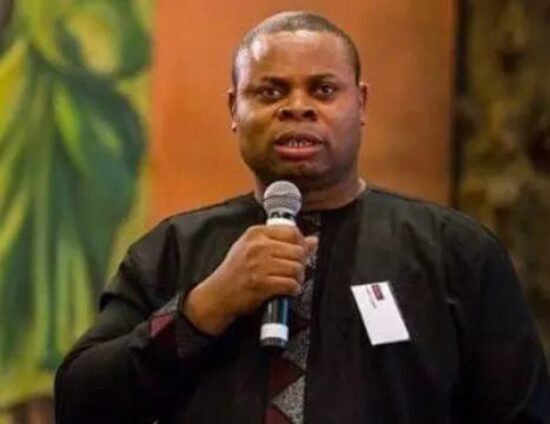
In the meantime, we are grateful for the dexterity of the economic management team, the Governor of the Bank of Ghana, the encouraging progress of GoldBod, and all other functionaries of government who will abide by the honour code of spending within budgets to make Ghana's self-imposed IMF PCI possible.-- Franklin Cudjoe
Latest Stories
-
Ghana should withdraw from 2027 AFCON – Kojo Addae Mensah
9 minutes -
Team Ghana departs Accra for Angola ahead of Karting Africa Trophy
15 minutes -
AIT President Prof Clement Dzidonu urges lifelong learning as AI reshapes work and education
18 minutes -
FWSC to meet striking teacher unions on Tuesday
19 minutes -
NPP won’t force candidates to step down – Miracles Aboagye
33 minutes -
Black Stars: Building in the sinking sands
34 minutes -
Low inflation on paper, high cost of living: How Presidents Mahama and Trump are facing stark economic reality
42 minutes -
NPP will negotiate with popular non-politicians to secure winnable candidates – Miracles Aboagye
47 minutes -
Only 5% of Ghanaians can afford housing without support – Gov’t
47 minutes -
Nigeria launches rescue after military plane crashes with 32 aboard
54 minutes -
GES digitalisation already exists; restore discontinued platforms – Adutwum spokesperson
54 minutes -
Police launch manhunt for 7 after deadly Bunkprugu violence
56 minutes -
GTEC directs UDS to immediately cease unauthorised mode of delivering accredited LLB programme
60 minutes -
We must address the role of boys in impregnating young girls, not just blame girls – Kobby Kyei
1 hour -
Mahama grants presidential pardon to 863 convicted persons
1 hour