

Audio By Carbonatix
The Human Trafficking Secretariat of the Ministry of Gender Children and Social Protection and its partners have engaged judges in the fight against human trafficking.
It collaborated with the Judicial Training Institute and with support from Expertise France to organise a two-day sensitisation and orientation workshop for selected judges.
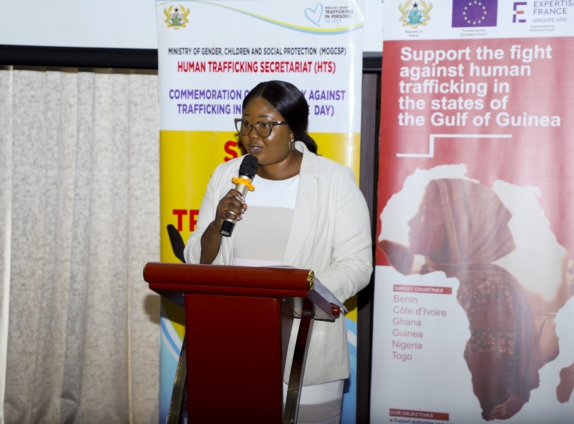
The Deputy Gender Minster, Mrs Francisca Oteng-Mensah in an address, said Ghana was a source, transit, and destination for issues of human trafficking, hence, the need to collectively end all forms of exploitation.
‘‘Let me reinterpret this adage; if you spare the rod, you spoil a child,’ to reflect the fact that, if we identify the offenders without punishing them at the end of the day,” she stated.
Mrs Oteng-Mensah said so far with collaboration with stakeholders, over 375 law enforcement officers had been trained from 2022 to 2023 through the Expertise France Project on Human Trafficking and Irregular Migration.
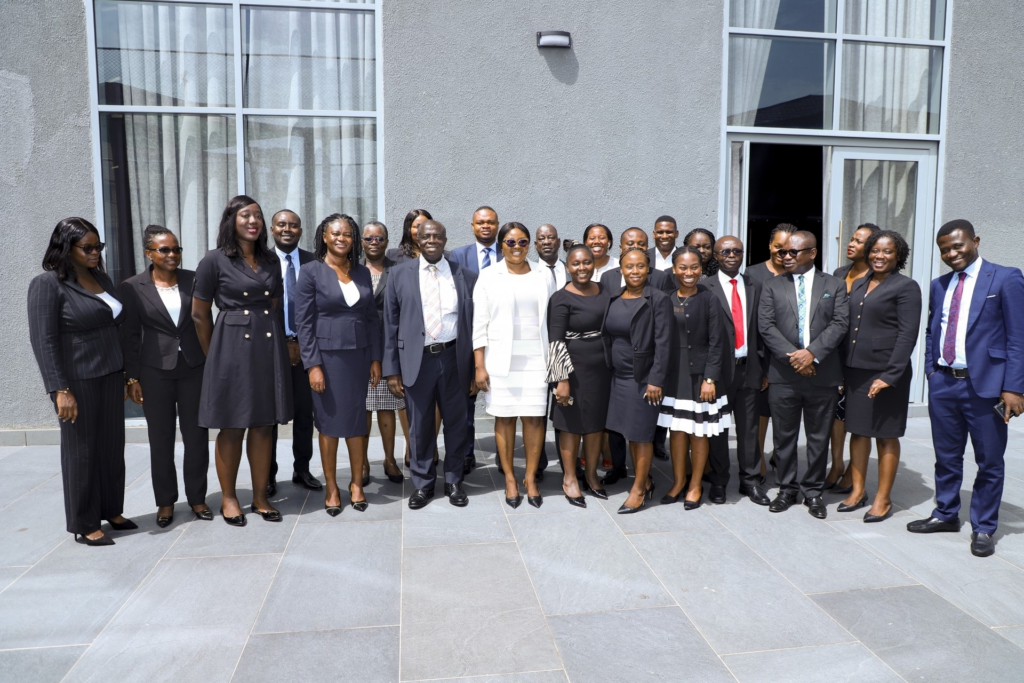
The officers are from the Ghana Police, Immigration Service, Customs officers and the Economic and Organised Crime Office (EOCO).
She said there had also been the training of trainers for 80 law enforcement officers to enhance their capacities to train their colleagues as well as capacity building for 140 Civil Aviation Officers on victim identification and counter-trafficking activities.
The Deputy Minister said 70 judges had been sensitised in human trafficking and irregular migration in the Northern and Southern sectors of the country.
She stated that 100 cocoa cooperatives officers’ capacities were built on understanding human trafficking trends, child labour and forced labour indicators.
‘‘We have to look at the financial and other material gains traffickers make from the exploitation of their victims. We can disrupt their activity through restraining and freezing their assets under the EOCO laws at an early stage of the investigation,’’ Mrs Oteng-Mensah said.
For human trafficking, the Deputy Minister said, it included the power to seize and forfeit land, vehicles, and buildings, which may had been used to traffic victims.
She expressed worry about the current trend of Information and Communication Technology (ICT), and crime involving the Q Net and the level of exploitation being done in the area and appealed for it to be investigated.
Dr Afisah Zacharia, Chief Director, Gender Ministry, in a speech read on her behalf by Ms Abena Annobea Asare, Head of Human Trafficking Secretariat, said the workshop was to provide judges a basic understanding on the issues of human trafficking and irregular migration.
She said it was also to enable them to manage traumatised trafficking victims or witnesses in the courtroom, and to discuss issues related to sentencing which was sometimes not in accordance with the statutory provisions and guidance in the Human Trafficking Act.
Dr Zakaria said the training was necessitated by the global sales of ammunition, currently, the largest criminal trade followed by human trafficking which called for stakeholders, including judges help eradicate human trafficking.
The Project Manager of Expertise France, Mr Serge Akpalou said human trafficking was a global phenomenon that took various forms, such as sexual exploitation, forced labour or services and servitude or the removal of organs in its extreme cases.
He said it had recently become more pronounced due to the health and current economic crisis that had heightened the vulnerabilities of people who were already fragile.
Every year, Mr Akpalou said, according to the Global Financial Integrity Transnational Crime rating, human trafficking generated approximately $150.2 billion and was the second most widespread form of trafficking in the world, after drug trafficking.
The Project Manager said 2.5 million people, mainly women and children, annually fell under the influence of traffickers, and Ghana was no exception.
He underscored the need for concerted, united and coordinated actions between agencies and especially between neighbouring countries for an effective fight against the canker.
Mabel Ahele, Deputy Director of the Judicial Training Institute (JTI), said according to reports received, the previous sensitisation sessions in Kumasi and Tema were successful.
She said the judges received and shared their experiences, limitations and challenges in applying the law, especially regarding dealing with victims of trafficking.
‘‘I pray that this sensitization will follow in the same vein. Let’s bring to light the issues bothering on victims of trafficking in our courtrooms, share best practices and discuss very effective ways of tackling the issues so that victims are not re-traumatised and stakeholders develop confidence in our judicial decisions and judgments," Madam Ahele stated.
Latest Stories
-
The man who saw tomorrow: How Dr Bawumia built for Ghana what America and Nigeria are building today
18 minutes -
Kumasi drivers demand price controls for goods, brand some traders as real ‘Kalabule’
22 minutes -
Consumer Protection Agency commends FDA for destroying illegal bales of diapers
25 minutes -
GNFS rescues stranded persons after flooding in Hohoe
47 minutes -
Baffour Awuah deliberately refused to honour EOCO invitation – Deputy AG, Srem-Sai
1 hour -
‘Believe in these players’ – Carlos Queiroz tells Ghanaians after leaving Black Stars job
1 hour -
ECG announces planned maintenance outage in parts of Accra on Friday
1 hour -
Carlos Queiroz sacked as Black Stars head coach
1 hour -
Parliamentary Sports Committee to ‘interrogate’ Black Stars struggles with Ministry, GFA invitations
2 hours -
Asutifi North Police arrest 7 in crackdown on suspected drug activities
2 hours -
Attijariwafa Bank: What to know about the Moroccan Group taking over SG Ghana
2 hours -
University Librarians Ghana honours past leaders for distinguished service
2 hours -
Seychelles President leads high-level dialogue on Africa’s digital future at FALS Global Conversations in New York
2 hours -
24-hour economy requires faster justice for commercial cases – Chief of Staff
2 hours -
Five Agric Colleges receive digital tools to drive climate-smart farming
2 hours