

Audio By Carbonatix
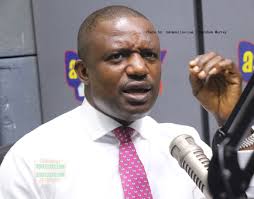
The Minister for Energy and Green Transition, Mr John Jinapor, has insisted that the newly introduced GH₵1 energy levy is not intended to pay off legacy debt but is a necessary measure to sustain Ghana’s electricity supply amid rising costs of procuring liquid fuels.
Speaking on Joy FM on Wednesday, June 4, Mr Jinapor stressed that without the levy, the energy sector would face severe funding shortfalls, threatening power stability for consumers nationwide.
Mr Jinapor emphasised that governance is not merely about making decisions but about optimising situations and doing what is believed to be the best course of action.
He added that nobody enjoys imposing taxes or levies on the people of Ghana.
“We have been working very hard since assuming office, but to be clear, this levy is not intended to pay off legacy debt,” he explained.
“We have studied the energy sector thoroughly and analysed the system. The fundamental truth is that the liquid fuels we currently purchase are not part of the tariff structure,” he added.
He further explained that even if the Electricity Company of Ghana (ECG) were to collect 100% of electricity payments today, none of that money would go towards procuring liquid fuel.
“Meanwhile, this year alone, we require over one billion US dollars to procure liquid fuels,” he revealed.
Mr Jinapor noted that increasing gas consumption or production would be the ideal solution, but the gas infrastructure takes an average of 18 months to two years to put in place — assuming work started today.
"This should have happened years ago."
He acknowledged the support of the Finance Minister, who has been helping, albeit with considerable difficulty, to procure liquid fuel.
“In terms of available options, we could increase electricity tariffs, rely fully on the Finance Minister to find non-existent funds, or share the burden through a reduction in fuel prices,” he said.
Mr Jinapor reminded listeners that when their administration took office, fuel was approximately GH¢16 per litre.
“So even with this one cedi levy, and although we agree that consumers will pay about 50 cedis extra, you will still be saving between 100 to 150 cedis compared to when we assumed office,” he continued.
He acknowledged that ideally, they would have wished to pass all the benefits onto Ghanaians, but this would have required a 40 to 50 per cent increase in electricity tariffs.
“Governance is a balancing act, and we are appealing to Ghanaians to understand that we have already provided a reduction from 16 to about 13 cedis — roughly a three cedi decrease.”
Mr Jinapor concluded by stating that maintaining the levy at one cedi will help sustain electricity productivity, while efforts continue to increase gas consumption, reduce losses, and improve efficiency.
Latest Stories
-
Richard Ankomah beats competition to win Hitz FM Rep Ur Jersey 2026 Quiz
47 minutes -
Afriyie Wutah marks birthday with ‘Summer Jam’ featuring Maxi Priest
1 hour -
AngloGold Ashanti trains Obuasi SMEs in digital marketing to boost business growth
2 hours -
Takoradi Port to serve as main corridor for cargo going to Sahel region –Finance Minister
2 hours -
The Shadow Squad: Who really picks Ghana’s Black Stars?
2 hours -
COPEC backs 20% increase in transport fares
3 hours -
President Mahama will not “play games” over Anti-LGBTQ Bill – Akwatia MP
3 hours -
Davida Roofing Systems Ltd CEO receives 2026 International Business Achiever Award
3 hours -
Courts of the Living: Re-imagining environmental justice in the era of ecological crisis
3 hours -
Mahama in London for high-stakes investment, royal engagements and diaspora meeting
5 hours -
NPP-USA rejects new internal election guidelines, sticks to branch constitution
6 hours -
Gyakie surprises fans with visits to workplaces and campuses
6 hours -
Maiden Ladé Wosornu Students Poetry Contest held in Accra
7 hours -
Photos: 24 players train at Dragon Park as Black Stars step up World Cup preparations
7 hours -
Partey, Inaki join Black Stars camp as preparations intensify for Wales friendly
7 hours