

Audio By Carbonatix
Ghana finds itself in a troubling economic cycle—where prices of goods and services continue to rise, often without justification or regulatory oversight. While global and local economic dynamics do play a role, the absence of a strong, specialised national pricing regulatory mechanism allows unchecked price escalation that hurts the consumer, especially the vulnerable.
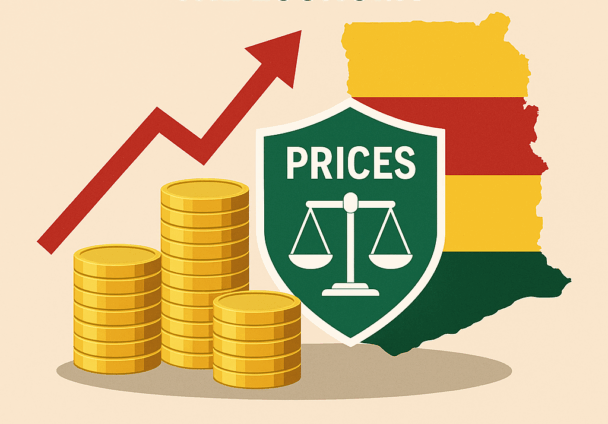
The time has come for Ghana to establish a Pricing Regulatory Commission or Authority, a body dedicated solely to monitoring, evaluating, and setting fair price thresholds for essential goods and services. This institution will be different from, and operate independently of, existing consumer protection structures. It will serve as a stabilising force in the economy and help restore confidence in market fairness.
Why the Pricing Regulatory Authority Must Be Separate from Consumer Protection
Ghana currently has a Consumer Protection framework, backed by the Consumer Protection Act and implemented through institutions like the Consumer Protection Agency and Ghana Standards Authority. While these institutions have been useful in safeguarding consumer rights against fake products, deceptive packaging, or harmful goods, their mandate is limited in scope when it comes to price regulation.
Consumer protection bodies cannot impose price ceilings or floors, nor can they regulate price fluctuations tied to the dollar or inflation unless it involves clear exploitation or deception. In contrast, a dedicated Pricing Regulatory Commission will have the legal authority and technical expertise to:
- Monitor price trends across markets and sectors,
- Set minimum and maximum prices for essential goods,
- Ensure that prices fall when input costs decrease or when the cedi strengthens,
- Stop opportunistic pricing by retailers and service providers.
Separating these two institutions—Consumer Protection and Price Regulation—will not only reduce bureaucratic conflict but will also promote specialisation and effectiveness. Consumer protection ensures product quality; price regulation ensures product affordability. Both are essential, but they must function independently with clear mandates.
What a Pricing Regulatory Authority Will Do
A Ghana Pricing Regulatory Authority (GPRA) would:
- Monitor and control the prices of essential commodities and services.
- Set price ceilings and price floors to protect consumers and ensure fair trade.
- Investigate price hikes and demand economic justification before approval.
- Require periodic reviews of pricing by sectors—especially in food, transport, construction, health, utilities, and rent.
- Enforce penalties on businesses or individuals engaging in exploitative pricing.
- Issue regular public bulletins on benchmark prices for key goods and services.
This Authority will not distort the free market but rather regulate price abuse and unfair manipulation, which continue to threaten economic stability and widen inequality in Ghana.

The Dollar Excuse Must End
Today, nearly every product—from food to cement, rent to medical supplies—is linked to the U.S. dollar. Yet, when the dollar rate drops, prices remain high. There’s no enforceable mechanism to track and correct this disparity. The GPRA will fix this by mandating automatic price reviews and reductions tied to real-time exchange rate and production costs.
No economy thrives when only price increments are allowed and reductions are optional or non-existent.
Lessons from Other Countries
Several countries have implemented similar systems with measurable success:
- South Africa – National Consumer Commission (NCC)
Works in collaboration with pricing monitors to check unfair price hikes, especially during crises. - India – National Pharmaceutical Pricing Authority (NPPA)
Sets maximum retail prices (MRPs) for medicines and health services, ensuring healthcare remains affordable. - Malaysia – Price Control and Anti-Profiteering Act
Gives legal backing to regulate prices of over 20 essential items like fuel, rice, sugar, and flour. Businesses must justify price changes with documentation. - Philippines – Department of Trade and Industry (DTI)
Issues Suggested Retail Prices (SRP) for essential goods. Violators of the SRP are sanctioned.
These countries understand that unchecked price movements can collapse household incomes and damage long-term economic growth.
Legal Empowerment is Key
To be effective, Parliament must pass a new law establishing the GPRA with the authority to:
- Audit companies and supply chains,
- Define what qualifies as an “essential good or service,”
- Issue guidelines on price margins,
- Enforce penalties and corrective pricing,
- Collaborate with industry bodies, banks, and trade unions.
The Commission should operate like the Public Utilities Regulatory Commission (PURC) or the Bank of Ghana, with transparency, accountability, and independence from political influence.
Ghana cannot continue to operate in an environment where prices go up but rarely come down. A Pricing Regulatory Authority is not a luxury—it is a national economic necessity. The current Consumer Protection structure is useful, but it is not enough. A dedicated, empowered commission that oversees and enforces pricing sanity across sectors is long overdue.
Let us act now to safeguard the ordinary Ghanaian, protect local businesses from exploitative competition, and restore confidence in the market system.
A country that controls how prices are determined controls its future.
Latest Stories
-
Re: Reinsurance does not replace process — A response to the SIGA–SIC defence
12 minutes -
Gender Ministry supports Harriet Amuzu in ongoing abuse case
25 minutes -
AG joins plaintiff to scrap OSP ?: We should be mindful of the mischief in this – Bobby Banson
31 minutes -
Samson Lardy Anyenini questions willingness of Attorneys-General to prosecute political colleagues
33 minutes -
It is only fair the OSP is heard in Supreme Court case – Bobby Banson
39 minutes -
Asiedu Nketia resumes Ashanti tour, second leg kicks off on Sunday
48 minutes -
NLA denies salary cut claims, threatens legal action over reports
52 minutes -
BoG Governor honoured for stabilising cedi, improve inflation
54 minutes -
Kyebi Easter Homecoming 2026: A resounding success!
1 hour -
Trade Minister applauds GUTA as a pillar of economic growth; Prez Mahama honoured
2 hours -
President’s brother’s takeover of Damang Mines is ‘untidy’ – Alhassan Tampuli
2 hours -
It’s not true that gov’t decided not to renew the lease for Gold Fields – Bobby Banson
2 hours -
Ghana to boost tomato production with 60-hectare irrigated farms and processing initiatives
2 hours -
E&P’s takeover process of Damang Mines was very clean – Inusah Fuseini
2 hours -
Damang takeover: There is not going to be any job loss; it is a lease change – Bobby Banson
3 hours