

Audio By Carbonatix
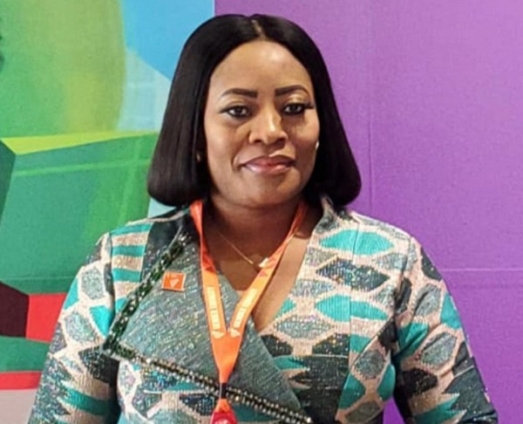
Ghanaian media personality and gender advocate Josephine Oppong-Yeboah has called for stronger access to justice for women and girls to promote inclusive and equitable legal systems.
She said many women and girls worldwide face structural barriers that limit fair and equal access to justice.
Strengthening equitable access to legal systems would help eliminate discriminatory laws, policies and practices that hinder the growth and well-being of women, particularly in the Global South, Ms Oppong-Yeboah said.
She made the remarks in a media interview ahead of this year’s International Women’s Day celebrations on March 8.
This year’s theme, “Give to Gain,” promotes a mindset of generosity and collaboration to advance opportunities for women.
Ms Oppong-Yeboah said the theme highlights the power of reciprocity and collective support.
“When people, organisations and communities give generously, opportunities and support for women increase, helping them to thrive,” she said.
“We can all give our support to gain advancement for women and girls.”
She added that contributions such as donations, knowledge-sharing, resources, infrastructure, advocacy, education, training and mentoring could help create a more supportive and interconnected environment for women’s advancement.
Ms Oppong-Yeboah also noted that many young women in several countries, including the United States and Ghana, face career stagnation due to workplace policies that inadvertently disadvantage women.
Citing data from Fora: Network for Change, a nonprofit focused on gender equity in the workforce, she said 93% of Canadian women and gender-marginalised workers aged 18 to 29 reported seeing no clear pathway to promotion in their workplaces.
She said women often face intersecting barriers to justice, including high legal costs, limited legal aid and systemic biases.
Socioeconomic factors such as poverty, caregiving responsibilities and geographical isolation, particularly for rural women further restrict access to justice, she added.
Ms Oppong-Yeboah said discriminatory legal frameworks, fear of retaliation and insensitive court systems also discourage many women from reporting abuse or seeking redress.
Latest Stories
-
Power restoration fault suspected in Kumasi Central Market fire
4 hours -
The 7-foot giant of Ngleshie Amanfro: Seven-foot Ghanaian Ephraim Saawa dreams of joining the national basketball team
5 hours -
Government promises support for Kumasi Central Market fire victims
5 hours -
Vibes The Movie: Big Ghun’s Ghanaian film earns five nominations at 2026 REFFA
5 hours -
MamaCare CEO warns unresolved conflicts among health workers could undermine maternal and neonatal care
6 hours -
Health professionals urged to translate medical knowledge into practice to save mothers
6 hours -
Conflicts among care providers linked to maternal, neonatal deaths – Expert
7 hours -
GIS marks 10th TIME conference, champions improved teaching practices
7 hours -
BRICS Or Balance? What Ghana’s bid really means
8 hours -
GPRTU wants full TRAFFITECH-GH implementation to start in 2027
8 hours -
How 10-mile walks for basic education birthed a 50-year legal career for Justice Korbieh
8 hours -
Mahama announces plans to import electric wheelchairs for PWDs
8 hours -
KGL U17 Colts 2026: Western beat Prempeh Elite Academy to set up final final with Greater Accra Region
9 hours -
Late Solanke strike salvages 10-man Spurs draw at Man United
9 hours -
Gender Ministry to monitor welfare of Nana Akua Addo’s children amid domestic violence case
9 hours