

Audio By Carbonatix
Ghana’s 2026 Budget has placed renewed emphasis on capital expenditure, with strategic allocations aimed at revitalising infrastructure and boosting the energy sector to support industrialisation and the government’s 24-hour economy initiative.
According to the budget document, total expenditure for 2026 is projected at GH¢302.5 billion, representing 18.9% of GDP, with a significant portion dedicated to capital projects under the Big Push Infrastructure Programme and energy sector reforms.
The government has earmarked GH¢30 billion for the Big Push Programme, which will fund strategic road and bridge construction across the country.
Key projects include the Accra–Kumasi Expressway, designed to reduce travel time by 50% and create over 30,000 jobs, and the Adawso–Ekye Amanfrom Bridge, expected to unlock the agricultural potential of the Afram Plains.
“The Big Push is not just an infrastructure drive, it is a nation-building vision,” the Finance Minister noted. “We are connecting people, markets, and opportunities to ensure growth is shared across every region.”
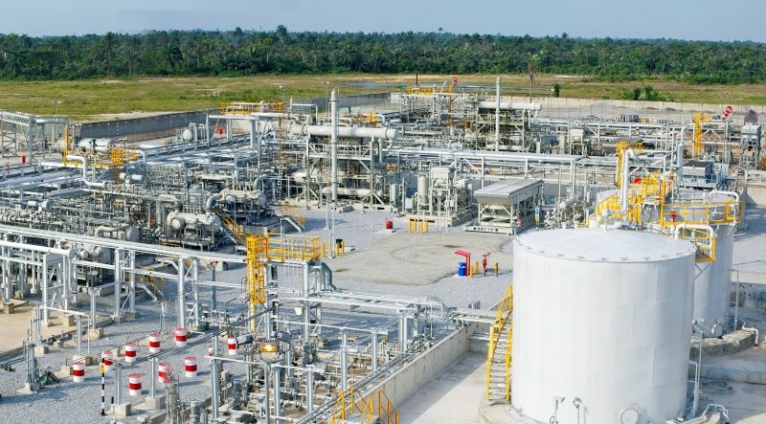
In the energy sector, the government is prioritising affordable and reliable power supply through gas-to-power reforms, renewable expansion, and rural electrification.
An allocation of GH¢15.2 billion has been made for energy sector shortfall payments, alongside GH¢4.8 billion for clearing legacy Independent Power Producer (IPP) debts.
Additionally, GH¢2 billion has been set aside for the Rural Electricity Acceleration and Urban Intensification Initiative, which aims to expand nationwide access to electricity.
Energy initiatives also include new gas supply agreements with ENI and Jubilee partners, projected to add over 150 million standard cubic feet of gas per day, while transitioning from light crude oil to natural gas to cut power generation costs by up to 75%.
Overall, the 2026 Budget reflects a deliberate shift toward productive and growth-enhancing investments, positioning infrastructure and energy as the backbone of Ghana’s economic transformation agenda.
“Every cedi borrowed will deliver value, every repayment will build confidence, and every reform will secure Ghana’s fiscal future,” the Finance Minister affirmed, reinforcing the government’s commitment to fiscal prudence and sustainable development.
Latest Stories
-
Cybersecurity is a journey; Ghana must adapt to evolving threats — CSA
9 minutes -
“Money can’t win 2028” – Former U/West Minister warns NPP against ‘highest bidder’ politics
9 minutes -
2026 Mid-Year Budget: Minority vows to block fresh funding request
51 minutes -
Fintechs must unite to strengthen Ghana’s fight against digital fraud — Prof Bokpin
1 hour -
Ramaphosa sends delegation to Mahama over xenophobic attacks in South Africa
2 hours -
Payment service providers operating in silos are weakening Ghana’s fight against fraud — Ebenezer Boffour
2 hours -
KMA reports police officer over alleged gun threat during vehicle towing operation
2 hours -
Dr Daniel Seddoh and siblings honour the memory of their mother with an ICT lab and library
2 hours -
Stanbic Bank Ghana reinforces leadership in Private Banking as Group retains Africa’s Best Private Bank title
2 hours -
Today’s front pages: Thursday, July 23, 2026
2 hours -
3 decades of connecting people, creating opportunities and advancing Ghana’s development
2 hours -
Fraud cases involving fintechs rising as criminals exploit payment channels – Ebenezer Boffour
2 hours -
Digital fraud isn’t a war we win, it requires continuous improvement – Prof Bokpin
2 hours -
It is easier to go after humans than systems – CSA explains rise in digital fraud
2 hours -
Social engineering remains biggest driver of digital fraud in Ghana – Cudjoe-Seshie
2 hours