

Audio By Carbonatix
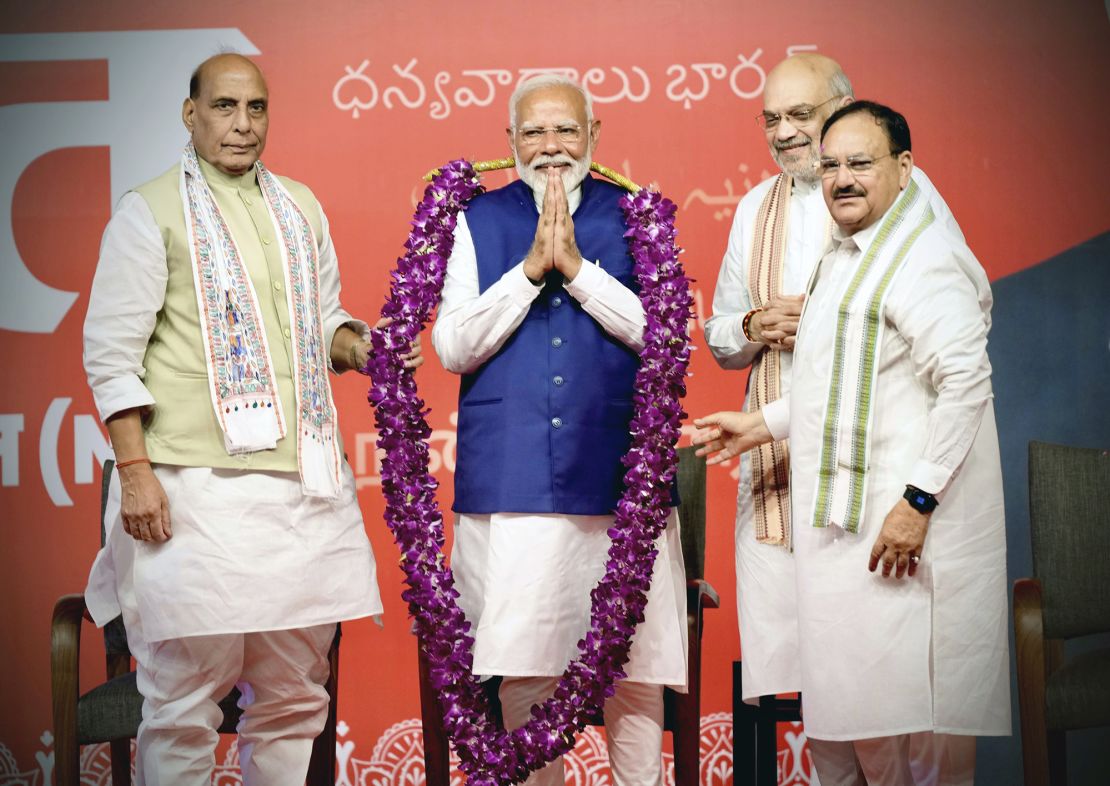
At the start of the year, Narendra Modi launched his unofficial election campaign from the steps of a grand Hindu temple. India was about to enter a “divine” era, he said, declaring the beginning of a “new time cycle.”
January’s inauguration of the Ram Mandir, on the site of a destroyed mosque, analysts said, was the latest and most significant step in a years-long project, moving India away from its secular, pluralist founding principles and toward a new future as a Hindu nation.
On Tuesday night, Modi’s Bharatiya Janata Party (BJP) lost its seat in the town where the temple stands.
The loss sent shock waves through a country where a firebrand ideology of Hindu nationalism has – over the last decade of Modi’s leadership – been thrust into to the centre of daily life.
But as the election results showed, for many voters, his BJP’s strident ideology could not compensate for far more pressing local issues, including soaring unemployment and rising inflation.
he opposition – which had been all but written off by many pundits and polls – put on a far stronger showing than expected, winning seats in BJP strongholds while denting Modi’s aura of invincibility.
The INDIA alliance, a grouping of dozens of political parties with a breadth of political positions, won 235 out of 543 seats in the lower house of Parliament, denying the BJP its dream of forming a supermajority – and with it a mandate to enact radical change.
The star face of that alliance, Indian National Congress lawmaker Rahul Gandhi, had long been ridiculed by Modi, and disregarded by many analysts as an ineffective and weak leader.
Not so anymore. Voters have sent a “clear message” to Modi, Gandhi said Tuesday night. “We do not want you.”
Though the opposition lost, for many it felt like a win. Modi will enter a third consecutive term as India’s prime minister – becoming only the second person to do so - but must rely on his coalition allies in a way he has never done before.
“The people’s mandate has given a befitting reply to the BJP and their politics of hate, corruption,” Congress chief Mallikarjun Kharge told reporters Wednesday.
“This is a mandate in defense of the Constitution of India… and (a mandate) to save democracy.”
‘Not a normal contest’
While the BJP alone still won more seats than the INDIA alliance combined, by many critics’ accounts, there wasn’t a level playing field.
“This was not a normal contest,” Indian activist Yogendra Yadav, told local news channel India Today.
Gandhi, the scion of a political dynasty that has produced three prime ministers, was last year disqualified as a lawmaker, and handed a two-year jail sentence for defamation, in a ruling his supporters say was politically motivated. Gandhi was later reinstated as a lawmaker following an intervention from India’s Supreme Court – and didn’t serve prison time.
Weeks before the election began, the Congress accused the BJP of crippling its ability to campaign after its accounts were frozen by the tax department, leaving it unable to use some $20 million in funds.
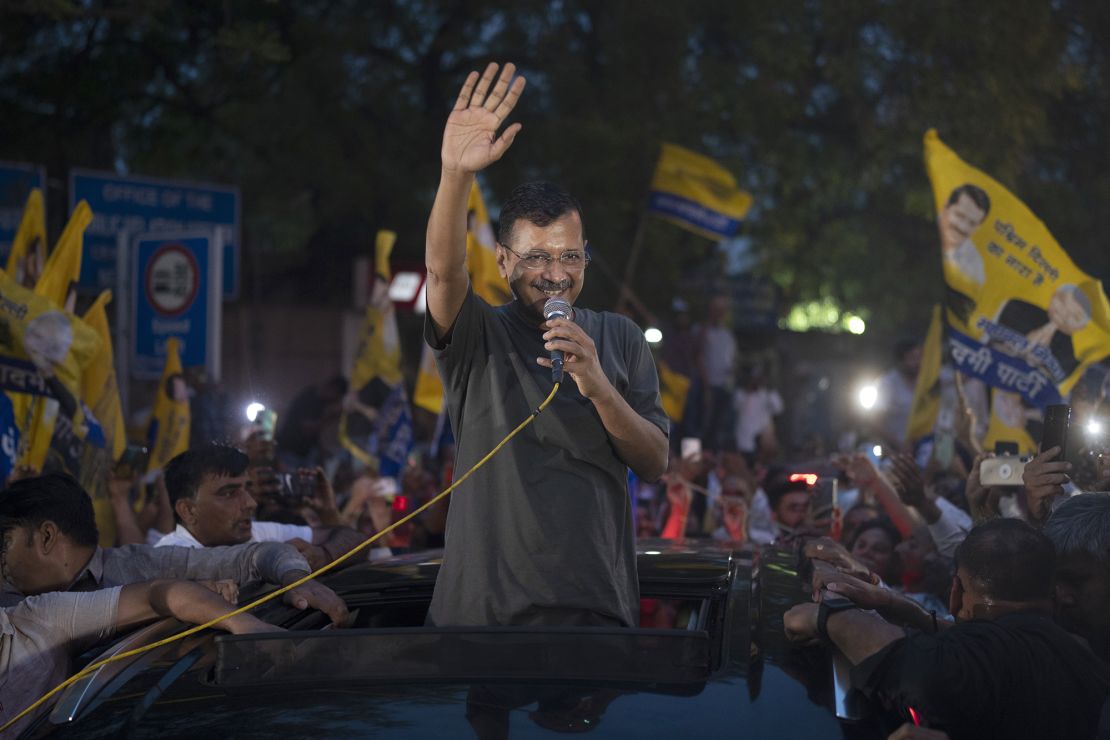
Then came the arrest of Arvind Kejriwal, Delhi chief minister and head of the popular Aam Aadmi Party, who was taken into custody for alleged corruption, and is now back in jail after being released toward the end of the campaign.
The BJP has repeatedly denied accusations of political motivation.
“Here is a contest where there is a stranglehold on power. The BJP had more money than… anyone else. They had the entire media of this country lined up as their spokesperson,” Yadav said.
“In this context, getting (235 seats) is defeat. There is no other word for it.”
A shift in trends
No other place exemplifies the BJP’s disappointment like the state of Uttar Pradesh in India’s north.
Home to more than 200 million people, the nation’s most populous state lies in the heart of the “Hindi belt” — the predominantly Hindi-speaking states where support for Modi is especially strong. It is governed by a firebrand monk turned BJP politician, Yogi Adityanath, whose Hindu-first policies have polarized people along religious lines.
And on Tuesday, voters there appeared to put their faith in the hands of the INDIA alliance, electing their candidates to 43 out of 80 seats – seemingly rejecting this populist vision for a Hindu-first nation. The BJP won 33, down from 62 at the previous election.
In Banswara, in the western state of Rajasthan, where Modi’s election campaign took its most divisive turn, voters were also turned off. It was there that the Indian leader sparked a row over hate speech when he accused the Congress of wanting to distribute the country’s wealth among Muslims, referring to them as “infiltrators.”
The BJP candidate there, a two-time incumbent lawmaker, lost his seat to a rival from a much smaller, regional party.
“The BJP did not sell its Hindu agenda as much as it thought. Other countervailing factors have impacted the electorate,” said T.V. Paul, a professor from McGill University.
Modi did not define a single overarching issue or narrative for the election, so voters focused more on local matters, according to Milan Vaishnav from the Carnegie Endowment for International Peace,
“In the absence of that, what we’ve got in a federal country like India is a series of state-by-state, local contests in which more mundane, parochial issues really matter,” he said.
“Jobs, inflation, local leaders, incumbency, caste, ethnicity, religion and those seem to have worked against the prime minister and his party.”
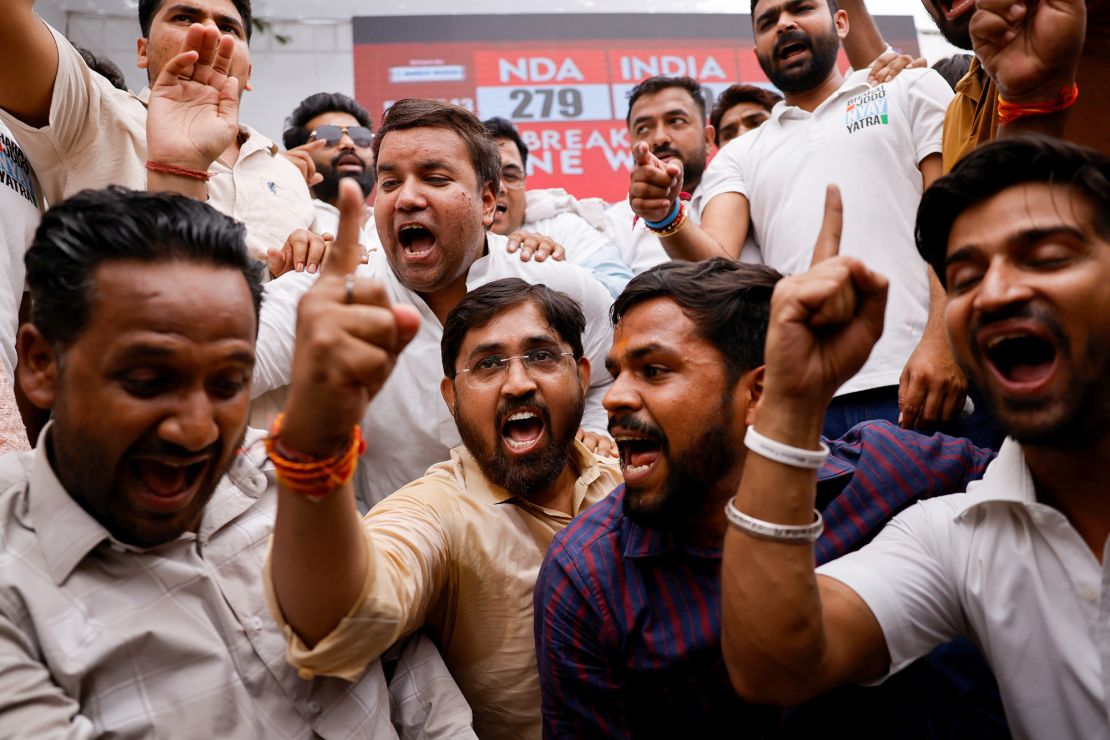
As results began to trickle in Tuesday night, and the Congress learned of its gains across the country, there were scenes of jubilation at its headquarters in the capital New Delhi.
“Rahul Gandhi is the only hope our country has,” said Lakshman Valhekar, who travelled more than 1,000 kilometres (620 miles) from his home state in Maharashtra for the result. “I believe in them completely. BJP is done. BJP is out.”
The electorate has said Paul from McGill University, “occasionally shown their capacity to make a large-scale challenge to any kind of authoritarian order that is being imposed on them.”
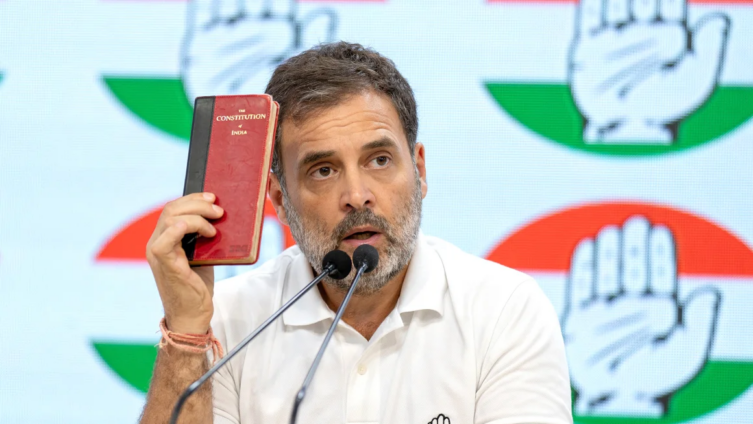
Sitting in front of a large crowd in New Delhi Tuesday, Gandhi pulled out a small, pocket-sized version of India’s constitution. Holding the red and black book, the leader began to speak.
“To save this,” he said, “we have taken the first and biggest step.”
Latest Stories
-
Walter Mosley visits W.E.B. Du Bois Centre in Accra: A New York Secretary’s homecoming story on where Du Bois spent his final years.
2 hours -
MTN set to deploy 5G services after winning spectrum licenses worth US$202m
4 hours -
NPP national elections: 3,000–4,000 police to handle security, traffic in Kumasi – Karbo
6 hours -
Atta Akyea fumes as Manhyia MP is to spend another night in EOCO custody
7 hours -
SSNIT says La Beach clearance was to protect hotel investments, beaches to remain public
8 hours -
APSU congratulates St Augustine’s College after back-to-back National Investment Quiz wins
8 hours -
Renewed flood intervention at Mallam Junction raises hopes among residents, businesses
8 hours -
St Augustine’s College retain National Investment Quiz title after nail-biting grand finale
8 hours -
Education infrastructure investment will drive Banda’s development – Ahmed Ibrahim
9 hours -
Teacher unions strike: Gov’t presents fresh proposals as talks end inconclusively
9 hours -
51,000 teachers’ promotion arrears to be validated for October payment – Education Minister
10 hours -
Kwabena Boamah appointed Board Chair for Impact Investing Ghana
10 hours -
Striking teacher unions to meet Fair Wages and Salaries Commission on October 6
10 hours -
EOCO working with AG to arraign Nana Baffour Awuah before weekend court
10 hours -
Duraplast reassures customers after fire, announces October 5 reopening
10 hours