

Audio By Carbonatix
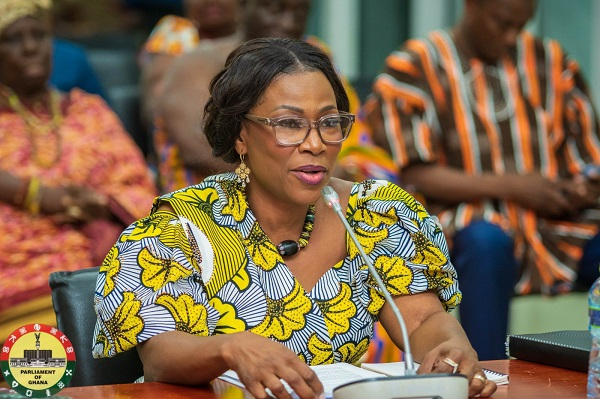
Professor Grace Ayensu-Danquah, the Deputy Minister of Health, has pledged the government’s support to advance women’s rights and address the remaining challenges to ensure that every woman and child can realise their full potential.
The Deputy Minister, who also serves as the Chairperson of Parliament’s Committee on Population, Gender and Health, and the Committee on Women, Children and Social Protection, said Ghana had long recognised that improving women’s health was both a moral obligation and a strategic national investment.
Prof Ayensu-Danquah made the pledge during a high-level roundtable organised by MSI Reproductive Choices Ghana, a non-governmental organisation, in partnership with Global Affairs Canada, to commemorate the 2026 International Women’s Day (IWD).
The event was on the theme: “Rights. Justice. Action For All Women and Girls.”
She noted that government had made significant strides in strengthening maternal health services, expanding access to reproductive health care and improving community-level health systems.
However, she acknowledged that inequalities still persisted.
“Too many women, especially those in rural and underserved communities, continue to face financial, cultural and structural barriers that limit their access to essential health care,” she said.
The Deputy Minister stated that advancing gender equality required deliberate legislative action and practical interventions that protected women from gender-based violence, improve access to health services and expand opportunities for young women to learn, lead and innovate.
She said partnerships among government, civil society organisations, the private sector, development partners, traditional authorities and communities were critical in addressing the challenges confronting women.
“As we leave here today, we must renew our commitment to challenge discriminatory norms, remove barriers to women’s participation and build systems that are safe, inclusive and resilient,” she said.
“Because when we empower women, we empower families, communities and the entire nation.”
Prof Ayensu-Danquah called for stronger collaboration and sustained investment to advance women’s health, eliminate inequalities and empower women across Ghana.
Dr Eva Mensah, the Director of Nursing and Midwifery at the Ghana Health Service, highlighted the importance of strengthening maternal and reproductive health services to improve outcomes for women.
She noted that the Service had partnered with MSI Reproductive Choices, over the years, to expand sexual and reproductive health services in the country.
Maternal health, she said, remained a priority under the health sector agenda of the Ministry of Health.
Dr Mensah said the Ghana Health Service had implemented several strategies and guidelines aimed at strengthening maternal health services, including improvements in family planning, nutrition services and reproductive health care.
She said nurses and midwives played critical roles in the health delivery system and accounted for more than 75 per cent of the workforce within the Service.
“They are present at all levels of health delivery, right down to the Community-based Health Planning and Services level, ensuring that women have access to essential maternal health services,” she said.
Dr Mensah said the Service had introduced initiatives to strengthen the capacity of nurses and midwives through improved clinical education, practice standards, monitoring and evaluation of service delivery indicators.
Such measures were aimed at improving the quality of care and supporting government’s commitment to providing free maternal health care.
Dr Demi P. Letsa, the Country Director of MSI Reproductive Choices, urged the Government and stakeholders to intensify efforts to improve women’s sexual and reproductive health services across the country.
She highlighted Ghana’s progress in protecting women’s rights through legislation such as the Affirmative Action Act and the Land Act, 2020 (Act 1036), which prohibits gender discrimination in access to land and recognises joint spousal ownership of property acquired during marriage.
Despite these achievements, MSI Ghana said major gaps remained in access to quality reproductive health services.
It said many women still faced difficulties accessing reliable care due to uneven service quality and a shortage of trained specialists such as obstetricians, gynaecologists and midwives, particularly in rural and low-income urban communities.
Dr Letsa called on policymakers, health institutions and development partners to work together to expand access to quality reproductive health services and ensure that every woman in Ghana receives the care she needs, regardless of where she lived.
Participants at the roundtable expressed the hope that the discussions would generate practical recommendations to further strengthen policies and programmes aimed at improving women’s health and advancing gender equality in Ghana.
International Women’s Day, marked annually on March 8, is a global day celebrating the social, economic, cultural and political achievements of women.
It also serves as a call to action for accelerating gender equality.
Latest Stories
-
Church of Pentecost supports over 2,000 BECE candidates in Obuasi with career guidance seminar
1 hour -
Brandon Asante and Coventry all but promoted to Premier League despite Sheffield Wednesday draw
1 hour -
GPL 2025/26: Late Kwartemaa strike downs Hearts in Tema
1 hour -
Ghana Faces Sierra Leone Moment as Prosecutorial Powers come under strain
2 hours -
Don’t consume fish or seafood from Tema Shipyard until further notice – FDA warns
2 hours -
Why volunteering might be Africa’s most underrated career accelerator
2 hours -
ActionAid Ghana raises concern over gender gaps in Feed Ghana Programme
2 hours -
Windstorm wreaks havoc in Gushegu, displacing nearly 2,000 residents and damaging schools
2 hours -
Friends of Bridget Bonnie Marks her 35th birthday with donation to Kasseh Model Health Centre
3 hours -
From Ekumfi Kokodo to the Pulpit Stage: Essi Donkor’s gospel journey takes shape
3 hours -
Landfilling waste management creates no value, it’s an economic waste
3 hours -
Photos: Speaker Bagbin Commissions MPs constituency office under parliamentary decentralisation programme
3 hours -
Black Stars technical advisor Winfried Schäfer sacked as GFA shakes up backroom staff
3 hours -
Wenchi water project almost complete, critical to gov’t agenda – GWL MD
4 hours -
Anti-LGBTQ+ bill not part of government’s legislative agenda – Inusah Fuseini
4 hours