


Audio By Carbonatix
A sitting of Lesotho's upper house of parliament this week degenerated into a fist-fight between massed ranks of rival MPs who also threw wooden panels, documents and anything else they could get their hands on across the chamber at each other.
The scuffle happened during a debate over a long-running dispute over new regulations around the wool and mohair trade - not the subject you might expect to ignite such strong passions.

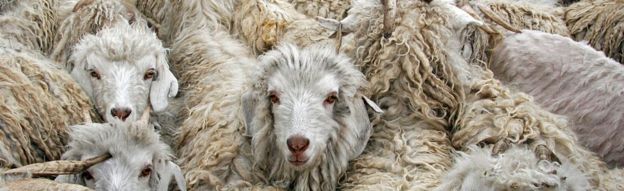 Image copyrightGETTY IMAGES
Earlier this year, thousands of farmers marched to parliament to protest against a regulation signed in 2018 forcing them to sell their wool and mohair to a Chinese broker.
The farmers said that the new broker was not paying them for their goods.
This led to a crisis that left an estimated 48,000 farmers without earnings for more than a year, according to South Africa's BusinessLive newspaper.
After numerous protests in the months after that, the government, led by Prime Miniser Tom Thabane, changed its tune and ended the controversial deal with Guohui Shi and his company, Lesotho Wool Centre.
Image copyrightGETTY IMAGES
Earlier this year, thousands of farmers marched to parliament to protest against a regulation signed in 2018 forcing them to sell their wool and mohair to a Chinese broker.
The farmers said that the new broker was not paying them for their goods.
This led to a crisis that left an estimated 48,000 farmers without earnings for more than a year, according to South Africa's BusinessLive newspaper.
After numerous protests in the months after that, the government, led by Prime Miniser Tom Thabane, changed its tune and ended the controversial deal with Guohui Shi and his company, Lesotho Wool Centre.
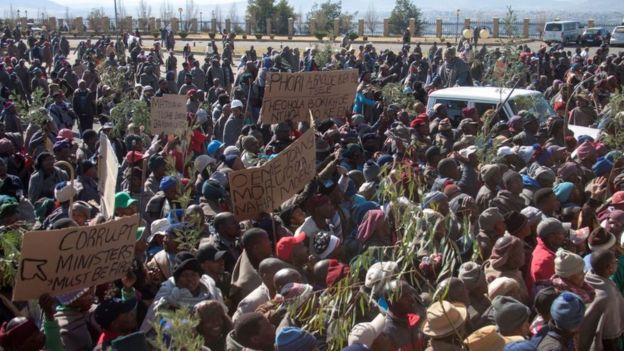 Image copyrightGETTY IMAGES
Image captionAngry farmers took to the streets of the capital, Maseru, in June
Lesotho's farmers say the government's refusal to allow producers to sell their products in South Africa and elsewhere means they cannot get fair market prices.
They used to rely on a South African broker, BKB, to export their products seemingly without any problems. They now want to either return to that arrangement or be allowed to sell to alternative markets.
In October, lawmakers called for the regulations to be repealed but a new deal is yet to be finalised.
Image copyrightGETTY IMAGES
Image captionAngry farmers took to the streets of the capital, Maseru, in June
Lesotho's farmers say the government's refusal to allow producers to sell their products in South Africa and elsewhere means they cannot get fair market prices.
They used to rely on a South African broker, BKB, to export their products seemingly without any problems. They now want to either return to that arrangement or be allowed to sell to alternative markets.
In October, lawmakers called for the regulations to be repealed but a new deal is yet to be finalised.
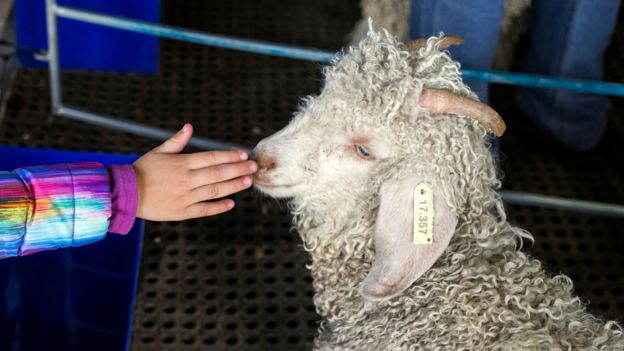 Image copyrightAFP
Image captionAn Angora goat needs to be sheared twice a year because its hair grows 12-15cm every six months
Farmers back in Lesotho, and opposition MPs, are worried that if they continue to only sell their produce from their own country, buyers might move elsewhere because of the increased travel costs involved.
While there are other tensions between the government and opposition, this week's sitting was expected to start addressing the concerns raised over existing regulations.
Opposition leaders grew frustrated when they learned Minister for Small Business Development, Conservation and Marketing Chalane Phoro would not be appearing in parliament, as they had expected, to explain what was happening with the regulations.
Then the speaker of parliament suspended the session, sparking uproar.
Image copyrightAFP
Image captionAn Angora goat needs to be sheared twice a year because its hair grows 12-15cm every six months
Farmers back in Lesotho, and opposition MPs, are worried that if they continue to only sell their produce from their own country, buyers might move elsewhere because of the increased travel costs involved.
While there are other tensions between the government and opposition, this week's sitting was expected to start addressing the concerns raised over existing regulations.
Opposition leaders grew frustrated when they learned Minister for Small Business Development, Conservation and Marketing Chalane Phoro would not be appearing in parliament, as they had expected, to explain what was happening with the regulations.
Then the speaker of parliament suspended the session, sparking uproar.
 Image copyrightLESOTHO PARLIAMENT
Image captionThe rival groups of MPs confronted each other in the chamber
Image copyrightLESOTHO PARLIAMENT
Image captionThe rival groups of MPs confronted each other in the chamber
First off, what is mohair?
Mohair is made from the hair of Angora goats. It is much softer than wool and has a noticeable sheen and lustre. Because it is considered to be a luxury textile, garments made entirely from mohair are more expensive than those made from other types of yarn. Some call it the "diamond fibre".But why fight over it?
Mohair and wool production is one of Lesotho's main industries and is the main source of income for many families.
More about mohair
Image copyrightGETTY IMAGES
Earlier this year, thousands of farmers marched to parliament to protest against a regulation signed in 2018 forcing them to sell their wool and mohair to a Chinese broker.
The farmers said that the new broker was not paying them for their goods.
This led to a crisis that left an estimated 48,000 farmers without earnings for more than a year, according to South Africa's BusinessLive newspaper.
After numerous protests in the months after that, the government, led by Prime Miniser Tom Thabane, changed its tune and ended the controversial deal with Guohui Shi and his company, Lesotho Wool Centre.
So the farmers should be happy?
Unfortunately not. While the deal with the Chinese businessman is no longer in place, what has remained is a decision for mohair and wool to be auctioned from Lesotho instead of neighbouring South Africa which had been the practice for many years.Image copyrightGETTY IMAGES
Image captionAngry farmers took to the streets of the capital, Maseru, in June
Lesotho's farmers say the government's refusal to allow producers to sell their products in South Africa and elsewhere means they cannot get fair market prices.
They used to rely on a South African broker, BKB, to export their products seemingly without any problems. They now want to either return to that arrangement or be allowed to sell to alternative markets.
In October, lawmakers called for the regulations to be repealed but a new deal is yet to be finalised.
Why do they want to sell their mohair in South Africa?
Lesotho is a small landlocked country, with a population of just two million, and the partnership with South Africa gave producers access to a broader market, they say. It is one of southern Africa's poorest nations, with unemployment rates of 24-28%, according to the World Bank. Neighbouring South Africa produces 53% of the world's mohair and runs the world's biggest auction in the coastal town of Port Elizabeth in the Eastern Cape province.Image copyrightAFP
Image captionAn Angora goat needs to be sheared twice a year because its hair grows 12-15cm every six months
Farmers back in Lesotho, and opposition MPs, are worried that if they continue to only sell their produce from their own country, buyers might move elsewhere because of the increased travel costs involved.
While there are other tensions between the government and opposition, this week's sitting was expected to start addressing the concerns raised over existing regulations.
Opposition leaders grew frustrated when they learned Minister for Small Business Development, Conservation and Marketing Chalane Phoro would not be appearing in parliament, as they had expected, to explain what was happening with the regulations.
Then the speaker of parliament suspended the session, sparking uproar.
Image copyrightLESOTHO PARLIAMENT
Image captionThe rival groups of MPs confronted each other in the chamber
So what happens now?
That is not entirely clear. There is still a dispute of over the mohair regulations and, once the dust has settled, this will need to be resolved by the very people who came to blows. In the meantime, the many hundreds of families in Lesotho who depend on mohair for their living will be hoping those in leadership positions can put their fists away long enough to come to a decision.DISCLAIMER: The Views, Comments, Opinions, Contributions and Statements made by Readers and Contributors on this platform do not necessarily represent the views or policy of Multimedia Group Limited.
DISCLAIMER: The Views, Comments, Opinions, Contributions and Statements made by Readers and Contributors on this platform do not necessarily represent the views or policy of Multimedia Group Limited.
Latest Stories
-
Food Buffer Stock seeks stronger liquidity buffer despite record profit
4 minutes -
LPG investments key to achieving 50% access target by 2030 – Energy Minister
5 minutes -
Jinapor: New LPG terminal strengthens Ghana’s energy security
8 minutes -
Agbodza directs road agencies to fast-track design approvals to prevent project delays
11 minutes -
Housing Minister urges stakeholders to prioritise quality education in Banda District
17 minutes -
Government redeems pledge to complete abandoned projects – Kofi Buah
22 minutes -
Sam George calls for Black Stars disbandment, GFA dissolution after Gambia defeat
24 minutes -
Bunkpurugu MP urges action to curb network disruptions in Northern Ghana
25 minutes -
Education Minister calls for evidence-based response to learning crisis in West Africa
32 minutes -
NPA reaffirms regulatory support as Puma Energy deepens investment in LPG and CRM
35 minutes -
Ketu South NDC clears 73 aspirants for constituency elections
37 minutes -
We are with all flood victims – Hohoe MP
43 minutes -
Asharami Ghana commends NPA CEO Edudzi Tameklo for support towards LPG vessel arrival
49 minutes -
Finance Minister engages AGI, leaders ahead of 2027 Budget
55 minutes -
Enforce surcharges, modernise audits to curb GH¢100bn losses – Audit Service urged
1 hour