

Audio By Carbonatix
The New Patriotic Party (NPP) has condemned the one-year prison sentence handed to TikToker Camilla Alhassan, describing it as a troubling signal of growing intolerance and a criminalisation of free expression under President John Dramani Mahama’s administration.
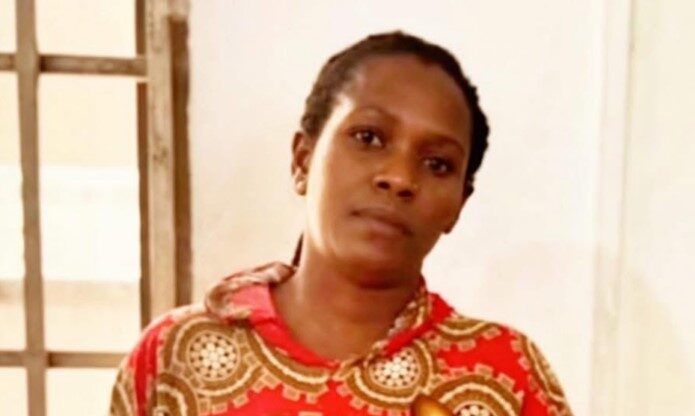
The Accra Circuit Court on Thursday, July 16, 2026, convicted the 43-year-old content creator on charges of offensive conduct after she pleaded guilty to publishing videos alleging, without evidence, that President Mahama had buried 32 cows as part of ritual sacrifices to secure victory in the 2024 general election. The court struck out a separate charge of electronic abuse, ruling it lacked jurisdiction to hear that aspect of the case.
In a press statement, the opposition party said the imprisonment of a citizen over expressive conduct raises profound constitutional questions regarding the freedom of speech guaranteed under Article 21 of the 1992 Constitution.
"The imprisonment of a citizen over expressive conduct raises profound constitutional questions regarding the freedom of speech guaranteed under Article 21 of the 1992 Constitution," the NPP said in its statement. "No amount of legal formalism can conceal the fact that a Ghanaian has today been deprived of her liberty in circumstances arising from her expression. This is not the hallmark of a confident democracy."
The party called the sentence a "troubling signal of growing intolerance" and argued that if the President feels defamed, the Constitution points him to a courtroom, not a prison cell.
"If any person, including the President of the Republic, believes that he has been defamed, our legal system provides a clear, civilised and well-established remedy: an action in civil defamation," the party said. "What we have witnessed instead is the deployment of the coercive machinery of the State, including the Police, the Attorney General and the criminal courts to punish an ordinary citizen."
The NPP also condemned the treatment of Madam Alhassan, describing scenes at the court premises where she was "paraded and handled as though she were a dangerous violent offender" as an affront to human dignity.
The case has reignited debate over the use of laws to police online expression. The Media Foundation for West Africa (MFWA) has documented 14 arrests linked to false news and offensive speech in the 16 months since President Mahama took office, nearly double the number recorded during the entire eight-year tenure of the previous administration.
The MFWA has expressed deep concern over what it describes as the increasing "weaponisation" of laws, including Section 76 of the Electronic Communications Act and Sections 207 and 208 of the Criminal Offences Act, to arrest and prosecute people for comments made in public and on social media.
The NPP has additionally petitioned the diplomatic community, calling on them to take note of the developments and support democratic values. The party has also served notice that it will support every lawful effort to pursue an immediate appeal against the conviction and sentence.
Meanwhile, the government has defended the enforcement action, maintaining it is not a crackdown but a necessary response to the explosion of reckless and dangerous content on social media. Communications Minister Samuel Nartey George recently declared that while free speech is a pillar of governance, the state would not shield the "weaponisation of fake news".
Latest Stories
-
Power restoration fault suspected in Kumasi Central Market fire
3 hours -
The 7-foot giant of Ngleshie Amanfro: Seven-foot Ghanaian Ephraim Saawa dreams of joining the national basketball team
4 hours -
Government promises support for Kumasi Central Market fire victims
4 hours -
Vibes The Movie: Big Ghun’s Ghanaian film earns five nominations at 2026 REFFA
4 hours -
MamaCare CEO warns unresolved conflicts among health workers could undermine maternal and neonatal care
5 hours -
Health professionals urged to translate medical knowledge into practice to save mothers
5 hours -
Conflicts among care providers linked to maternal, neonatal deaths – Expert
6 hours -
GIS marks 10th TIME conference, champions improved teaching practices
7 hours -
BRICS Or Balance? What Ghana’s bid really means
7 hours -
GPRTU wants full TRAFFITECH-GH implementation to start in 2027
7 hours -
Mahama announces plans to import electric wheelchairs for PWDs
7 hours -
KGL U17 Colts 2026: Western beat Prempeh Elite Academy to set up final final with Greater Accra Region
8 hours -
Late Solanke strike salvages 10-man Spurs draw at Man United
8 hours -
Gender Ministry to monitor welfare of Nana Akua Addo’s children amid domestic violence case
8 hours -
Benedict Okyere Yeboah: Ghana’s football problem goes beyond sacking a coach
8 hours