

Audio By Carbonatix
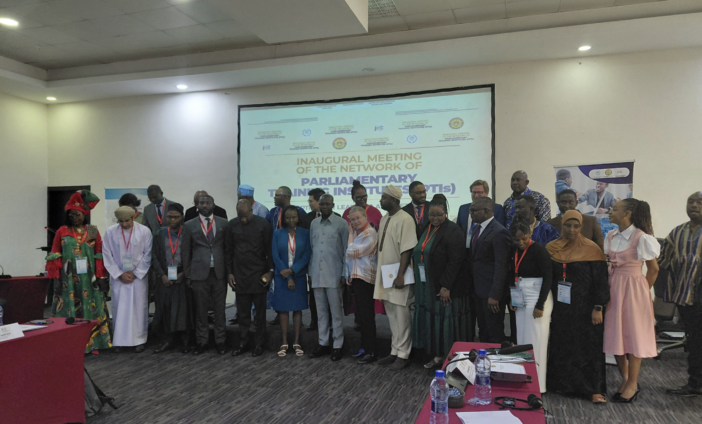
The Parliament of Ghana, through the Parliamentary Training Institute (PTI), in collaboration with the Inter-Parliamentary Union (IPU) opened the inaugural meeting/conference of the Network of Parliamentary Training Institutes (PTIs) in Accra on Monday.
The conference, also in collaboration with the Center for Parliamentary Studies and Training (CPST) of the Parliament of Kenya, aims to bring together PTIs from around the world to foster global parliamentary cooperation.
The two‑day event themed: PTIs: Peer Learning and Networking is scheduled for Monday, March 23, and Tuesday, March 24, 2026.
The gathering attracted leadership, Members of Parliament (MPs), and management of the Parliamentary Service.
Mr. Bernard Ahiafor, the First Deputy Speaker who read a speech on behalf of Mr. Alban Sumana Kingsford Bagbin, the Speaker of Parliament, emphasised peer learning, and networking to strengthen parliamentary democracy.
He said, “The effectiveness of any parliament is closely tied to the quality of its members and the robustness of its support system.” “Training must no longer be seen as an occasional activity; it must be regarded as a strategic institutional partnership,” he added.
Mr. Ahiafor noted that the future of parliamentary strengthening laid in building networks of institutions that could jointly design solutions, exchange resources, and support one another.
He told participants that the Parliament of Ghana’s Training Institute delivered 36 training programs last year, involving 2,792 participants, including MPs and staff.
Professor Nyokabi Kamau, Executive Director, Centre for Parliamentary Studies Training, Kenya, said the conference is seen as a significant step in strengthening parliamentary training networks and sharing best practices among African and international legislative institutions.
Speaking on behalf of the Minority Leader, Mr. Vincent Ekow Assafuah, the New Patriotic Party (NPP) MP for Old Tafo emphasised collective growth, learning in parliaments, technology awareness, and a culture shift where training was integral to parliamentary work.
He cited investment, relevance, and ownership as three conditions for success.
Mr. Mahama Ayariga, the Majority Leader, said the network was a game-changer for parliamentary democracy, capacity building for parliamentary effectiveness, and broadening the scope to the entire democratic ecosystem—media, civil society, and citizens.
The meeting brought together thirty institutions to promote collaboration, share best practices, and address challenges in parliamentary capacity building.
Latest Stories
-
Food Buffer Stock seeks stronger liquidity buffer despite record profit
4 minutes -
LPG investments key to achieving 50% access target by 2030 – Energy Minister
6 minutes -
Jinapor: New LPG terminal strengthens Ghana’s energy security
8 minutes -
Agbodza directs road agencies to fast-track design approvals to prevent project delays
11 minutes -
Housing Minister urges stakeholders to prioritise quality education in Banda District
17 minutes -
Government redeems pledge to complete abandoned projects – Kofi Buah
22 minutes -
Sam George calls for Black Stars disbandment, GFA dissolution after Gambia defeat
24 minutes -
Bunkpurugu MP urges action to curb network disruptions in Northern Ghana
25 minutes -
Education Minister calls for evidence-based response to learning crisis in West Africa
32 minutes -
NPA reaffirms regulatory support as Puma Energy deepens investment in LPG and CRM
35 minutes -
Ketu South NDC clears 73 aspirants for constituency elections
37 minutes -
We are with all flood victims – Hohoe MP
43 minutes -
Asharami Ghana commends NPA CEO Edudzi Tameklo for support towards LPG vessel arrival
49 minutes -
Finance Minister engages AGI, leaders ahead of 2027 Budget
55 minutes -
Enforce surcharges, modernise audits to curb GH¢100bn losses – Audit Service urged
1 hour