

Audio By Carbonatix
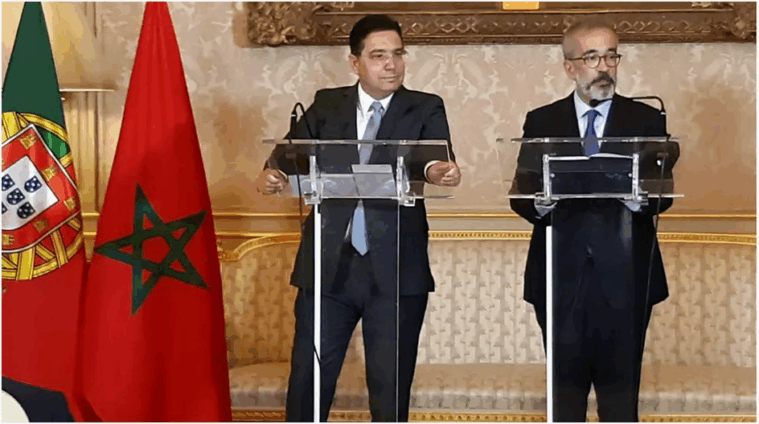
Portugal joined other Western countries in expressing a positive view of Morocco's autonomy proposal for the disputed Western Sahara region, after Portuguese Foreign Minister Paulo Rangel said on Tuesday the plan had a "serious and credible basis".
The dispute, dating back to 1975, pits Morocco, which claims sovereignty over Western Sahara, against the Algeria-backed Polisario Front, which seeks an independent state there.
Rangel showed support for the autonomy proposal, first presented by Moroccan King Mohammed VI to the United Nations in 2007, following a meeting in Lisbon with Moroccan Foreign Minister Nasser Bourita.
The plan would establish a local legislative, executive, and judicial authority for Western Sahara elected by its residents, while Rabat would retain control over defence, foreign affairs, and religion.
"Following movements made by France, Spain, Britain and others, Portugal considers that this ... will be the most serious basis for a solution, but always under the auspices of the U.N.," Rangel later told reporters, falling short of recognising Morocco's sovereignty over the territory.
Jose Tomaz Castello Branco, a professor of political science at Lisbon's Catholic University, said Portugal's position was "quite diplomatic, reasonable, and opens the door to a future formal recognition of Morocco's sovereignty".
"However, the Portuguese government is reserving room to maneuver to decide in the future, not committing completely yet," he said, adding that Lisbon's position should always be "carefully considered because Morocco is also Portugal's neighbor".
During a high-level meeting in 2023, Portugal's previous Socialist government had already formalised its view of Morocco's proposal as "realistic, serious and credible", but Rangel's comments cemented the current centre-right government's position.
In 1976, following Spain's withdrawal from what was until then its colony, the Polisario Front proclaimed the Sahrawi Arab Democratic Republic as a government-in-exile, based on the right to self-determination.
France and Spain have also backed the autonomy proposal, with Madrid in 2022 formally describing it as "the most serious, realistic and credible" framework for resolving the dispute.
Latest Stories
-
Glut! Farmers count losses as prices crash, customers happy
6 minutes -
GSA postpones auction of unserviceable vehicles
8 minutes -
Man charged with attempted murder after stabbing
12 minutes -
World Cup visa scandal: Senyo Hosi says issue goes beyond calls for Sports Minister’s resignation
13 minutes -
Yaw Ampofo Ankrah hasn’t taken or received any money to facilitate visas – Lawyer insists
31 minutes -
World Cup visa scandal: Senyo Hosi urges focus on constitutional accountability
31 minutes -
La Beach demolition: Senyo Hosi condemns lack of consultation
43 minutes -
Russian glide bomb attack on Zaporizhzhia kills at least 15 people
58 minutes -
Jinapor warns underperforming energy sector CEOs of consequences, says no protection for failure
59 minutes -
Fire destroys head of tipper truck on Lower Volta Bridge
1 hour -
Palmer signs new Chelsea contract until 2034
1 hour -
World Cup visa scandal: Mahama will act on corruption allegations – Abass Nurudeen
1 hour -
Abass Nurudeen accuses Minority of ‘scandal scavenging’ over World Cup visa controversy
1 hour -
US Embassy recognised NSA, GFA and GTA as separate entities for visa applications – Sports Minister’s aide
1 hour -
Only 30% of Ghanaian teachers satisfied with their jobs – CAPCOE data reveals
1 hour