

Audio By Carbonatix
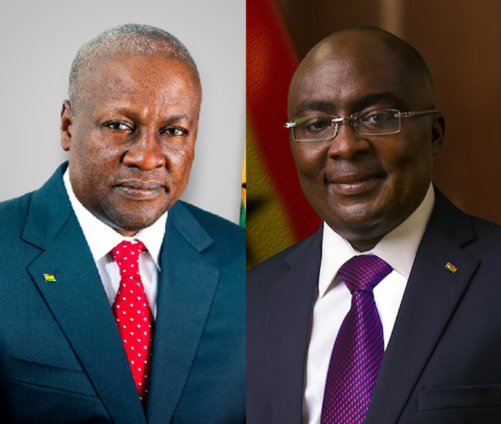
Some tax analysts have cast doubts over the ambitious tax proposals announced in the manifestos of the two major political parties, the New Patriotic Party (NPP), and the National Democratic Congress (NDC) to be rolled out under an International Monetary Fund (IMF) programme.
Both parties have promised to remove the Electronic Transaction Levy, the COVID-19 -Levy and reduce some taxes at the ports.
But Speaking to Joy Business, tax analyst Francis Timore Boi cautioned that the blanket removal of the taxes without alternative plans to boost revenue may derail the IMF programme.
He argued for example that the Covid-19 levy and the E-levy combined are projected to give the government about GH₵7.7 billion in 2025.
Mr Timore Boi expressed worry that no alternative revenue generation model has been proposed by the two major parties to make up for the shortfall that may occur as a result of the proposal to remove the taxes.
Read Also: NPP or NDC can scrap E-levy and betting tax, it won’t cost the economy much – Kwasi Peprah
He warned that this could go contrary to the IMF programme aimed at improving revenue and redirecting government expenditure to critical areas to help alleviate poverty.
“If any policy you seek to introduce may bring down revenue, the IMF may not be happy with that. You are planning to abolish the COVID-19 levy and the e-levy. COVID-19 levy alone in 2025 is estimated to bring in about GH₵5.6 billion. If you take it off, how are you going to replace it? In 2025, we are expecting E-levy to give us about GH₵2.1 billion and in 2026, it is projected to increase to about GH₵2.4 billion”.
Stressing the need to assess such tax proposals, Mr Timore Boi said the political parties must provide a workable budget that will provide a foresight of how the revenue shocks that will be created will be remedied.
“It is important because the budget has not shown us that you are going to introduce new taxes”.
He added that even though e- levy is an unpopular tax and the general sentiment is that it should go, there must be a discussion on how to fill the financial holes that will be created after its abolishment.
Latest Stories
-
See the areas that will be affected by ECG’s planned maintenance on Monday, April 13, 2026
5 minutes -
GPL 2025/26: Salim Adams double fires Medeama back to summit after Kotoko rout
6 minutes -
Two robbery suspects convicted following violent gold dealer attack in Obuasi
9 minutes -
Supreme Court @150: Fanfare meets reflection as nationwide activities roll out
16 minutes -
Padel for Parkinson’s cycling event promotes awareness at University of Ghana
35 minutes -
GPL 2025/26:Samuel Tetteh brace fires Nations FC past Basake Holy Stars
43 minutes -
Ghana’s oil trade position close to net neutral in near term – Fitch
1 hour -
IMANI Africa President urges greater awareness and support for Parkinson’s Disease patients
1 hour -
T-bills: Government records 29% undersubscription; interest rates continue to surge
1 hour -
Perceptions of Judicial partisanship ‘unfortunate’ – Justice Adjei-Frimpong urges greater public engagement to build trust
1 hour -
Ghana to honour Christina Hammock Koch for historic Artemis II mission
2 hours -
Supreme Court appointments require more than 15 years’ experience – Justice Adjei-Frimpong
3 hours -
Fire destroys 3-bedroom house at Bogyawe
3 hours -
Why the Supreme Court is a “policy court” – Justice Richard Adjei-Frimpong breaks it down
3 hours -
Playback: The Law discussed Supreme Court @150
4 hours