

Audio By Carbonatix
The Ark Foundation, a non-governmental organisation which offers help to the vulnerable in society has made some pressing requests to government while it commemorates its annual 16 Days of Activism against Gender-Based Violence programme.
This prorgramme is held from November 25 till December 10 every year, as an annual global campaign which serves as a crucial reminder of the persistent struggle against gender-based violence and the need for concerted efforts to protect and support victims.
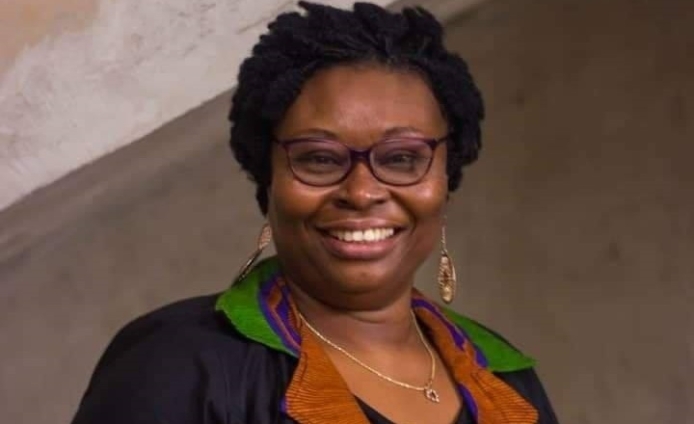
In a statement signed by Dr. Angela Dwamena-Aboagye, the Executive Director of The Ark Foundation, Ghana, she draws the attention of government to three key things that could help address some challenges faced by actors involved in dealing with issues regarding gender-based violence.
According to her, funding for NGOs and state institutions working in this space should be prioritised to guarantee continuous support and services for victims through the legally established Domestic Violence Fund and other legitimate State and development agency sources.
"The difficulty in securing adequate funding hampers the ability of institutions to fully support victims, highlighting the urgent need for increased financial commitment from the government to ensure the continuity and expansion of these essential services. The Domestic Violence Fund, established to provide financial resources for these efforts, should be playing a crucial role stop-gap role in supporting victims and raising awareness.
The Gender Ministry, should ensure equitable distribution of the Fund for the purposes stated by law. Monitoring and accounting for the use of the Domestic Violence Fund are critical for transparency and accountability. Additionally, providing training for families to support reintegration and rehabilitation is essential for the long-term recovery process. This training should be handled by agencies on the ground with support from the Fund," she writes.
Secondly, Dr. Angela Dwamena-Aboagye intimated that despite legislative efforts and advocacy efforts, practices such as witchcraft accusation, customary servitude, cruel widowhood practices, child marriages, elopement and female genital mutilation persist in Ghana, perpetuating harm and inequality against women and girls.
"It is imperative that the government revives efforts at prohibiting these practices in collaboration with civil society organizations, women’s groups and local state agencies. Existing laws must be enforced through prosecution, and communities must be sensitized through education and engagement. Ultimately, the government, civil society, and communities must work together to protect the rights and dignity of women and girls, and to ensure that harmful traditional practices are eliminated. This can only be done through the firm leadership of the State primarily through the Gender Ministry, which has the mandate to coordinate such efforts and ensure continuous improvement in prevention and responsive strategies," she indicates.
She finally recommends that state institutions such as the Commission on Human Rights and Administrative Justice (CHRAJ); the Department of Social Welfare (DSW), the Girl Child Unit of the Ghana Education Service, the Courts and the Gender-Based Violence Courts, the Domestic Violence and Victims’ Support Unit (DOVSSU), which have their respective mandates in preventing and responding to gender-based violence should work towards improvement in their own strategies and strengthening their capacities and knowledge in this area of work.
"Victims should not be re-victimized or re-traumatized as they seek help, which sadly often happens when they engage responding agencies. Also, as these institutions have a shared responsibility to reduce the prevalence and incidence of gender-based violence in the country, they are called upon to exert the needed pressure on the State, the Gender Ministry and the Domestic Violence Secretariat to rise to the challenges and perform their mandate. The State will be shirking its responsibility under the law, the Constitution and the adopted regional and international instruments, such as the Maputo Protocol and the UN Declaration on Elimination of Violence against Women (DEVAW), if it fails to tackle gender-based violence, a canker that affects 14% of men and boys and an alarming third of the population of women and girls in Ghana. This must change," the Executive Director further noted.
Since 1999, The Ark Foundation as one of such organisations has been providing free core support services including shelter, psycho-social support and legal assistance. State institutions, including the courts, Police/DOVVSU, health facilities, and the Department of Social Welfare have also been doing what they can to provide services according to their mandates; however, these institutions are inhibited by funding and sometimes severe capacity needs.
Furthermore, the existing institutional framework perpetuates the cycle of violence, as state and non-state institutions often operate in seclusion from others, lacking effective coordination and formal referral mechanisms.
This fragmentation results in victims of gender-based violence going from one agency to another without receiving comprehensive support, thereby exacerbating their trauma and suffering. The fragmented response to gender-based violence is a glaring obstacle to progress and undermines the country’s human development.
Latest Stories
-
Treasury bill auction oversubscribed by 53.5% as yields fall across maturities
6 minutes -
NPP warns aspirants premature campaigning could jeopardise eligibility for primaries
12 minutes -
Ghana courts investors in Bangkok after exit from $3bn IMF bailout
17 minutes -
8 arrested over alleged internet fraud initiation assault in Bono Region
21 minutes -
BoG proposes 30-day liquidity buffer requirement for banks
28 minutes -
BoG plans reviews of banks’ cybersecurity compliance
34 minutes -
GRA cautions taxpayers against attacking tax officials
41 minutes -
Invest Ghana Summit to drive value addition, industrialisation
46 minutes -
Sports Ministry denies involvement in World Cup visa scandal, calls for probe
52 minutes -
Ghana earns top US ranking in fight against human trafficking
58 minutes -
Education Minister commends teacher unions for suspending nationwide strike
1 hour -
‘Farmers Services Centres to be game changer for Ghana’s agriculture’ – Mahama
1 hour -
WIWIK launches new leadership development pathway for Ghanaian university students
1 hour -
Public basic schools resume today after strike suspension
1 hour -
Environment Minister calls for transparency in Ghana’s GMO adoption
2 hours