

Audio By Carbonatix
As we approach the 2024 presidential and parliamentary elections, the Ghana Armed Forces’ role in democratic governance comes under renewed scrutiny. While Ghana has been a beacon of democracy in West Africa, incidents such as the Ayawaso bye-election violence, the Ejura killings, and the Ashaiman brutalities have cast a shadow over our democratic credentials. These incidents have highlighted the dangers of militarized responses to civil matters and raised critical questions about the military’s role in elections and governance.
Ghana’s military, a respected institution with a proud history, must remain conscious of its constitutional limitations. Under Article 210 of the 1992 Constitution of Ghana, the military’s primary role is to protect Ghana’s territorial integrity. The maintenance of law and order is explicitly within the purview of the Ghana Police Service, except in extraordinary situations where the military is called upon to assist. This arrangement safeguards civilian control of state security and ensures the military does not overstep its constitutional boundaries.
However, the troubling trend of military involvement in internal security matters has undermined public trust. Instances of brutality, excessive use of force, and overreach in civil matters have not only eroded confidence in the Ghana Armed Forces but have also raised the specter of impunity. The Ayawaso bye-election violence and the Ejura killings are stark reminders of the consequences of failing to respect the rule of law, established rules of engagement, and human rights.
The Ghana Armed Forces must be mindful that under Ghana’s Constitution and international human rights law, accountability for illegal acts and abuses is inescapable. Commanders and individual soldiers alike are liable for actions that contravene legal and ethical standards, and there is no place for impunity in a democracy.
As guardians of Ghana’s sovereignty, the military has a responsibility to uphold the country’s democratic gains. Ghana’s democracy is hard-won and fragile, and its continued strength depends on institutions like the military remaining neutral, professional, and resistant to political manipulation. Historical precedents in West Africa reveal the catastrophic consequences of military interference in politics. By steadfastly maintaining neutrality, the Ghana Armed Forces will send a powerful signal to the public and the international community about its commitment to democracy.
To this end, the military must ensure that during the upcoming elections, it operates strictly within the law and under the command and control of the police in joint security operations. Force, if used at all, must be proportionate, necessary, and guided by established standard operating procedures. Soldiers deployed to maintain peace and order must receive clear instructions and adequate training to handle election-related security with professionalism and restraint.
The temptation for political actors to co-opt the military in their quest for power must also be resisted at all costs. Political manipulation of the armed forces not only tarnishes their reputation but also risks dragging the institution into partisan conflicts that could destabilize the nation. The military’s allegiance is to the Constitution and the people of Ghana—not to any political party or figure.
As election day approaches, the Ghana Armed Forces must seize the opportunity to demonstrate its unwavering commitment to democracy, the rule of law, and human rights. By respecting its constitutional mandate, ensuring accountability, and maintaining professionalism and neutrality, the military will not only safeguard the integrity of the elections but also solidify its role as a cornerstone of Ghana’s democracy.
Ghanaians are watching, and the world is watching. The military’s conduct during these elections will either affirm Ghana’s position as a democratic trailblazer in West Africa or undermine the foundations of its democracy. The choice is clear, and the stakes could not be higher.
The Ghana Armed Forces should rise to the occasion and honour its legacy as a protector of the nation—not a threat to its democracy.
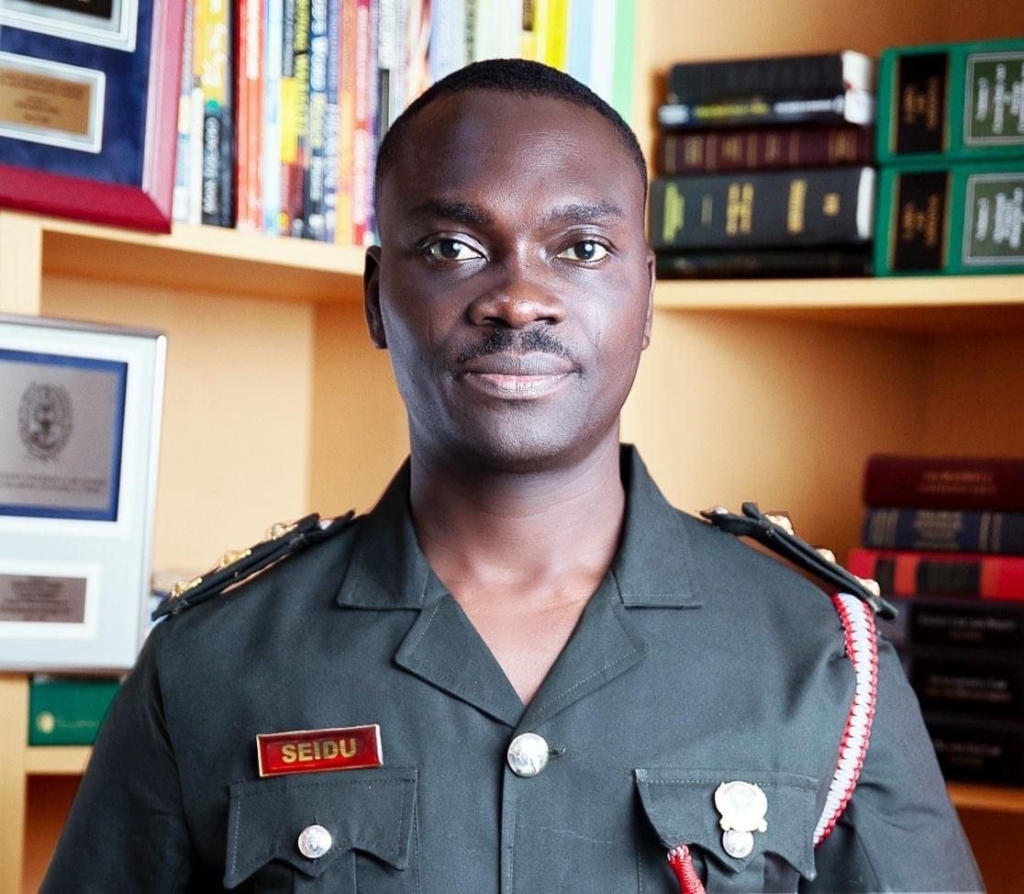
Written by Dr. Jamal Tonzua (MPP (Oxford), LLM (Georgetown Law), LLB, QCL (Ghana), DIA (Johns Hopkins SAIS)).
Dr Jamal Tonzua Seidu is an international law practitioner, a law lecturer and former military officer and assistant director for legal services of the Ghana Armed Forces. He has advised governments and trained troops for United Nations international peacekeeping missions on various subjects including the use of force, human rights, and international criminal law and justice. Dr Tonzua holds a doctorate in international affairs from the Johns Hopkins School of Advanced International Studies, with a specialization in international cyber operations. He also specialized in Transnational organized crime and global security (University of Oxford) and international arbitration and dispute resolution (Georgetown University). Dr Tonzua has received four United Nations International Law Fellowships, and he is currently a law, security policy, and governance fellow at the African Center for Governance and Economic Management.
Email: jts159@georgetown.edu.
Latest Stories
-
Walter Mosley visits W.E.B. Du Bois Centre in Accra: A New York Secretary’s homecoming story on where Du Bois spent his final years.
1 hour -
MTN set to deploy 5G services after winning spectrum licenses worth US$202m
3 hours -
NPP national elections: 3,000–4,000 police to handle security, traffic in Kumasi – Karbo
5 hours -
Atta Akyea fumes as Manhyia MP is to spend another night in EOCO custody
6 hours -
SSNIT says La Beach clearance was to protect hotel investments, beaches to remain public
7 hours -
APSU congratulates St Augustine’s College after back-to-back National Investment Quiz wins
7 hours -
Renewed flood intervention at Mallam Junction raises hopes among residents, businesses
7 hours -
St Augustine’s College retain National Investment Quiz title after nail-biting grand finale
8 hours -
Education infrastructure investment will drive Banda’s development – Ahmed Ibrahim
8 hours -
Teacher unions strike: Gov’t presents fresh proposals as talks end inconclusively
8 hours -
51,000 teachers’ promotion arrears to be validated for October payment – Education Minister
9 hours -
Kwabena Boamah appointed Board Chair for Impact Investing Ghana
9 hours -
Striking teacher unions to meet Fair Wages and Salaries Commission on October 6
9 hours -
EOCO working with AG to arraign Nana Baffour Awuah before weekend court
9 hours -
Duraplast reassures customers after fire, announces October 5 reopening
10 hours